Sonarpur Arohi Climbs Chang Chenmo Kangri and Makes Three First Ascents in Eastern Ladakh
Sonarpur Arohi from West Bengal, India, has successfully concluded the climbing phase of its Chang Chenmo Expedition 2026, making four significant ascents in the remote Chang Chenmo Valley of eastern Ladakh. The team climbed Chang Chenmo Kangri (6,536 m) by a new route and made three first ascents of peaks approximately 6,400 m, 6,420 m and 6,274 m high. All four climbs were completed in self-supported alpine style, without fixed ropes or high-altitude porter support.
The expedition left Kolkata on 25 August. On 31 August, the team distributed educational materials and sports equipment among students of the Government Secondary School at Phobrang, the last village on the approach.
A NewlineApproach
The team faced an early logistical challenge when, following instructions from the Indian Army, the team had to abandon its originally planned approach to the Chang Chenmo Glacier and take an alternative route, requiring an additional transit camp. The Base Camp was eventually established at around 5,500 m on 3rd September. From there, the climbers crossed a ridge of nearly 5,900 m to establish Camp 1 at 5,690 m beside the Chang Chenmo Glacier.
First Ascent and Chang Chenmo Kangri
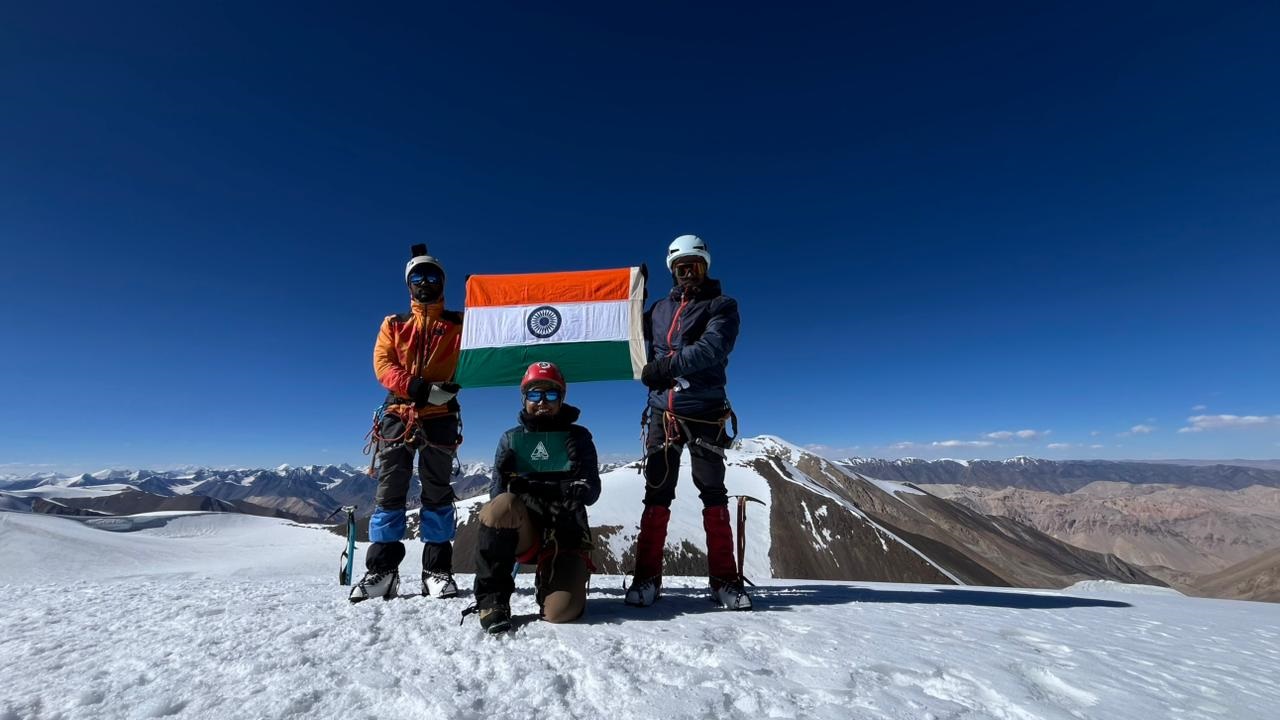
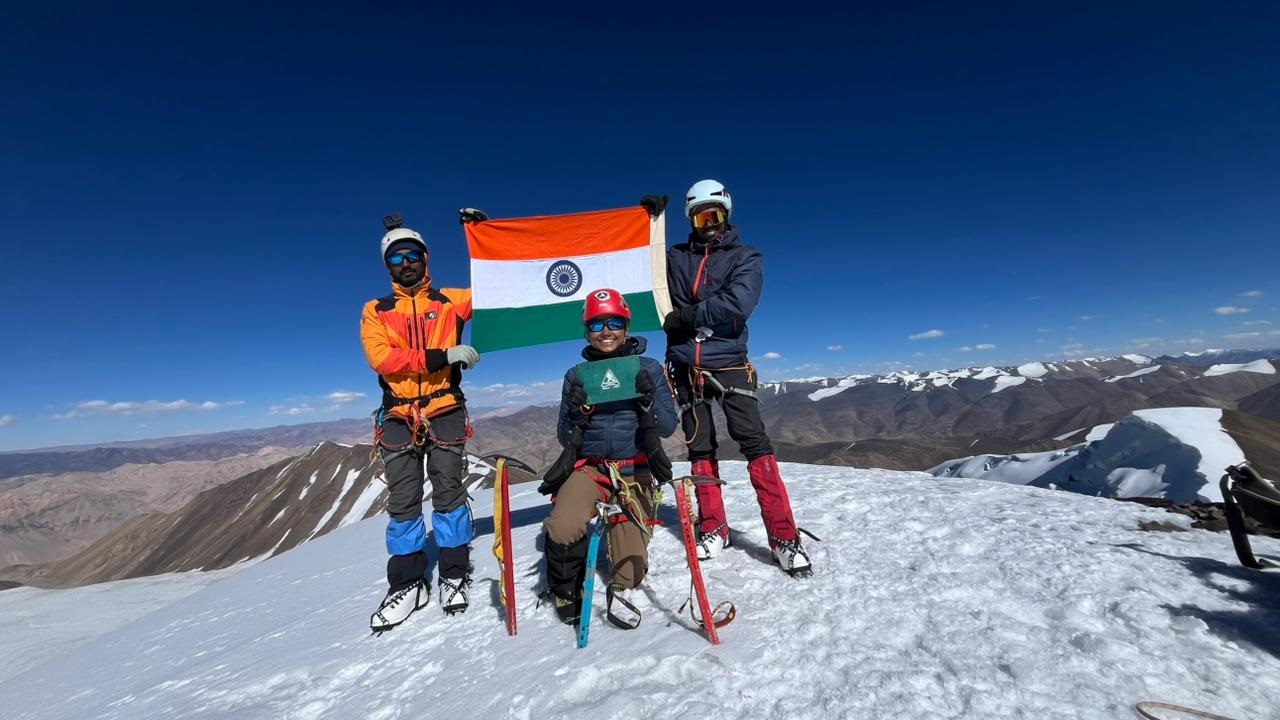
Following load ferries to Camp 1, the expedition recorded its first major success on 9th September, when three climbers reached the summit of an approximately 6,400 m peak, making its first ascent. They climbed by the west ridge and descended by the east ridge, completing a traverse of the mountain.
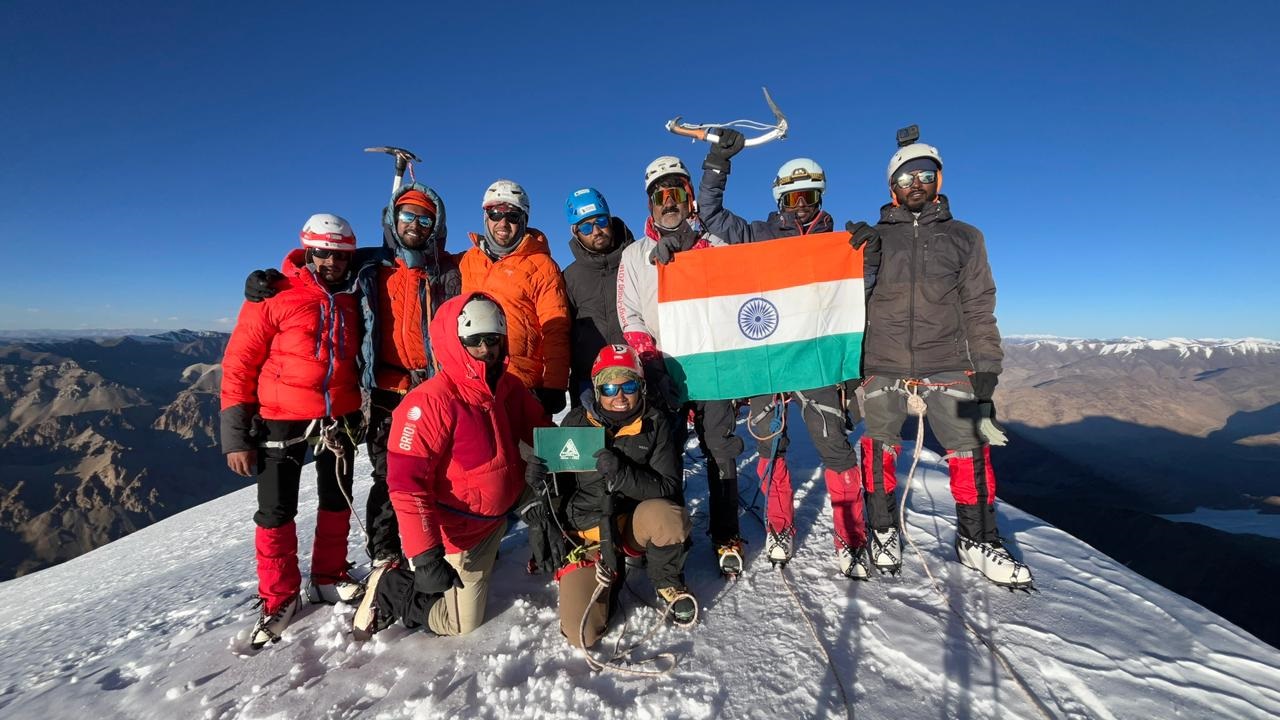
Two days later, on 11 September, nine members set out for the expedition's principal objective, Chang Chenmo Kangri (6,536 m). Starting from Camp 1 at 4:40 am, the team reached the summit at 5:30 pm after a long and demanding ascent.
The mountain was climbed via a new route, and the team thought that they were the first civilians to ascend. During the expedition, the team received information about a reported ascent by Indian Army personnel on 10 June 2026, although documentary details of that ascent have not yet been obtained by the expedition.
An Open Bivouac at –30°C
One of the most difficult moments came on 14th September, when eight climbers attempting another objective were forced to spend several hours in the open on the glacier at around 5,900 m. Using survival sheets and raincoats for protection, they endured temperatures of approximately –30°C, aggravated by strong wind chill. With snowfall beginning after daybreak and conditions continuing to deteriorate, the team abandoned the attempt and returned safely to Camp 1.
Two More First Ascents
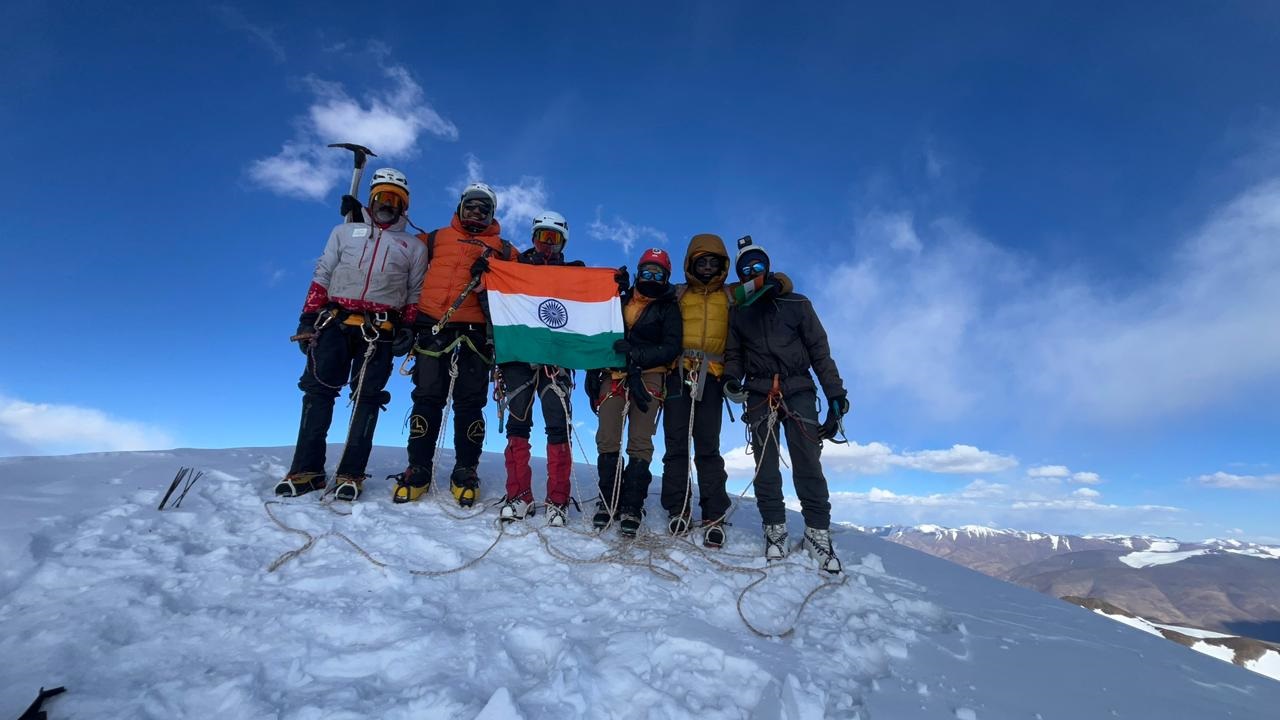
The team established Camp 2 at around 5,900 m on 15th September. The following day, six climbers reached the summit of an approximately 6,420 m peak, completing the expedition's second first ascent.
The fourth and final summit came on 20 September. Starting from a Summit Camp at around 5,900 m, the entire participating team reached the summit of an approximately 6,274 m peak, marking the expedition's third first ascent.
A notable feature of the expedition was its climbing style. No fixed ropes were used on any of the four mountains, despite slopes ranging from approximately 55 to 75 degrees. The climbers also followed different descent routes rather than retracing their lines of ascent.
Water Shortage at Base Camp
The team faced another serious challenge during the final phase when the stream beside Base Camp stopped flowing between 14th and 23th September. Water had to be collected daily from sources 300–400 metres away. At times, members travelled nearly a kilometre and gained about 100 metres in elevation to collect glacier ice, which was carried back and melted for drinking and cooking.
Peaks Proposed in Honour of Hillary, Tenzing and Netaji
Sonarpur Arohi has proposed names for the three peaks on which the expedition made first ascents. The approximately 6,400 m peak has been proposed as Mount Edmund Hillary, the approximately 6,420 m peak as Mount Tenzing Norgay, and the approximately 6,274 m peak as Netaji Subhas Parvat, in honour of Netaji Subhas Chandra Bose.
The expedition has received consent for the proposed names from Peter Hillary, son of Sir Edmund Hillary; Jamling Tenzing Norgay, son of Tenzing Norgay; and representatives of the Netaji Research Bureau. The proposed names remain subject to the appropriate official recognition process.
The team returned to the roadhead at Tsogtsalu on 23rd September and is scheduled to reach Kolkata on 30 September.
With four summits, three first ascents and a new route on Chang Chenmo Kangri, all completed without fixed ropes or high-altitude porter support, the expedition marks a significant exploratory achievement in the remote mountains of the Chang Chenmo region.
Expedition Summary
Expedition: Sonarpur Arohi Chang Chenmo Expedition 2026
Location: Chang Chenmo Valley, Eastern Ladakh
Expedition Leader: Rudra Prasad Halder
Base Camp: Approx. 5,500 m
Camp 1: Approx. 5,690 m
Camp 2 / Summit Camp: Approx. 5,900 m
Summit I : Proposed Mount Edmund Hillary (6,400 m)
Summit Date: 9 September 2026
Ascent Details: First ascent; climbed by the west ridge and descended by the east ridge, completing a traverse.
Summit Members: Naitik Naskar, Debashis Majumdar and Dipashree Pal.
Summit II : Chang Chenmo Kangri (6,536 m)
Summit Date: 11 September 2026
Ascent Details: Climbed by a new route; described by the expedition as the first civilian ascent.
Summit Members: Naitik Naskar, Debashis Majumdar, Tuhin Bhattacharya, Wrik Roy, Aparesh Sannigrahi, Satyarup Siddhanta, Malay Purkait, Dipashree Pal and Rudra Prasad Halder.
Summit III : Proposed Mount Tenzing Norgay (6,420 m)
Summit Date: 16 September 2026
Ascent Details: First ascent.
Summit Members: Rudra Prasad Halder, Naitik Naskar, Debashis Majumdar, Dipashree Pal, Anindya Mukherjee and Satyarup Siddhanta.
Summit IV : Proposed Netaji Subhas Parvat (6,274 m)
Summit Date: 20 September 2026
Ascent Details: First ascent; all participating members reached the summit.
Summit Members: Naitik Naskar, Debashis Majumdar, Tuhin Bhattacharya, Wrik Roy, Aparesh Sannigrahi, Satyarup Siddhanta, Malay Purkait, Dipashree Pal, Rahul Halder, Ratan Acharya, Yasmina Khan, Niranjan Pal, Anindya Mukherjee and Rudra Prasad Halder.
Expedition Highlights
Total Summits: 4
First Ascents: 3
New Route: Chang Chenmo Kangri (6,536 m)
Climbing Style: Self-supported alpine style
Fixed Ropes: None
Sherpa / High-Altitude Porter Support: None
Slope Angles: Approximately 55°–75°
Major Challenges: Forced change of approach, extreme altitude and cold, snowfall, an open glacier bivouac at around –30°C, and prolonged water shortage at Base Camp.


