AICTE-VAANI Seminar at Techno Main Salt Lake Brings Climate and Energy Conversations to Bengali
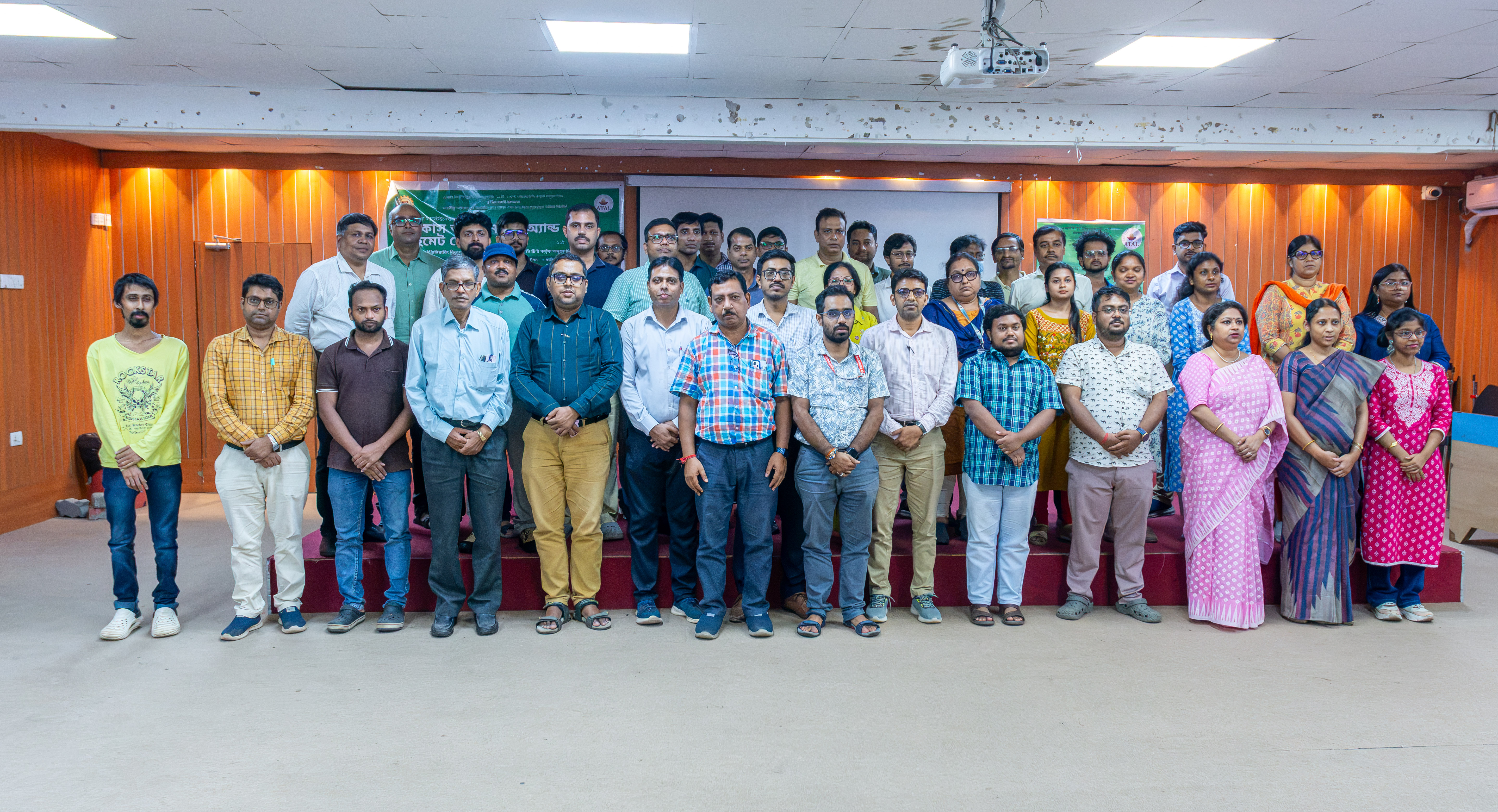
The Department of Electrical Engineering, Techno Main Salt Lake (TMSL), organised a two-day seminar, “Towards a Sustainable Future: Focus on Energy and Climate Change,” on 15–16 September 2026 under AICTE’s Vibrant Advocacy for Advancement and Nurturing of Indian Languages (VAANI) initiative.
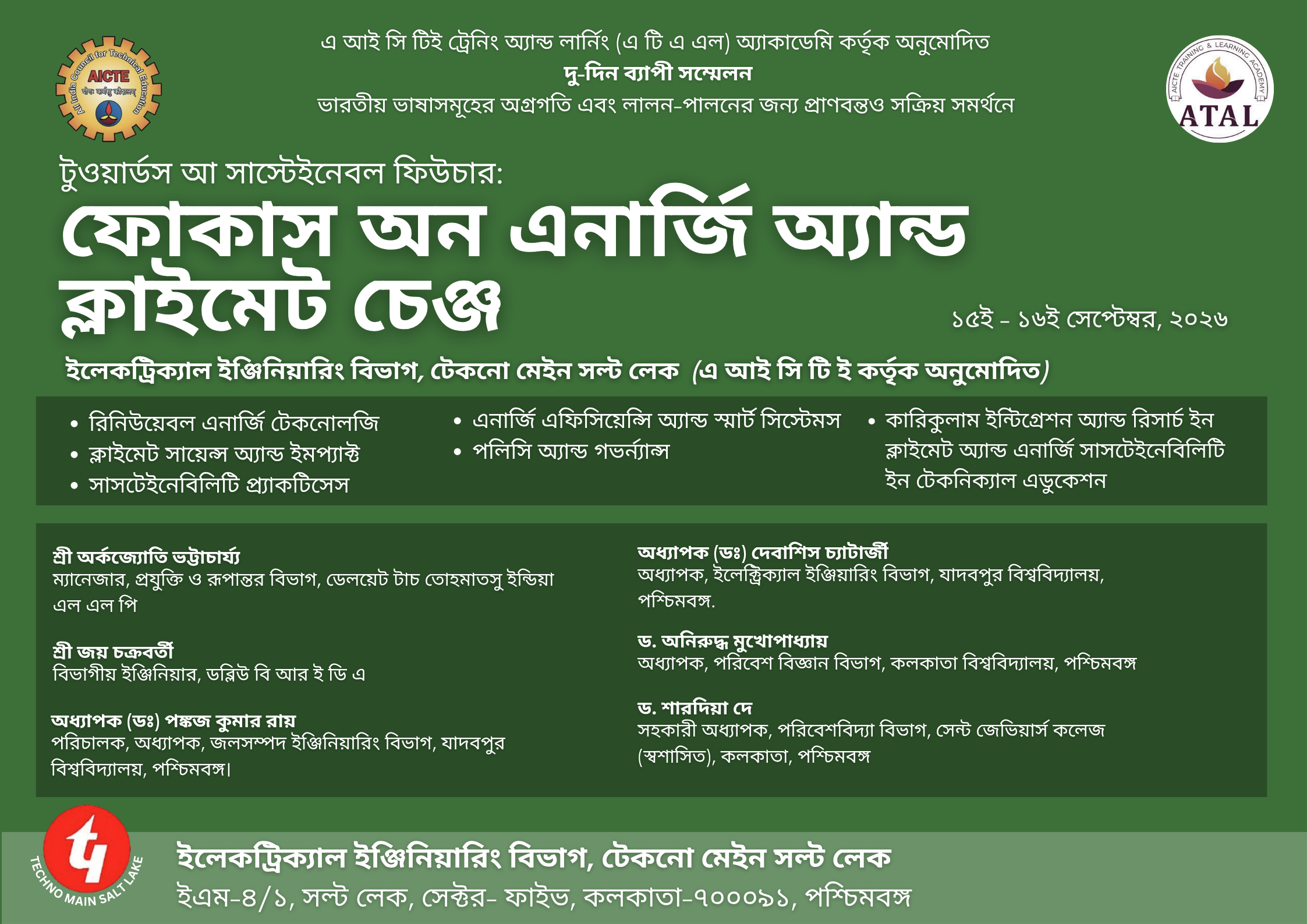
Conducted in Bengali, the programme brought together academicians, engineers and professionals to discuss some of the most pressing challenges surrounding climate change, renewable energy, energy efficiency and sustainable development.
VAANI is an AICTE initiative aimed at promoting the use of Indian languages in technical education and creating opportunities for academicians and professionals to exchange knowledge on emerging areas of science and technology. The TMSL programme reflected this objective by demonstrating how contemporary subjects such as climate science, renewable-energy technologies, smart energy systems and sustainability can be effectively discussed through Bengali while retaining their scientific and technical depth.
The inaugural programme was attended by Prof. Soumitra Sasmal, Registrar, TMSL; Prof. Sujoy Biswas, CEO, Techno India Group; and Prof. (Dr.) Dharmadas Mandal, Dean of Academics, TMSL, Professor Bidishna Bhattacharya, Head of the Electrical Engineering Department, TMSL.
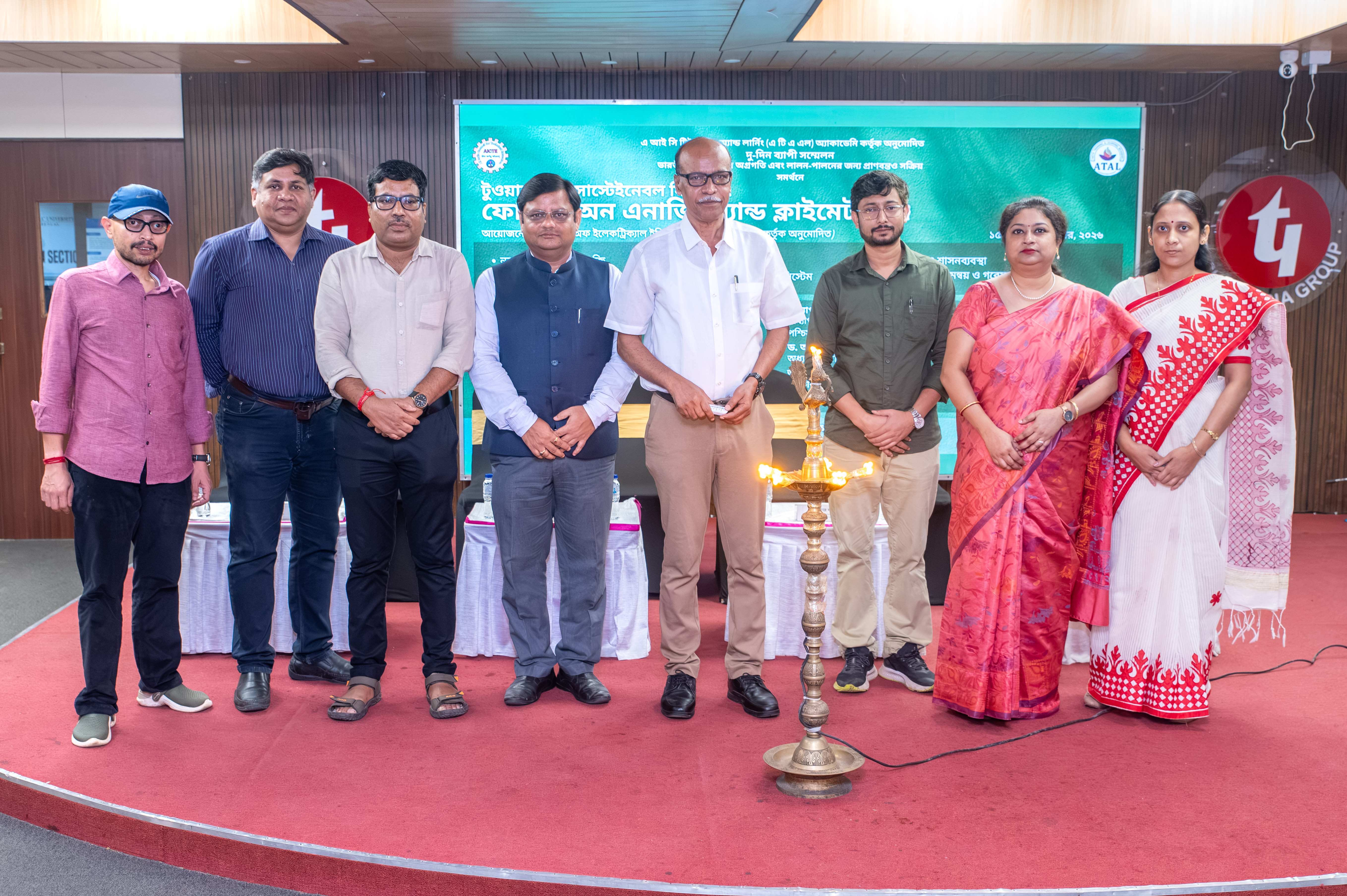
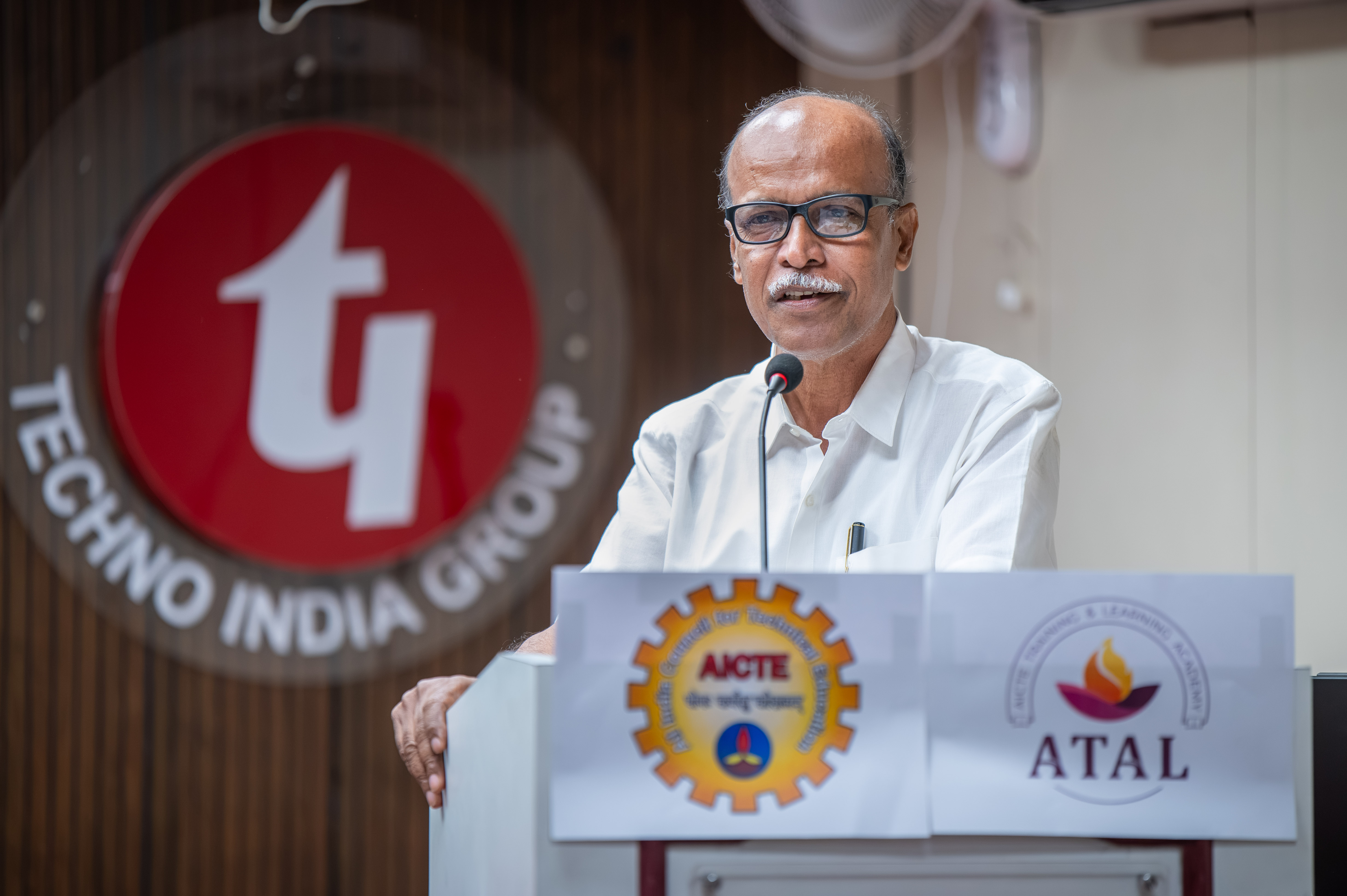
Noted science communicator and museum professional Nataraj Dasgupta joined the programme as Special Chief Guest and shared his views on climate change and the importance of communicating science effectively to society.
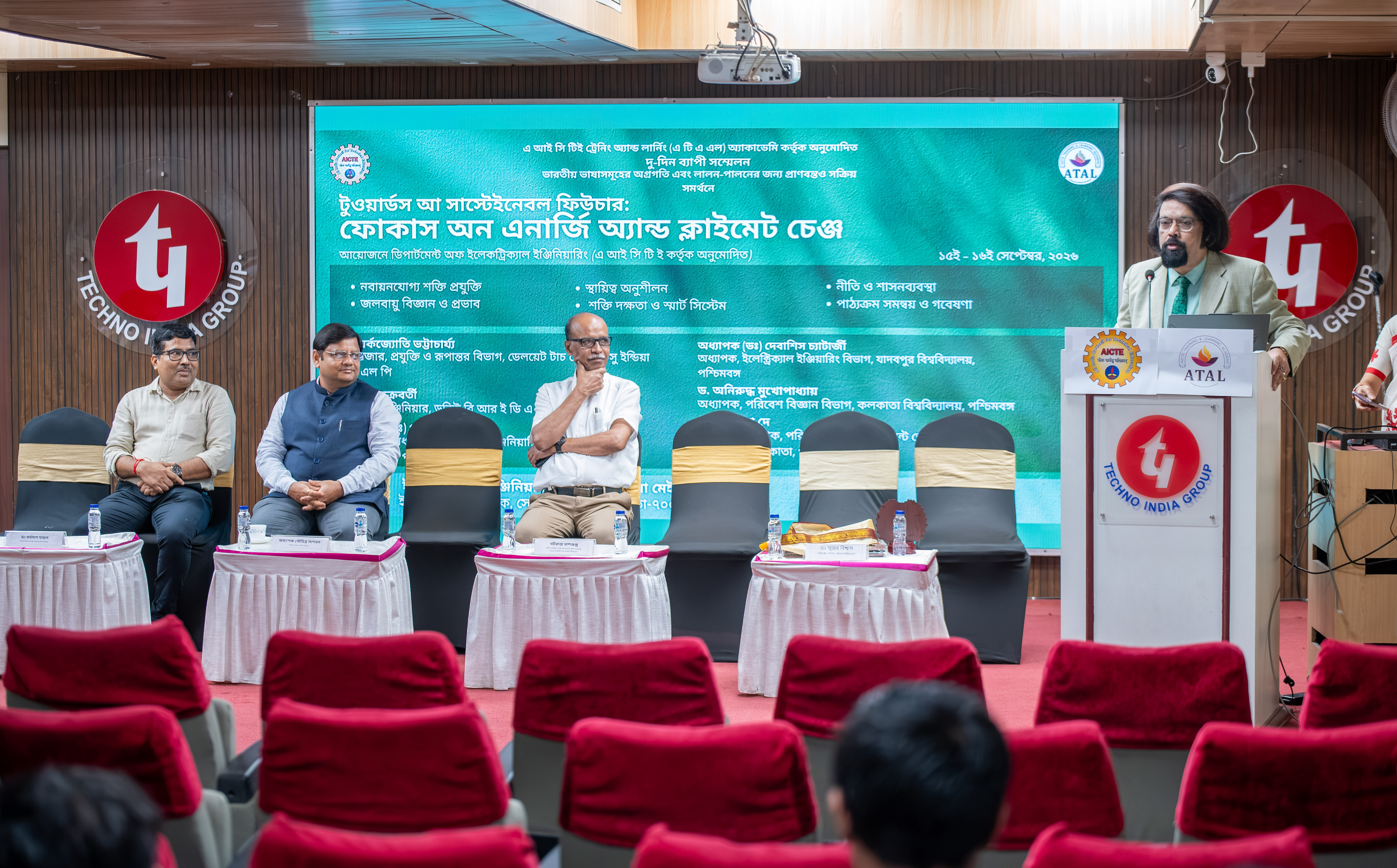
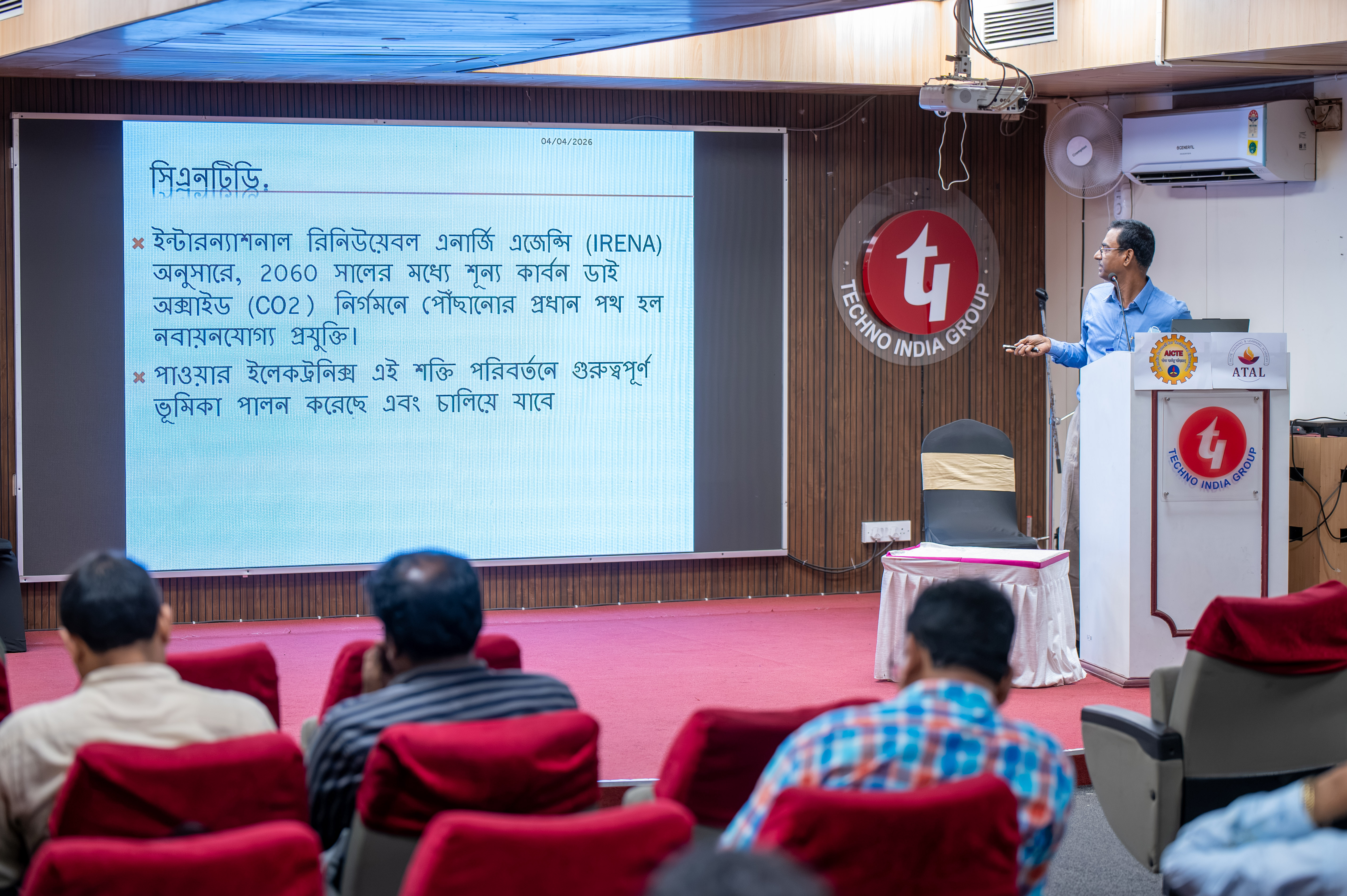
Six expert sessions spread across the two days explored sustainability from complementary perspectives. Dr. Sharadia Dey of St. Xavier’s College discussed the interrelationship between climate science, sustainability and human well-being. Er. Joy Chakraborty of WBREDA examined India’s renewable-energy prospects and strategies for reducing carbon emissions, including emerging possibilities in rooftop solar, electric mobility and smart energy technologies.
Prof. Debashis Chatterjee of Jadavpur University provided an engineering perspective on renewable-energy technologies, focusing particularly on grid integration and the challenges of integrating renewable sources into weak electrical grids. The discussion covered wind-energy conversion, power-electronic interfaces, power quality and techniques for mitigating harmonics.
On the second day, Er. Arkajyoti Bhattacharjee of Deloitte Touche Tohmatsu India LLP discussed energy efficiency and smart systems, highlighting the growing roles of smart grids, smart metering, digitalisation, IoT, Artificial Intelligence and data analytics in the evolving energy ecosystem.
Prof. (Dr.) Pankaj Kumar Roy of Jadavpur University focused on integrating climate and energy sustainability into technical education. He emphasised the need to develop “climate-ready” and “energy-literate” engineers and advocated connecting classroom learning with real-world sustainability problems, research, industry and society.
The concluding technical session by Prof. (Dr.) Aniruddha Mukhopadhyay of the University of Calcutta brought the discussion back to nature and individual responsibility. Connecting climate change with sustainable development, ecological footprints and Mission LiFE, he emphasised practical principles such as Reduce, Re-use, Recycle, Restore and Re-think.
Together, the sessions conveyed an important message: addressing climate change requires more than technological advancement alone. It calls for changes in the way energy is generated and consumed, the way engineers are educated, the way scientific knowledge is communicated, and ultimately the way individuals and societies interact with nature.
The programme was coordinated by Dr. Jayanti Sarker (Bhattacharjee), with Dr. Nilanjan Patra serving as Co-Coordinator from the Department of Electrical Engineering, Techno Main Salt Lake.
By bringing contemporary discussions on climate, energy and sustainability into Bengali, the VAANI programme also demonstrated that language need not be a barrier to advanced scientific discourse. Rather, Indian languages can become an effective bridge between technical knowledge and a wider section of society—an idea particularly relevant when challenges such as climate change ultimately concern everyone.