Tales of the Elephant
Gautam DuttaCategory: Article
Date of Publication: July 30 , 2026
The Astonishing Intelligence of the Elephant
Recently, a video clip has been circulating widely on WhatsApp. It shows an elephant skillfully using the tip of its trunk and its feet to pick up and throw away an electric fence that had been erected to keep it out. Although all viewers enjoyed the clip, they were also astonished; many remarking on “the intelligence of elephants.” And indeed, it is astonishing! The elephant is an animal that roams through the forests. Its eyes are positioned in such a way that it cannot easily see directly in front of its trunk. If attacked from behind, it can not swiftly turn its massive body and retaliate or launch an instant counterattack. But, while moving through the winding paths of the jungle, it rarely collides with trees despite its enormous size and bulk, and also takes care of each tidbits happening around. Where does such intelligence come from?
Its immense body is matched by an equally remarkable mind. Its intelligence is not merely instinctive; it is shaped by memory, experience, social learning, sometimes sense of improvisation and emotional bonds. Beside possessing an intricate mind, remarkable powers of memory, it has an impressive capacity for adaptation as well. This combination of strength, wisdom, and sensitivity makes the elephant one of the most extraordinary creatures in the natural world.
The elephant is the largest living land animal. It belongs to the order Proboscidea and the family Elephantidae. They are found mainly in the continents of Africa and Asia and their range extends across sub-Saharan Africa, South Asia, and Southeast Asia. They inhabit savannas, deserts, marshlands, and wetlands and prefer to live in social groups (in herds). They are herbivores. An adult elephant stands tall, reaching heights between 2.50 to 4.00 metres (8 to 13 feet), and its immense body may weigh anywhere from 2,000 to 7,000 kilograms. Yet its magnificent structure has proved to be the elephant's greatest misfortune also.
The elephant and the forest have been inseparably associated since time immemorial. Vast stretches of dense woodland, abundant water, and an ample supply of vegetation are indispensable for the survival of these gigantic herbivores. An adult elephant consumes an enormous quantity of food every day. It feeds upon the bounty of nature—grass, leaves, fruits, bark, bamboo, creepers, and the tender shoots of various plants. In many regions, elephants are particularly fond of the leaves and bark of certain trees, including teak and several other forest species. Elephants have long been admired for their intelligence and sensitivity. The elephant's intelligence is also reflected in its feeding habits. It knows the locations of fruit-bearing trees and favoured food plants and remembers them from year to year.
Because of their tremendous appetite, elephants are constantly on the move, travelling great distances in search of food and water. But their migrations are not random; they follow ancient routes that have been used by successive generations over centuries, often called an ‘annual track’ of that herd.
Also, the relationship between elephants and forests is not merely one of dependence. Elephants also play a crucial ecological role in maintaining the health of the forest ecosystem. By dispersing seeds through their dung, opening pathways through dense vegetation, and creating clearings that permit sunlight to reach the forest floor, they contribute significantly to biodiversity and forest regeneration.
The African elephant, in particular, is renowned for its grandeur and strength. Among all elephants, the fully grown male bearing long and symmetrical gleaming ivory tusks has always exercised a peculiar fascination over the human imagination. Such an elephant, commonly known as a tusker, embodies strength, dignity, and an almost regal grandeur—stand as symbols of majesty.
At present, there are three species of elephants:
- African Savanna (Bush) Elephant (Loxodonta africana)
- African Forest Elephant (Loxodonta cyclotis)
- Asian Elephant (Elephas maximus)
These species are distinguished by differences in habitat, diet, environmental adaptations, and certain physical characteristics.
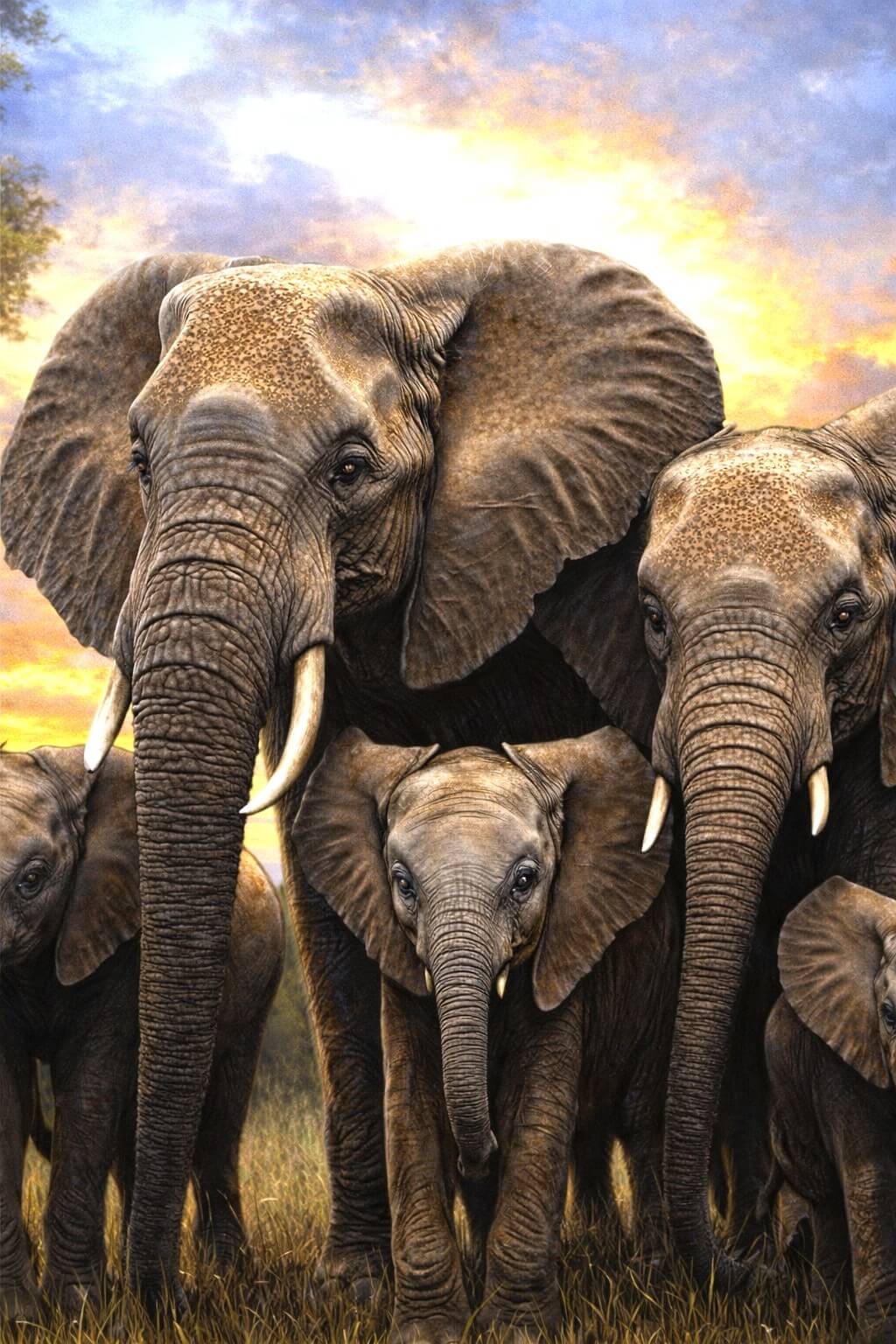
African elephant
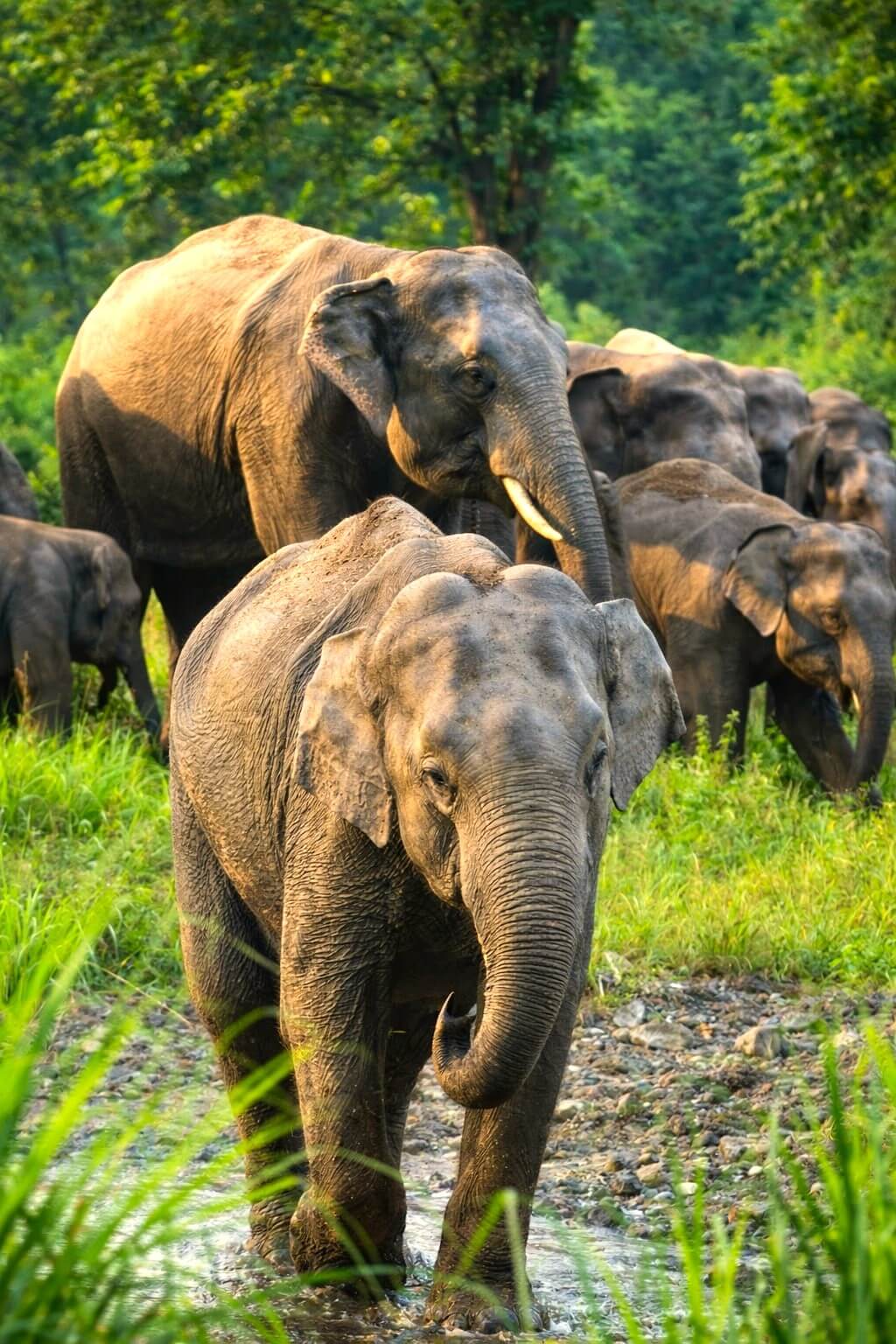
Asian elephant
The elephant’s most notable features include its highly sensitive and elongated trunk, tusks, large ear flaps, pillar-like legs, and thick grey skin measuring approximately 2.5 centimetres in thickness in most part of its body.
The trunk is one of the elephant's most remarkable organs. It is used for drinking and feeding and is capable of grasping even the smallest objects with astonishing dexterity. An elephant can draw nearly eight litres of water into its trunk in a single intake and can even lift heavy tree trunks in the forest. The trunk is composed of nearly 150,000 muscle fascicles, making it an extraordinarily sensitive and powerful organ; can lift up to 250 kilograms. At the tip of the Asian elephant's trunk there is a single finger-like projection, whereas the African elephant has two such projections. These serve as delicate grasping devices and function almost like fingers.
Incidentally, because the elephant can employ its trunk almost as though it were a hand, the animal is known in Bengali as Hati, in Sanskrit and classical Indian literature by names such as Hasti, and Kari. It is also known by other traditional names such as Gaja and Kunjara.
Tusks, Dentition, and the Tragedy of Ivory
The tusks of the elephant, known in Bengali as Gajadanta, are not ordinary teeth but transformed incisors, grown into powerful tools that serve both beauty and survival. These are permanently growing upper incisors that emerge from the skull, powered by a pulp cavity that supplies tissue, blood, and nerves. In the course of evolution, these incisors gradually elongated and projected outside the mouth, ultimately becoming the formidable tusks that are one of the most distinctive characteristics of the species. The tusks continue to grow throughout an elephant's lifetime. In some individuals, they may reach more than one and a half metres in length. In African elephants, the tusks can even grow up to three and a half metres long.
An elephant's dentition is quite unusual. They possess teeth in both their upper and lower jaws. In addition to the tusks, they possess large grinding molars that are adapted for crushing and masticating coarse vegetation. It has a total of 26 teeth including the tusks. Of these, 24 molars (12 are premolars and 12 are comparatively small molars), split evenly with 12 in the upper jaw and 12 in the lower jaw ((p₁, p₂, m₁, m₂, m₃ and m₄ on each side of both jaws). At any given time only four molars are functional – one on each side of the upper and lower jaws. Unlike humans and most mammals where teeth push out older ones from below, elephant molars are oriented horizontally. New enormous molars, which can measure up to 30 cm long and weigh up to 4 kg, grow at the far back of the mouth and move forward, in unique ‘conveyor belt’ system, to push out the older worn-out teeth. The surface of these molars features a series of parallel ridges. While crushing and grinding highly fibrous and tough vegetation, they meet at these matching ridges to complete the chewing function perfectly.
Every day, an elephant spends nearly 16 to 20 hours chewing grass, leaves, fruits, bark, bamboo, creepers, and the tender shoots of various plants. An adult’s consumption is roughly 150 to 170 kilograms of vegetation every day beside up to 190 litres of water. As described above, when the front teeth wear out, the teeth behind them move forward and new grinding teeth develop at the rear. In this way, the process continues throughout the elephant's life, a total of six times, and the grinding of food proceeds gradually. When the final set of molars is exhausted, the elephant often becomes incapable of feeding properly and may eventually succumb to starvation.
Interestingly, in African elephants both males and females may possess tusks and become tuskers. In Asian elephants, however, only some males have such large tusks. Some individuals have only small vestigial tusks or none at all. Tusky male elephants are popularly known as "dantal" (tuskers) in some Indian states including Bengal. The tusk serves many purposes. It is employed in digging for water, stripping bark from trees, uprooting vegetation, lifting and moving heavy objects, and defending the herd against enemies. During the mating season, tusks also become important weapons in contests between rival males. Otherwise, they are not of much use. The tusks emerge as protection of the trunk, as well. Just as the antlers are the principal ornament of a deer, so too are tusks, the distinctive adornment of an elephant. Side by side, in today’s world, as “a deer’s own flesh is its worst enemy”, so is “an elephant’s tusks are its own worst enemy”!
For centuries, human greed for ivory has led to the merciless slaughter of elephants. Ivory has been fashioned into ornaments, religious objects, decorative carvings, piano keys, knife handles, chess pieces, and innumerable luxury articles. The illegal trade in ivory has driven elephant populations to catastrophic decline in many parts of the world. According to estimates, nearly 90 percent of Africa's tusked elephants have disappeared over the past century—killed by poachers at the instigation of ruthless, profit-driven black-market traders. An elephant's teeth, which evolved as instruments for survival and adaptation, have paradoxically become the principal reason for its persecution by humankind! Similar statistics, though comparatively lower, are also found in Asia including India.
The situation of the African forest elephant has been especially alarming. Studies have indicated that the number of forest elephants declined by more than eighty-six per cent over a period of thirty-one years, and today they are believed to occupy only about one-quarter of their former historical range. The reason(s) I will explain later in this article. This tragic reduction is not merely the loss of an animal species; it represents the gradual disappearance of one of the most intelligent and ecologically significant creatures on Earth.
In India, however, elephants increasingly come into direct conflict with humans because of deforestation, expansion of human settlements, obstruction of elephant migration routes, the spread of railway lines through forests, and similar factors. Although amendments to wildlife protection laws and administrative measures have somewhat reduced elephant mortality, the atrocities committed by poachers continue unabated.
Here in, I shall speak of my own experiences regarding this matter soon after. Current estimates suggest that only about 415,000 African elephants remain alive today, while the population of Asian wild elephants is estimated to be only 48,000 to 52,000.
We have known since childhood the saying, "Ears like an elephant's winnowing fan." We also learned in school that an elephant's large ears help regulate its body temperature and aid in communication.
The ears of the African elephant are very large, resembling the shape of the African continent itself. Its forehead is somewhat concave. In contrast, the Asian elephant has comparatively smaller ears, somewhat resembling the map of India, and its forehead is raised or convex. Elephants communicate by touch, sight, smell, and sound. Also, they use infrasound and seismic communication over long distances.
It has already been mentioned that, elephants are social animals that live in herds. The social organisation of elephants is equally fascinating. A herd is usually led by the oldest and most experienced female, known as the matriarch. She dictates the herds movement, resolves conflicts, remembers migration routes, locations of water, and areas of danger and, through her experience, guides the entire group to safety. She also teaches younger generations how to survive. The survival of the herd often depends upon her memory and judgement.
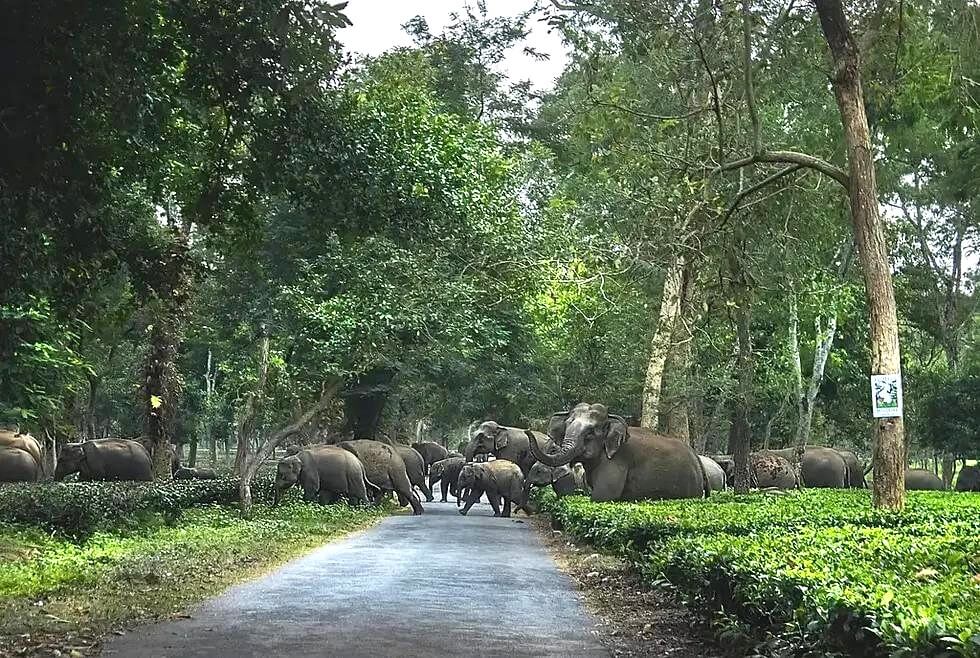
Elephants are social animals that live in herds, being led by the matriarch
The herd consists of 5 to 20 related females (mothers, sisters, aunts) and their young calves. In the centre of the herd, the mothers keep the calves protected. As the calves grow older, they take their places along the outer edges of the group. Once male calves reach puberty (Adolescence) at around 10 to 15 years old, they leave their maternal herds. This natural process prevents inbreeding. Adulthood reaches by age 20. It is characterized by deep family bonds and leadership for females. Adult males generally live solitary lives or form loose, temporary “bachelor groups”, led briefly by an older experienced Bull. On the other side, female calves reach sexual maturity at around 10-12 years for African elephants and 14 for Asian elephants, and begin taking interest in caring for newborn calves, a practice called ‘allomothering’ to prepare for motherhood. The females remain with their mother’s matriarchal herd for life. Males only briefly rejoin female herds for short periods during the breeding season when looking for a mate. They enter a state of increased testosterone and aggression known as musth, which help them gain dominance over other males as well as reproductive success.
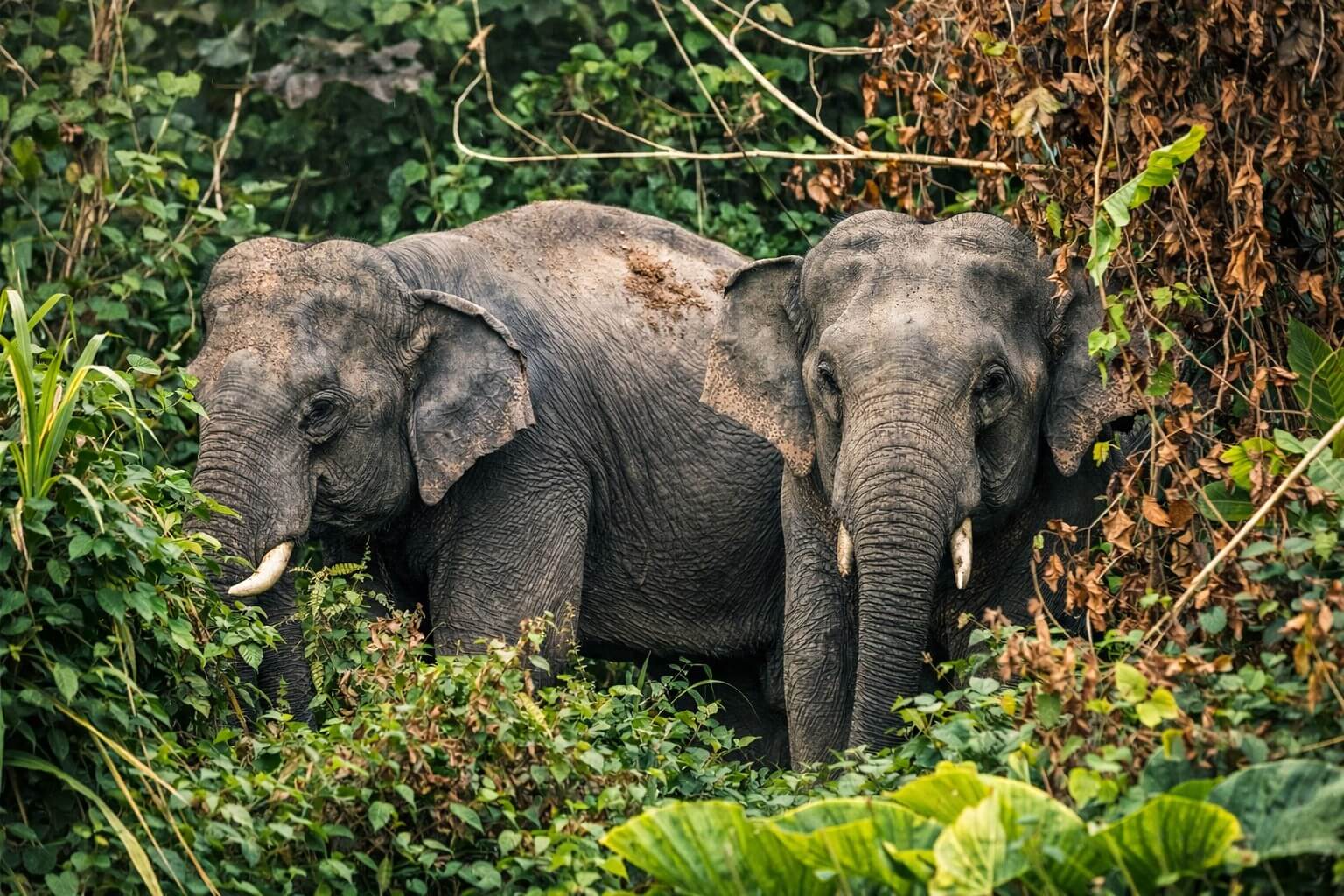
"Bachelor groups", led by an older experienced Bull
At this stage, I want to make one point clear as there is some confusion prevailing. Elephant societies are strictly matriarchal and hence, in a traditional elephant family herd, a male tusker can not become a leader. But then, while a male tusker will never be the matriarch of a family unit, adult male elephants do occupy distinct leadership roles in other aspects of elephant society, namely, 1) Bachelor group leadership, 2) Temporary dominance over family herd during the breeding season in musth state, and 3) In case of ‘Rare exceptions’, such as, while guiding large congregations, a dominant large male might briefly take charge of the gooup’s movement during critical moments and like these. But they never become a contestant against the ‘Matriarch’.
A tuskless male elephant is called a "makhna." Such males can remain hidden among the females and are capable of reproduction.
The gestation period of an elephant is approximately twenty-two months, one of the longest among mammals. A newborn calf may weigh up to 120 kilograms. Within only twenty minutes of birth, it is able to stand, and within a few hours it begins to walk. In a matter of two days, it starts accompanying the herd. Calves are the centre of attention in their family groups and rely on their mothers for as long as three years. Elephants attain adulthood between 15 and 20 years of age. Their average lifespan is 60 to 80 years, generally up to 70 years in the wild.
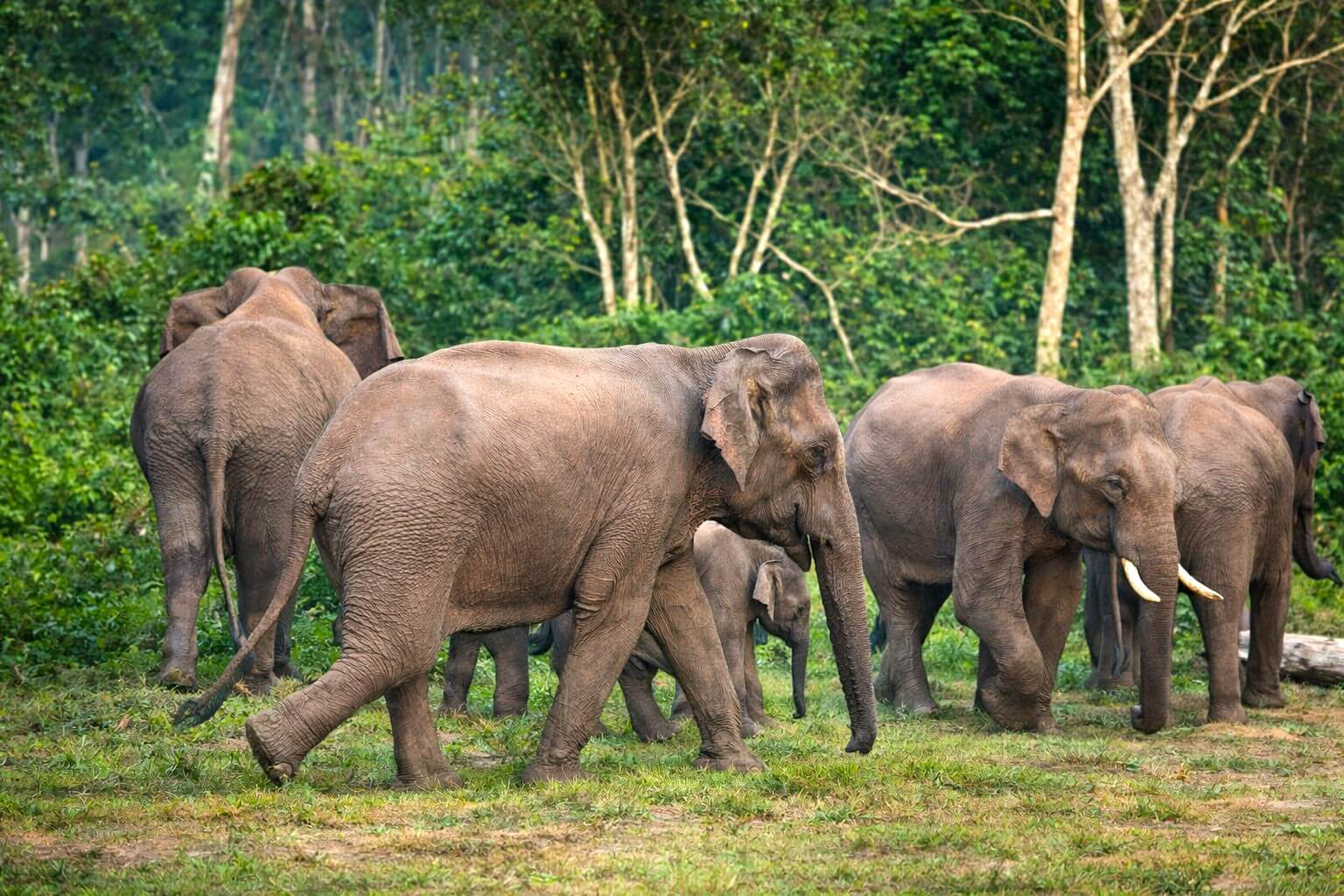
Calves are the centre of attention in their family groups.
A fully grown elephant weighs between six and seven tonnes (sometimes more in the case of African elephants and somewhat less in Asian elephants, even lesser in case of Borneo’s pigmy elephants) and stands about up to four metres (13 feet) tall. Reccord says that the largest elephant was an African bush bull that weighed a massive 10,886 kilograms. However, an elephant cannot jump. They are the only land mammals physically unable to get all four feet off the ground at the same time because of their massive weight, leg-structure and the absence of the flexible, spring-like tendons required to push off the ground. But they are capable of moving swiftly, reaching speeds up to 40 kilometres per hour.
The final set of grinding teeth generally grows when it gains about 60 years and wears out when the elephant reaches old age. Once these teeth are lost, the elephant can no longer eat. Gradually it becomes weak and sinks deeper into old age, and death from starvation becomes inevitable. The elephant itself understands its effect, gets out of the herd and goes deeper into the forest for a peaceful death! For a long time, it was believed that elephants simply died of old age and their remains are not traceable; in reality, the underlying cause lies in this process.
Since 1986, the International Union for Conservation of Nature (IUCN), based in Switzerland, has listed the African savanna elephant and the Asian elephant as Endangered species. The African forest elephant, however, has been placed in the category of Critically Endangered species.
The primary reason for this, as already mentioned, is the depredations of poachers seeking ivory. Other contributing factors include the destruction of the elephants' natural habitats, conflicts with local people, and developmental activities such as the construction of railway lines and other infrastructure.
Outside India, the Asian elephant occurs in several countries, including Bangladesh, Bhutan, Nepal, Sri Lanka, Myanmar, Thailand, Laos, Cambodia, Vietnam, Malaysia, Indonesia, and China (Yunnan province). In other words, the distribution of elephants extends from Borneo in the east to western India, and from Nepal in the north to southern Sumatra. This wide range is possible because the region's climate and habitats include grasslands, tropical evergreen forests, mountain forests, and many other suitable ecosystems. Although they share many behaviors with Indian elephants, some populations exhibit particularly interesting and unusual traits. Such as, Bornean elephant is often described as unusually calm and less aggressive than many mainland populations; while Sri Lankan elephants are not that calm but they do undertake extensive seasonal movements in response to rainfall and vegetation and gather in large numbers during the dry season. The phenomenon is known as The Gathering, where hundreds of elephants congregate around a shrinking reservoir and they maintain high levels of social interaction among unrelated groups. The Gathering is considered as one of the world's largest assemblies of Asian elephants. In Thailand and Laos, the Asian elephant has been declared the national animal.
Asian elephants are generally lighter than African elephants, weighing about 4.50 to 5.50 tonnes, while the same for Bornean pigmy elephants (one of four sub-species of the Asian Elephant, total population about 2050), it is even less, generally 2.00 to 2.50 tonnes for an adult. But, all of them possess a highly developed and remarkably large neocortex in their brains. As a result, the Asian elephant is exceptionally intelligent. They are capable of displaying behaviours associated with self-awareness, learning ability, greeting rituals, and even the expression of grief. Because of these qualities, Asian elephants have been domesticated and employed by humans for economic activities—and even in warfare—for a very long time. Evidence of this antiquity can be found in seals of the Indus Valley Civilization, more than three thousand years old, where representations of elephants have been discovered. The depictions suggest that elephants had already been domesticated in those days.
The Elephant's Mind and Memory
When we speak of intelligence among animals, the elephant invariably occupies a place of honour. Popular wisdom across many cultures has long held that an elephant never forgets. Although this saying may appear somewhat exaggerated, scientific observations reveal that the elephant indeed possesses an extraordinary memory and highly developed cognitive abilities.
The elephant's brain is the largest among all terrestrial animals. An adult elephant's brain may weigh between four and five kilograms. More significant than its size, however, is the complexity of its structure. The neocortex, the region of the brain associated with higher cognitive functions, is exceptionally well developed.
Because of this advanced neurological development, elephants demonstrate a remarkable range of behaviours:
- They can remember routes, water sources, and seasonal migration paths over vast distances.
- They are capable of recognising individual members of their herd even after long periods of separation.
- They display complex social relationships and appear to possess an awareness of kinship and hierarchy.
- They learn from experience and can solve practical problems through observation and experimentation.
- They can recognise danger, distinguish between friend and foe, and alter its actions according to the situation before it.
- They may avoid a place where it has previously encountered danger or return to a location where it once found food and water. And also,
- They are highly receptive to music; harmonious sounds and classical melodies can visibly calm them, lower their stress levels, and prompt them to sway along.
Their intelligence has enabled them to survive for millennia in changing environments, and they remain one of the most fascinating beings in the natural world.
Researchers have also observed behaviour that suggests empathy and emotional sensitivity. Injured or distressed members of a herd are often assisted by others. Calves are protected collectively, and adults have been seen waiting for weaker companions rather than abandoning them.
One of the most striking aspects of elephant behaviour is their response to death. Elephants have frequently been observed lingering near the remains of deceased companions, touching the bones gently with their trunks and displaying behaviour that many scientists interpret as a form of mourning. Although it would be unscientific to attribute human emotions to them without caution, these actions undoubtedly indicate a deep and complex emotional life.
James Howard Williams, CBE (1897–1958) was a British soldier, forester, and writer who became famous for his work with elephants in Burma’s teak industry. And later, during World War II, he combined forestry expertise with military service, using elephants for both timber extraction and wartime logistics. During wartime, his elephant corps eventually numbered over 1,600 animals, proving more effective than mechanized transport in Burma’s jungles.
He described elephants refusing work or showing resentment when mistreated, as a sign of their intelligence and memory. The most relevant sections are in his authored books named Elephant Bill (1950) and Bandoola (1954), where he emphasizes about how elephants’ insistence on rest for a day after every six‑day work cycle, and their ability to remember unfair treatment.
Key Passages from Williams’ Books
Elephant Bill (1950)
- Williams recounts that elephants in the teak industry were traditionally given one rest day after six days of hauling logs. He notes that elephants “would remember the rhythm of their work and grow restless or obstinate if denied their day of leisure.”
- He describes incidents where elephants refused to move logs or became “sullen and uncooperative” if handlers tried to overwork them.
- A memorable anecdote: an elephant, after being mistreated, later ignored commands from the same handler, showing what Williams called “a long memory for injustice.”
Bandoola (1954)
- In this biography of his favorite elephant, Bandoola, Williams highlights the animal’s discipline and intelligence. He notes that elephants “knew the difference between fair work and exploitation,” and that Bandoola himself would stop working if pushed beyond routine.
Williams stresses that elephants were partners, not machines, and that mahouts respected their need for rest. He recalls that elephants “would not tolerate being driven like cattle,” and that their resistance was a form of protest rather than aggression. Williams provides first‑hand evidence that elephants remembered routines, resisted mistreatment, and demanded humane treatment. Williams is remembered as a pioneer of humane elephant management, emphasizing respect, rest cycles, and partnership rather than exploitation.
The elephant's remarkable memory and intelligence have been demonstrated by thousands of examples. Equally extraordinary is its maternal instinct. My friend Cherian from Kerala, a member of the Catholic order and was my companion during the HMI's Advanced Mountaineering Course in October–November 1981. He told me of a region of North Bengal, where about twenty-five thousand Catholic tribal people lived under his pastoral care. It was an area frequented by elephants. The incident he described reveals the extraordinary maternal instincts of elephants.
One night, with several of his relatives who had come to visit him from Kerala, they were sitting quietly on the upper veranda of a two-storeyed forest bungalow adjacent to the local forest officer's office, hoping to see elephants. A special feature of the bungalow was that a salt pit had been created just beside by the Forest Department to attract wild animals there. Various animals regularly visited the salt pit to lick, and elephants also came there frequently.
About three feet above the ground, a large tub made of burnt earth (locally known as Mechla) was kept in the extended salt pit. That day, a bulk of cut pieces of banana plant mixed with salt had been kept there. Toward evening, a familiar scot-free bull (Ox) from the area arrived and began eating from the tub. But shortly afterward, a large female elephant appeared, accompanied by her charming little calf.
The bull stepped aside to one side of the tub, while the mother and calf moved to the other side. The calf initially went to its mother's side, but after a moment wandered away. As the bull suddenly moved its head, the calf was struck by one of its horns and cried out in distress.
The mother immediately reached out with her long trunk and pulled the calf close to her. She said nothing, although she was clearly angry. Perhaps because the horn had merely touched the calf lightly and the hit was soft, the little one was not seriously hurt.
But when, a second time, the calf was accidentally struck again by the horn, the mother elephant completely lost her temper. She seized the bull with her trunk, flung him some distance away, and then, lifting her front legs, stamped upon his body.
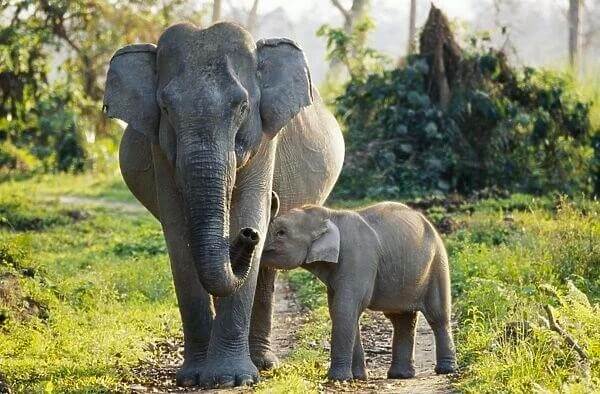
A mother elephant tolerates no interference whatsoever with her offspring
That is why I always say: never try to pamper someone else's child, however affectionate your intentions may be. A mother elephant with a young calf tolerates no interference whatsoever with her offspring. Even if you act out of genuine affection, the mother may misunderstand your intentions. In case the elephant is a tamed one, it trusts her mahout only, none others—it does not trust you.
During the eighties of the last century, I conducted several adventure training camps for children in the Jayanti–Buxa forest region of Alipurduar, North Bengal, which were organised by Kanchenjungha Foundation of Kolkata. Sri Indranath Mukherjee, a veteran with high level organizational acumen, was a regular partner of mine in all such ventures. The forests of Jayanti and Buxa have long been home to elephants. Their movement in herds through the dense greenery, their slow yet purposeful steps leaving deep impressions on the forest floor are both majestic and awe inspiring. The silence of the jungle is broken only by the rustle of leaves, singing of birds, sound of running streams, and the occasional trumpet of an elephant. Local people speak of encounters—sometimes peaceful, sometimes tense—when elephants approach villages in search of food. In certain years, their presence has been more frequent, reminding the fragile balance between human settlement and wild habitat. Conservation efforts have tried to safeguard these magnificent creatures, yet challenges remain. The elephants of Jayanti and Buxa are not merely animals of the forest; they are living symbols of nature’s grandeur and resilience. To witness them in their natural surroundings is to feel both humility and reverence.
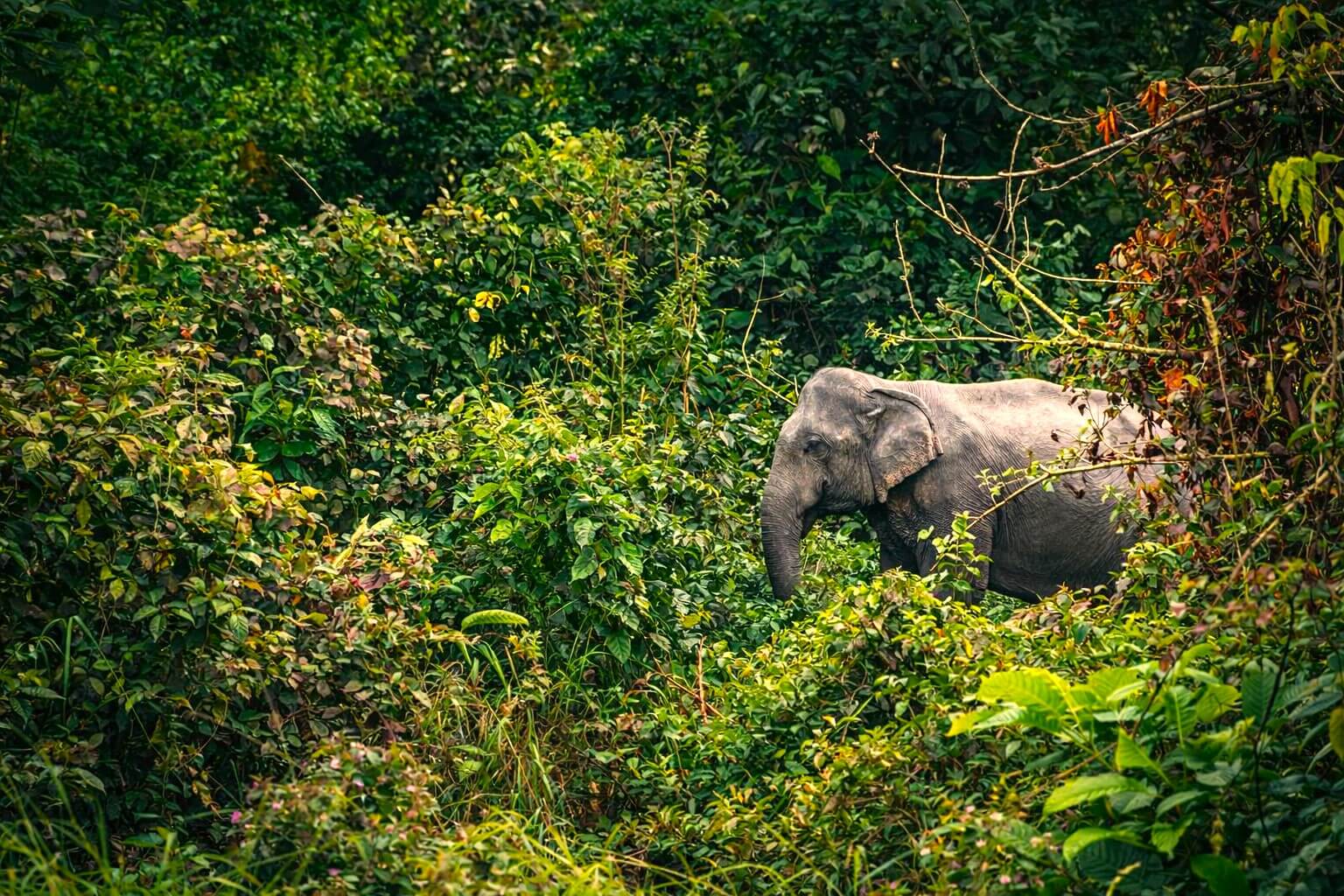
Elephants move very silently in the forest
From Jayanti, we would proceed through the jungle to Buxafort and, on the way after crossing a hill stream, visit the Mahakal Cave Temple. After spending the night at Buxafort, we would return to Jayanti the next day by the same route through the forest. On every camp I made it a point of taking this jungle trail, the way I used to conduct a jungle trail trek from Mathaburu to Ajodhya Top at Purulia for the children in adventure training camps when organised there. On one such occasion, late in the afternoon, I had come across signs of elephants. Therefore, I was driving the trek-walk of the greenhorns rather hurriedly.
In fact, to locate elephants in the jungle one has to be very observant. Fresh dung, signs of trees and saplings having been just damaged, and similar indications reveal their presence. As elephants spend almost the entire day eating, during their silent movement, the sound of breaking branches and leaves, and, when one is very close, the distinct smell of their bodies, are special signs that cannot be missed by an experienced observer.
Fortunately, my team and I had escaped a dangerous encounter with these elephants by only a few minutes. Because, within an interval of about five minutes after we crossed the last village, as it were, those elephants just chased the village and strampled one Adivasi village woman to death!
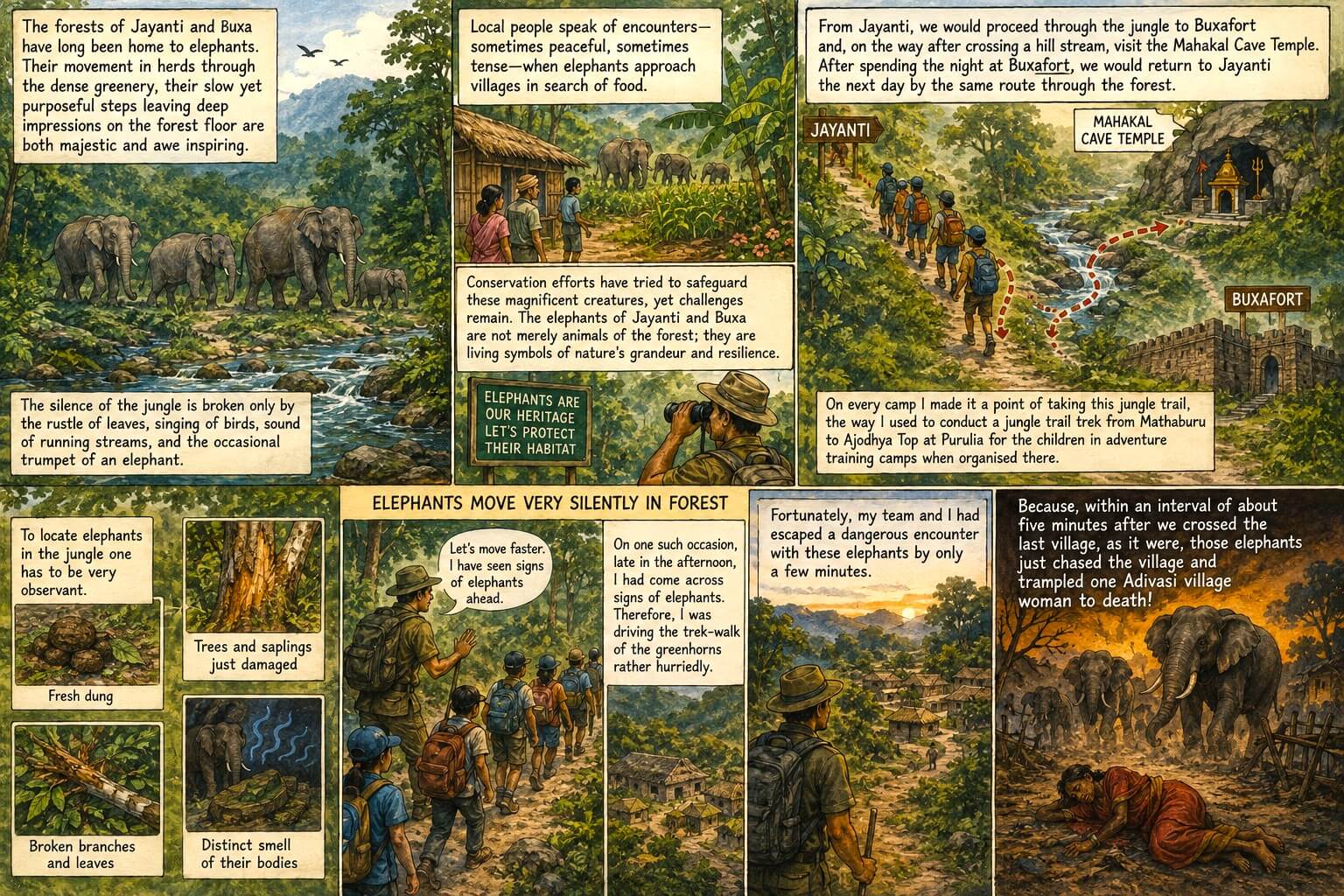
An illustration of the incidents faced at Buxafort to Jayanti jungle trail
Only a few months ago, on Sunday, 26 January 2025, while writing this, on a single day in Buxaduar forest, I had encountered two herds of elephants. One herd, though partly visible, remained almost hidden within the dense vegetation of the forest. I could not determine their exact number, but I estimated there were about fifteen or sixteen of them. The other herd consisted of only eight elephants, including two calves.
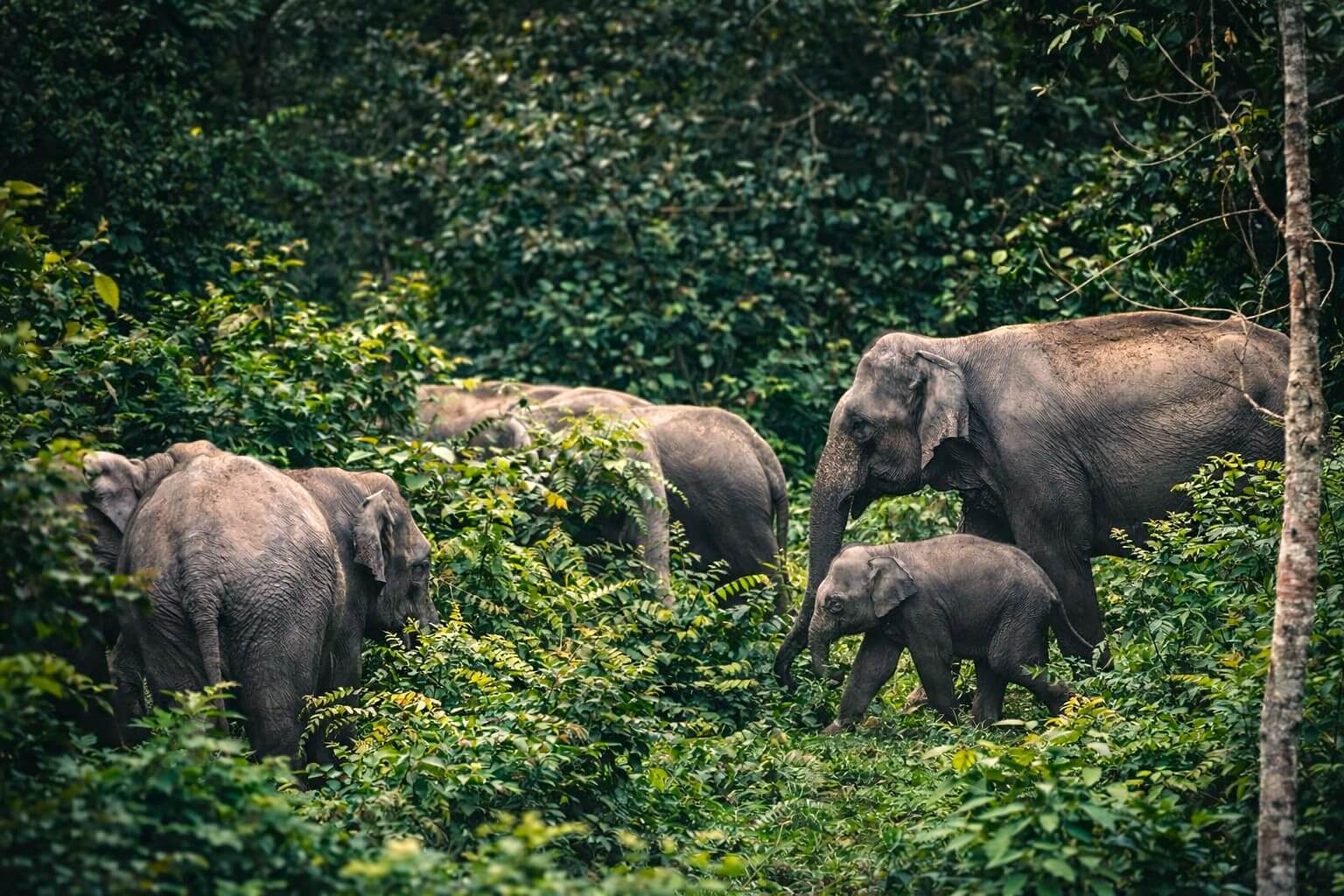
Buxa Herd -1
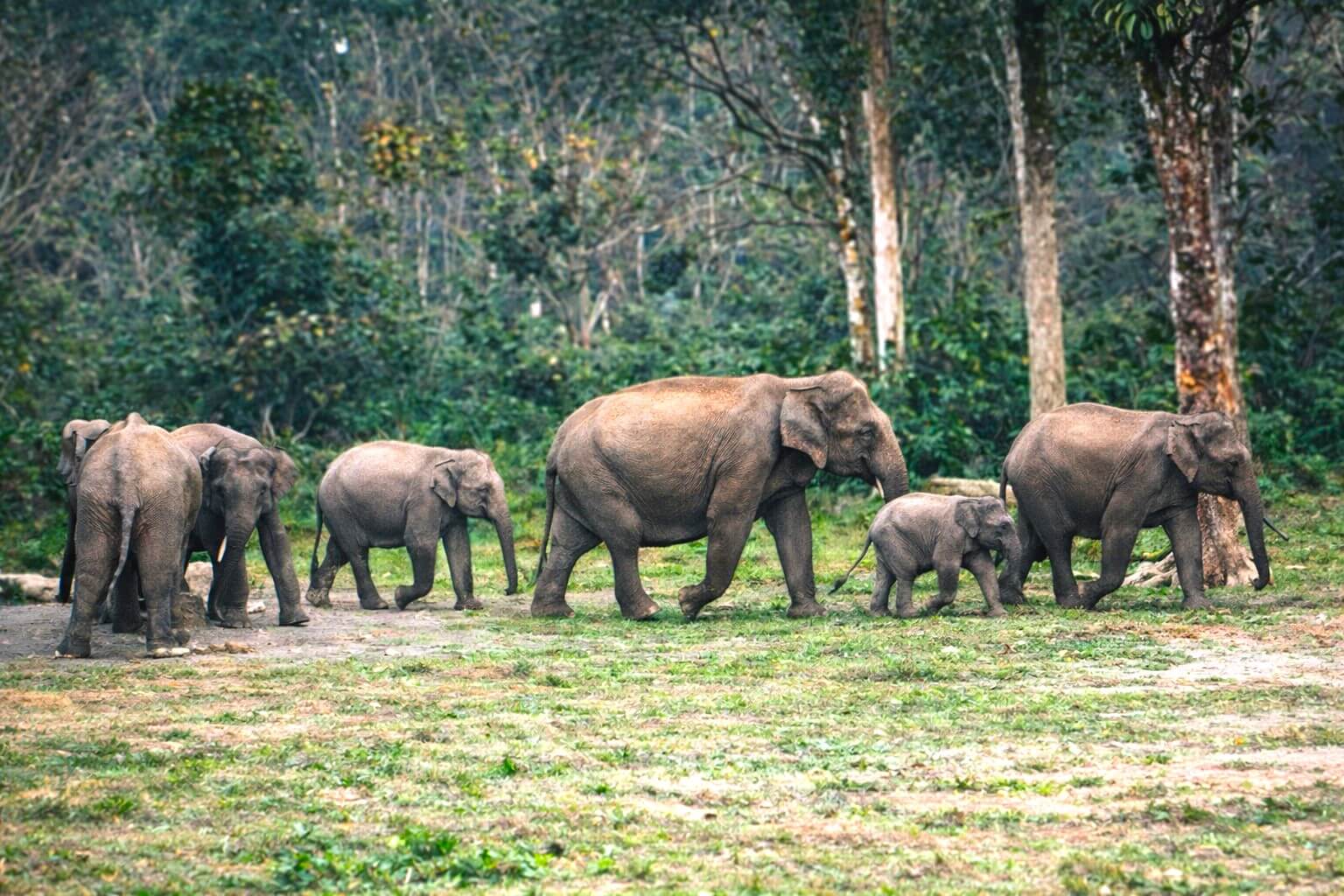
Buxa Herd -2
However, an incident from the 1970s in the Jayanti–Buxa range may perhaps illustrate the extraordinary memory and mental faculties of elephants.
Once upon a time (from 1901 to 1986, spanning from the British era onwards), a narrow-gauge railway line ran from Rajabhatkhawa to the edge of Jayanti’s dense teak forest. Its primary purpose was the transportation of dolomite and teak timber. Teak (Tectona grandis) is a tropical deciduous tree that grows up to forty meters (around 120–130 feet) tall. Its wood is extensively used for home furniture, house construction, and similar purposes—and because of its exceptional durability, it has always commanded a high price.
Elephants are highly social animals. During the mating season, two sexually mature elephants usually leave the herd and retire to a secluded place near a water source in the forest, where they engage in courtship before mating.
At one such time, when the female elephant had rested her head upon the railway track and was perhaps in a state of affection, a local engine unexpectedly came along that very track. Ordinarily, locomotive drivers stop when they see elephants on the track. The elephants, too, are accustomed to seeing the engine driven rakes passing through the jungle. But this driver, perhaps careless, drove the engine straight over the elephant despite seeing it in that condition.
The male elephant had fixed his gaze upon the driver at the very moment he had run over his companion, and he had retained his scent in his memory. It is said that from that day onward, that very driver could never again take an engine along that track. Whenever it (the elephant) heard the sound of an approaching engine, the enraged male elephant would rush over the track. The driver would stop the engine and, if he saw another driver in operation, allowed the engine to pass; otherwise, he would not leave the track.
The driver out of fear took a long leave! Yet then, that very driver could never take an engine along that route! But the elephant could not take his revenge as it couldn’t pierce through the thick steel sheet of the loco-engine…... Among various tribal communities, elephants are respectfully addressed as "Ganesh”, as if they are the representatives of hindu God ‘Lord Ganesh’. The driver, realizing this, spent another period in anxiety and illness; even his periods of illness and convalescence were overshadowed by the fear that the elephant might still be waiting for him.
Indeed, he was.
From the very day of the incident, the male elephant had remained in the vicinity of the railway track only. After nearly six months had passed, the driver finally left his railway duties. But, one day, after coming out of the forest, the elephant reached the outskirts of the town of Alipurduar, located the driver's house, and killed him there.
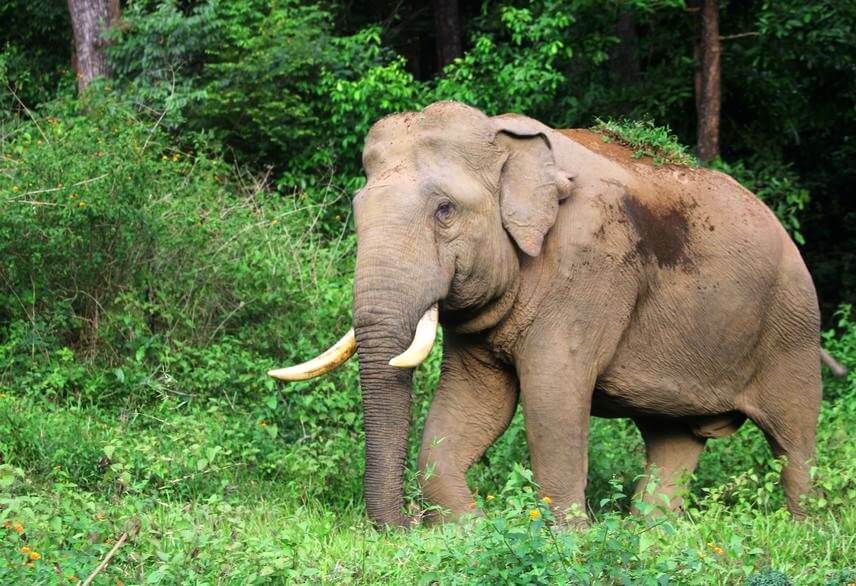
A loan tusker is always unpredictable
This incident is a remarkable example of the elephant's extraordinary memory, its capacity for recollection, and its instinct for retribution. Similar incidents have been reported frequently among African elephants as well. Yet there is another event that deeply moves the human mind and stands as a shining example of the elephant's loyalty, its inexpressible affection, and its profound emotional life.
Who does not know the famous conservationist of South Africa, Lawrence Anthony? Although he was a renowned environmentalist, the wider world knows him best as "The Elephant Whisperer," after the title of his celebrated book on elephants.
He passed away from a heart attack at his home in Johannesburg on 2 March 2012, at the age of sixty-two (born 17 September 1950). For many years he had served as the chief conservationist of Thula Thula Animal Reserve in Zululand, South Africa, and had made outstanding contributions to wildlife conservation, especially to the protection of elephants. He had also done notable work in rhinoceroses’ conservation.
The astonishing fact is that on the very day he died, before the local people had even heard the news of his death, a herd of twenty-one elephants arrived at the rear of his house after walking for nearly twelve hours. They stood there in silent mourning and then quietly departed.
According to reports, every year on 2 March the elephants return to pay their respects and then leave in silence. Many who have spent years among elephants testify that these animals possess remarkable emotional sensitivity and memory.
It is said that Lawrence had once saved this herd from almost certain death, and, over time, had become their friend. Such accounts, whether viewed scientifically or anecdotally, reinforce the impression that the elephant is not merely an animal of immense physical strength but also a creature of deep emotional complexity. The bond between elephants and those who live and work among them often transcends ordinary human-animal relationships and inspires both wonder and respect.
During the 1980s, I regularly conducted rock-climbing practice in various rocksites. I frequently visited places such as Susunia, Joychandi, and the Mathaburu hills region of Bengal. Also, visited Panchalingeshwar and Bangriposhi of Odisha, though less. But the beauty of the Mathaburu forests drew me more than anywhere else, and so I visited Mathaburu most often. From the beginning of December until the end of March, for almost every weekend of those four months, my address generally was Mathaburu.
The word buru means "hill". From 1978 onwards, as I kept returning there, the nature, the forests, every ravine of the Matha Hills, and the surrounding hilltops’ such as Gargaburu and Muraburu (Pakhipahar) gradually became as familiar to me as the palm of my hand. In the same way, I also came to know and grow close to the local inhabitants and the Forest Department staffs of that region.
With Mr. Samir Pal, the Ranger of the Mathaburu Forest Range, Beat Officers Mr. Mukherjee, and Mr. Bhaduri and their families, a kind of kinship gradually developed. During my rock-climbing ventures, our provisions often remained under the care of Mrs. Krishna Bhaduri—our beloved Boudi (elder sister-in-law). There were many occasions when Boudi prepared our dinner and sent it to us, while we spent the entire day at the climbing sites up in the hills. We used to stay at the Ranger’s office premises, initially in tents and later at the Pradip Das Memorial Hut, returning only at night.
Even today, I remember Boudi with great affection. In the gallery of my memories, she sits enthroned with profound reverence. We have had no contact for many years now, and I do not know where she is or how she is.
In January 1986, during the Rock-Climbing Course of JUMHC (Jadavpur University Mountaineering and Hiking Club), at about six o'clock in the morning of the second day, Mr. Samir Pal, along with two or three of his gunned forest guards, came to me carrying a letter. The letter was handwritten by the then Divisional Forest Officer (DFO) of the Purulia Division, Mr. D. Maji.
I had known Mr. Maji for a number of years and had often discussed various matters with him. I had especially noticed his affection for adventurers like us. In every JUMHC course, one hour was set aside for him to deliver a lecture on Nature Conservation. He would invariably arrive at the proper time and take the class.
In his letter he had written:
"Dear GautamBabu,
I am aware that you have got versatile interests. I find myself in a difficult situation now. SamirBabu will explain the entire matter to you. I sincerely hope for your help. Regards —Yours, …...Sign…."
SamirBabu informed me that poachers had shot and killed a tusker in the deep forest at Patdi Beat. They possessed modern firearms, and despite the risk to their lives, our forest guards had managed to capture two of them, alongwith weapons. They are part of a very powerful group operates from Tatanagar. For the submission of concrete proof to Court, Mr. Maji wants to get the bullets from the elephant’s body.
According to the forest guards' report, the elephant belonged to a herd of about thirty animals. Although the herd was thrown into confusion immediately after the killing, it later returned and has since been roaming around and sabotaging the entire area. Three days have passed since the incident, and today is the fourth day; no one now dares to go there.
The veterinary doctor attached to our Forest Department, having considered the possibility of an attack by the elephant herd, has submitted his application for leave for illness. We have also failed to persuade one of the local veterinary doctors to help, for he too has declared that he will not venture into the forest out of fear of the elephants. That is why the DFO has sent us to you.
That such a task would suddenly come my way was beyond my imagination. In great excitement, I quickly got myself ready and got into the jeep. After proceeding a short distance along the metalled road, the vehicle entered the dense forest. After about thirty-five minutes of travel, we reached the Patdi Beat office.
A large crowd had gathered there—frightened people from the neighbouring villages and, along with them, a number of excited young men. Faced with such a responsibility, I realized that I knew virtually nothing about what lay ahead. I possessed only courage, an indomitable spirit, and a sense of improvisation.
I had brought with me a khurpi, a good kukri, a Swiss knife set, a sturdy machete, a pterodoctyl (a device which we use while climbing an ice wall, and we brought that to demonstrate during our equipment demonstration class in rock-climbing camp where we explain various mountaineering devices to the students), and a few metres of four-millimetre diameter galvanized iron wires.
But an elephant's skin, together with the layer of fat beneath it, depending on the age, is often about two and a half centimetres thick. So, I began to wonder—would any of my instruments be capable of piercing such thick hide for reaching deep into the body?
By the time our jeep reached the Patdi Beat office, the crowd shouted, “Doctor has arrived”. Many of them greeted me warmly with a big smile. Looking at the sturdy hatchets (Tangi - a sharp hand axe) some of them carried on their shoulders, it suddenly struck me that I needed some reliable assistants with hatchets. At that very moment, a somewhat short but strongly built man with a gentle face and uncared beard at the chin came forward and said politely,
"DaktarBabu, I am Bhim, Bhim Mahato. I too shall go into the forest with you."
SamirBabu immediately explained, "I forgot mentioning him to you earlier. Bhim Mahato is an elephant specialist. Sir (Mr. Maji) has brought him from Dalma for this reason. We rely on him for all matters concerning elephants in this region. In fact, he has even been honoured by the President of India for his services in this field."
Bhim's simple, straightforward, and humble manner, and the sincerity reflected in his expression at first sight, filled me with deep affection and respect for him. I immediately embraced him.
It did not take long to make him understand. I said, "You know very well what we are about to do…. To cut through an elephant's hide and reach deep inside its body, I need a few strong assistants with hatchets, and few strong poles made of Sal."
Without hesitation he replied, "You just give the order; you will get them."
Turning towards the crowd, I raised my hand and requested everyone to remain calm, and the commotion immediately subsided. I said, "I need five or six strong young men from among you. Those who are willing to accompany me into the forest, raise your hands."
At once, nearly twenty hands shot up.
I selected six young men—those carrying hatchets and who looked physically fit. I asked each of them to carry a sturdy pole of sal (there was a hip of Sal poles just beside). They were all simple, trustworthy people of the forest villages. No one asked a single question. Within minutes, everyonre was ready.
By then, a few senior officials of the Forest Department had arrived. Each of them introduced himself and came forward to shake my hand. I particularly remember ADFO Mr. Sinha. I told him only this:
"I do not know how you will deploy your forest guards; that is entirely your concern. I am going up with my team."
Holding both my hands in his, Mr. Sinha looked at me with concern in his eyes and simply said, "You are going; I shall not stop you. But you are going on a very dangerous mission. Please be extremely careful."
Bhim, I, and our six assistants—each carrying a hatchet and a sharp sal pole in hand—set out.
In my life I have wandered extensively through hills, forests and mountains. Often, humming tunes to myself or playing flute mindfully and moving about with the carefree innocence of a child! I have paid little heed to possible dangers. Even now, whenever I get the opportunity, I do the same. But that day's journey into the jungle through the forests of Patdi Beat remains one of the most memorable and instructive experiences of my life. Even after returning from that mission, a few surprises still awaited me.
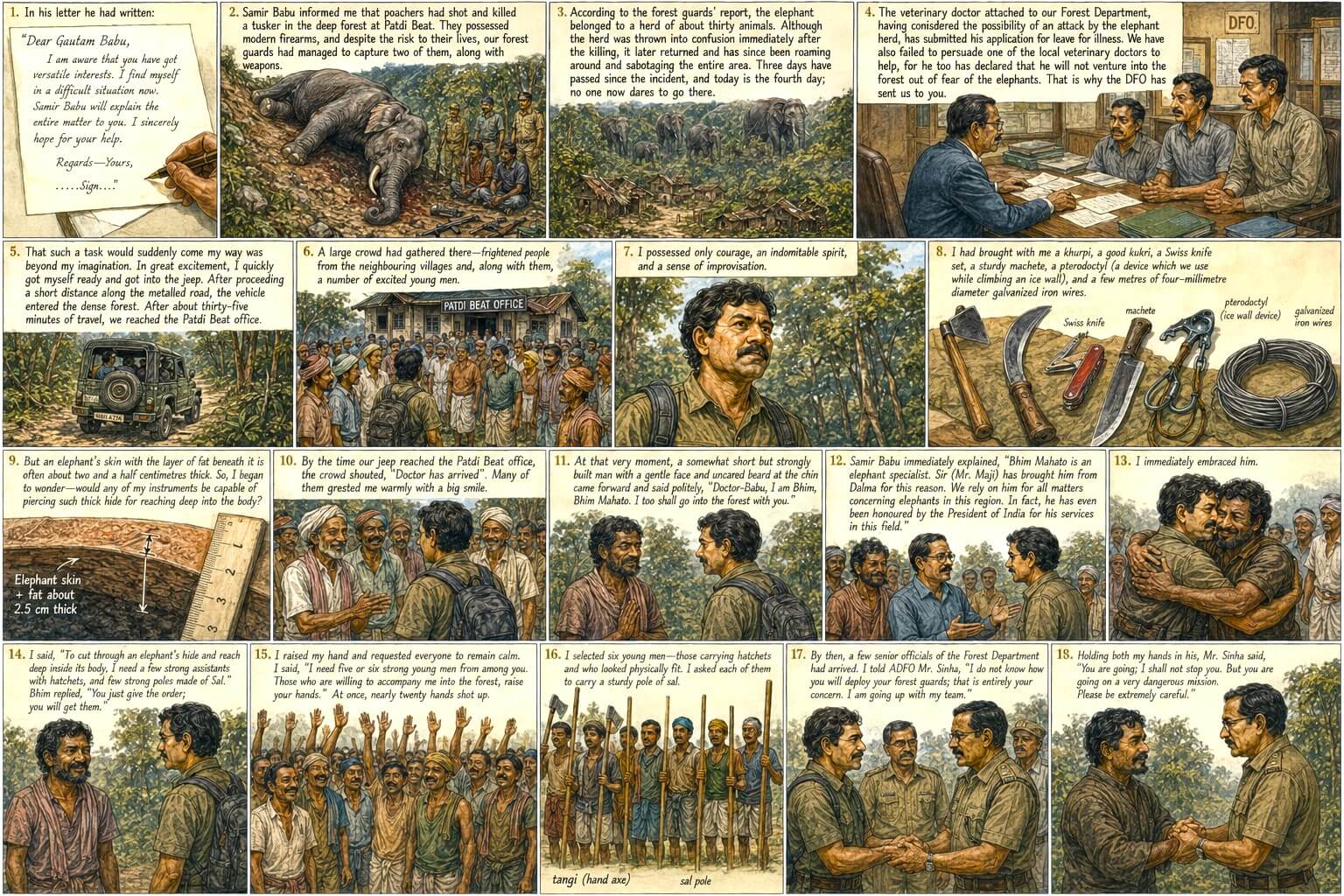
An illustration roughly showing step by step developments
At one point it reflected in me that Bhim and my other companions believed me to be an experienced professional veterinary doctor of the jungle. In reality, I was quite the opposite—I was a mechanical engineer by profession. On the other hand, I knew that Bhim Mahato was an accomplished elephant expert, and that my other companions, by virtue of their way of life, were well acquainted with the habits of elephants.
I was the leader of the party; Bhim was my associate. My role was that of a doctor, while Bhim's and the others' roles were entirely different. I listened to every word of Bhim's with the mind of a student, eager to learn and understand. Thus, I allowed him to speak freely and kept enriching my own experience. And, everytime, I would say, "Yes, that's right, you’re correct."
"Sir, look here", Bhim said. "The elephants have broken these trees not to eat them but to vent their anger. They could not avenge the death of one of their herd members, nor could they do anything to those who were responsible. That is the reason for this rage. It is very much like how human beings, in moments of helpless anger and frustration, sometimes bite their own hands until they bleed."
Again, he said, "Sir, look at these large trees. See how their branches have been snapped—not for food, but simply to express their fury."
Then he pointed and said, "Sir, look at this big sal tree. See how the elephants have repeatedly charged it with their tusks, again and again, in an attempt to relieve their pent-up anger and grief—nothing else! When an elephant becomes enraged, it uses its tusks. See the marks of the blows.” I noted with surprise that a huge sal tree, at about 7/8 feet from ground, has been shattered by those repeated strikes, and the upper part of the tree now lies on the ground.
Even then we had no idea where the recently killed elephant lay. Following the many signs left by the elephants, we kept moving deeper and deeper into the forest in search of its body. We thought the elephants had moved away from the area, but we still could not be certain whether they might still be somewhere nearby.
Could they still be somewhere nearby? What if they suddenly detected the presence of human beings? Mr. Sinha's words of caution kept returning to my mind again and again. But no—fear would not do. We kept moving forward.
Fortunately, when we reached the upper slopes of a densely wooded hill, we saw the elephant lying there in an almost 45 to 50-degree slanting slope, head down and body lying uphill. It was a pitiful sight.
After carefully examining the elephant from all sides and running my hands over its body with affection, I was astonished to find only a single bullet wound, exactly in the middle of the forehead. During my university days, while qualifying for the NCC "B" and "C" certificates, I had enough opportunities to fire 0.303 rifles, revolvers, and 12 bore guns. Later, I even had the opportunity to participate once in an all-India level shooting competition.
Drawing upon that experience and seeing the bullet wound precisely in the centre of the elephant's forehead, I became certain that the shot had undoubtedly been fired from a rifle. Only a rifle bullet can achieve such accurate marksmanship. Travelling at a speed greater than twice the speed of sound, when it strikes its target, it may leave only a tiny opening on the surface. Yet, because of rifling action i.e., its rotational motion around its own axis and its tremendous impact, it bores through the skin and penetrates inward in a funnel-like formation, and can easily cause the death of an elephant.
As the elephant was lying on a slope with its head downward and body uphill, because of its heavy body weight acting downwards, we could not turn its head even when we all tried together with the help of the sal poles! So, we could not determine whether the bullet had remained inside the body or had passed completely through and exited from the opposite side.
The elephant's enormous body weight had caused its head to become firmly wedged. Therefore, I decided to cut open the head exactly along the line of the bullet wound and trace the bullet's path inward.
I myself drove the sharp cutting tool into the head along the line of the wound to mark the line properly. Then the six young men of my party, one after another, continued cutting along that line. I began probing the cut section with the khurpi, like a surgeon searching with a probe, trying to locate the bullet.
By then the head had practically been split completely in two along the line I had imagined. My estimate had been correct. The bullet had entered the head at a slight angle through the exact middle of the forehead and had emerged through the base of the elephant’s right ear.
After much searching, I failed to recover the bullet itself. But, to my great astonishment, I saw—
First, an elephant's brain is very large, almost spherical in shape, and highly developed. In many respects, it closely resembles the human brain. The cerebrum—that is, the brain matter or grey matter that catches the eye when the skull is opened—is even more complex in its structure. It contains the cerebrum, cerebellum, and temporal lobe.
I found that the elephant's brain is much larger than that of other terrestrial mammals, both in size and in weight. It may weigh between 4.5 and 5.5 kilograms (about 10 to 12 pounds, roughly three times the weight of a human brain). The cerebrum and cerebellum are important for an elephant's movements and muscular coordination. The temporal lobe plays a vital role in memory and learning.
The elephant's brain contains far more neurons than those of other terrestrial mammals—about 257 billion, nearly three times that of humans—although it has a much smaller cerebral cortex than humans (which explains why humans possess greater intellectual abilities). Elephants are renowned for their memory, social bonds, and emotional sensitivity. Their brains are capable of supporting complex behaviours—such as play, learning, empathy, cooperation, and retaining experiences in memory for long periods—as well as expressing emotions, whether joy at another's happiness or sorrow at another's grief. These are manifestations of their intelligence.
It has been observed that when two elephant herds encounter one another while crossing an annual track, both groups often behave cooperatively. Even after decades, elephants can recognise one another when they meet again.
Second, although I could not recover the bullet despite probing each conical, funnel-shaped section along its path with the help of the galvanised iron wire I had brought with me, I could clearly see that poachers had sawn off and removed only the exposed outer portion of the upper tusk, leaving the entire inner portion intact. To remove the entire tusk, the whole cavity would have had to be excavated and that required more time. Perhaps, after the incident, the slain elephant's herd had remained nearby the body for some time. Therefore, the poachers could only cut off and carry away the visible outer portions of the tusk as quickly as possible.
Third, being eager to determine the exact position of the lower tusk, we used sal poles to move the lower part of the elephant's completely split head and found, to our surprise, that the tusk was still entirely intact.
I understood then that, given enough time, my responsibility had grown even greater. While my six companions and I were at work, Bhim had climbed a little higher up the slope and kept watch on the movements of the elephant herd. I called him down and explained the entire situation, and proposed that we should dig out the tusks and hand them over to the Forest Department. "What do you say?"
He replied, "That's exactly what should be done. But please hurry. We have already spent too much time. There is no trusting the Ganeshbabas—they may return before we finish our work. If they find us here, there will be no escape for us."
(Incidentally, the people of the forest villages respectfully address elephants as Ganeshbaba.)
Before returning to his lookout post, Bhim requested for one man from me, and instructed him to climb a nearby tall tree to enhance his vigil further.
I turned my full attention to the task. The kukri, the sharp machete, even the Swiss knife —all came into use. Working as quickly as possible, we finally detached the two tusks from their sockets and kept them beside. Once again, we spent another five to seven minutes searching the surrounding ground more intensely for the bullet. Failing to find the bullet saddened me.
Placing the tusks on the shoulders of two men, we set off in a body towards the "Patdi Beat Office." Because of my hasty surgical work in bare hands (we didn’t have any gloves), both my hands were thickly bloodstined. I wiped them as best I could on the green grass.
The complete tusk was about four feet or more long, with a girth of more than a foot, and was surprisingly heavy. I noticed that our men were passing it from one to another in turns. The other tusk was shorter; its outer portion had already gone into the poachers' sacks, so it was somewhat lighter. Yet it was not easy to carry.
As we approached the vicinity of the "Patdi Beat Office," I could see from above that the crowd had grown even larger. Mr. Sinha had left the office premises and come out with his other colleagues.
The moment we faced one another; Mr. Sinha took both my bloodstint hands into his and greeted us. But, seeing the tusks, he fixed his astonished gaze upon my smiling face and smiled curiously.
As I narrated everything, he embraced me, patted my back repeatedly, and said:
"You know, I have spent my entire life in the forests. I shall retire next month. Yet never in my life have I seen or heard of anything like this. You are truly remarkable. Even knowing how dangerous this task was, you undertook it with your own hands. We have all been deeply worried for you. We are proud of you!"
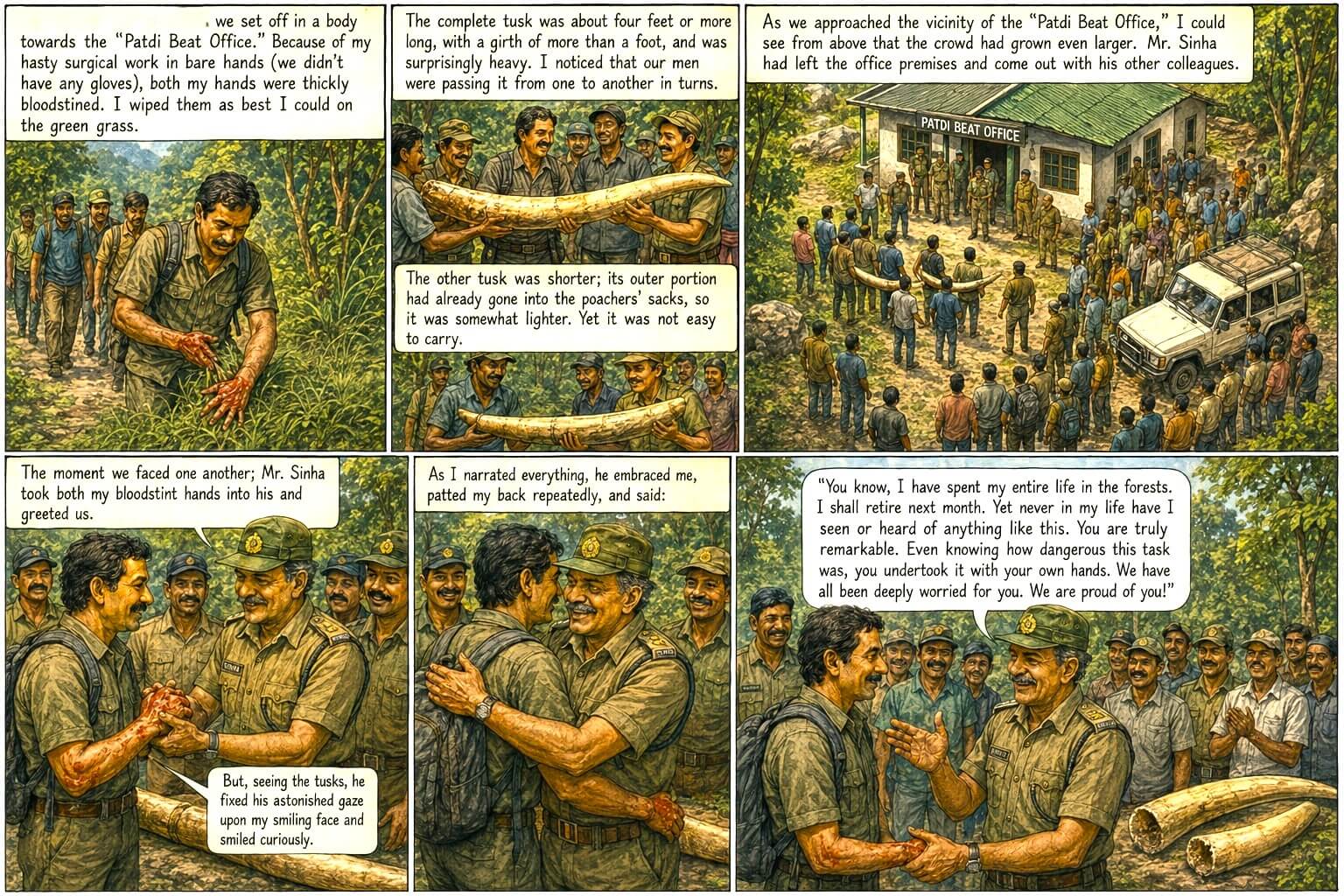
Another illustration roughly showing step by step developments
Meanwhile, SamirBabu came forward carrying and removing the rapper of a new lifebuoy soap. Seeing him the famous Bengali Ad-song, ‘লাইফবয় যেখানে, স্বাস্থ্যও সেখানে (where there is a lifebuoy, heath exists)” started humming in me—I said to Mr. Sinha: Let's go, wash our hands.
While Mr. Sinha himself was helping wash my hands by pouring water over them, he instructed one of his assistants to make arrangements for the tusks as per rule, and enter them in the stocklist. Accordingly, the tusks were placed on a table, and their measurements, weight, and other particulars were recorded in a register.
After our hands had been washed and before tea was served in the room inside, he came to me and said, "You have accomplished something extraordinary. You should keep a memento of it. I would like to present you with a piece of one of the tusks as a keepsake. Tell me, how much would you like cut off?"
I replied, "These are the property of the Forest Department. I have not the slightest desire to take any part of them, nor do I wish to, from the bottom of my heart. Please do not misunderstand me."
Even then, he cut off a small piece of the tusk scalping with a knife—perhaps weighing about five grams—and placed it in a small plastic packet, requesting me to keep it as a memento. I accepted it and brought it home to my ancestral house, where it can certainly still be found today.
The afternoon had slipped away. Since morning, I had been due to conduct a Rock-climbing course of the JUMHC (Jadavpur University Mountaineering and Hiking Club), but I could no longer remain there, though I have done all necessary arrangements while coming for this mission. Naturally, I had become anxious to return to the Matha camp, but I wanted Bhim to accompany me. On being informed, SamirBabu made the necessary arrangements.
By about three o'clock, Bhim Mahato and I returned to the Matha camp. During the following three days, having him with me there, I felt extremely delighted. I continued learning from his many firsthand experiences concerning elephants.
Bhim, generally doesn’t talk much, but never hesitates to answer any question about elephants. In his simple, unpretentious manner, he speaks from his own direct experiences, and I listen in amazement. A few exceptional individuals in this world are able to understand the character of elephants with remarkable depth. Bhim, a humble villager from the forested hills of Jangalmahal, has also acquired some such understanding. Whatever he has learned about elephants has come directly from his love for them and from long personal experience of their behaviour. He probably knows and understands many of the physical and behavioural traits of elephants—their strengths as well as their weaknesses—far better than most people.
He has many stories to tell. Here, I shall mention only two of them.
It was late at night. Everyone in the camp was asleep after the day's hard work. The two of us sat together a little away from the camp, in the darkness. The rustling of leaves stirred by the breeze, the incessant calls of crickets, the flickering of fireflies, the occasional songs of nocturnal birds, and above us the dense black sky with the glittering of innumerable stars—all these together had created an enchanting atmosphere around us.
From the very beginning, I had noticed that whenever Bhim spoke about elephants, a deep reverence and affection for them seemed to pour out from within him.
I asked, "Tell me, Bhim, you seem to love elephants very much, don't you? Since when have you felt such affection for them?"
Breaking the silence of the night, he began to speak softly:
"Sir, I was about eleven years old then. Our village lay in the midst of the forests. Before the harvest season, herds of elephants would almost every year descend upon the village. The elders of the village used to conduct meetings to make many arrangements to drive them away. Hula (Mashal), Torches, firecrackers, and other such things were kept in every household.
That day, the elephants came rather late in the afternoon. As usual, nearly a hundred villagers gathered together, beating tins and bursting crackers, and managed to drive the herd back into the jungle. I too had joined the crowd.
The herd was moving towards the forest, and all of us followed behind it. It was as though I had become intoxicated with excitement. I never realized when everyone else from the village had stopped and turned back from the forest path—I simply kept going.
By the time darkness began to fall, I looked behind me and saw that there was no one there. Fear gripped me. Unable to find the right path back to our village through the narrow forest trails, I truly lost my way.
I climbed up a large tree. From there I could see that the herd of elephants had halted. Most of them had spread out and were busy breaking branches and feeding on the forest trees. Sir, do you know how much elephants eat? —they are always eating!
At least six or seven large elephants came and stood in a circle beneath my tree, surrounding another elephant. Gradually, complete darkness descended.
By then I had forgotten my fear and even my home. Using my loincloth, I tied myself to the branch so that I would not fall if sleep overcame me.
The entire next day passed, but the elephants did not move. I could hear the cries of the elephant beneath again and again. From the way others were calling out, I understood that she was in great distress.
Two days passed, yet they did not move.
On the third day, the reason became clear to me. I could hardly believe my eyes—I was almost frightened and was out of my wits!
I remained crouched silently on the tree, yet I was also fascinated by what I saw them doing.
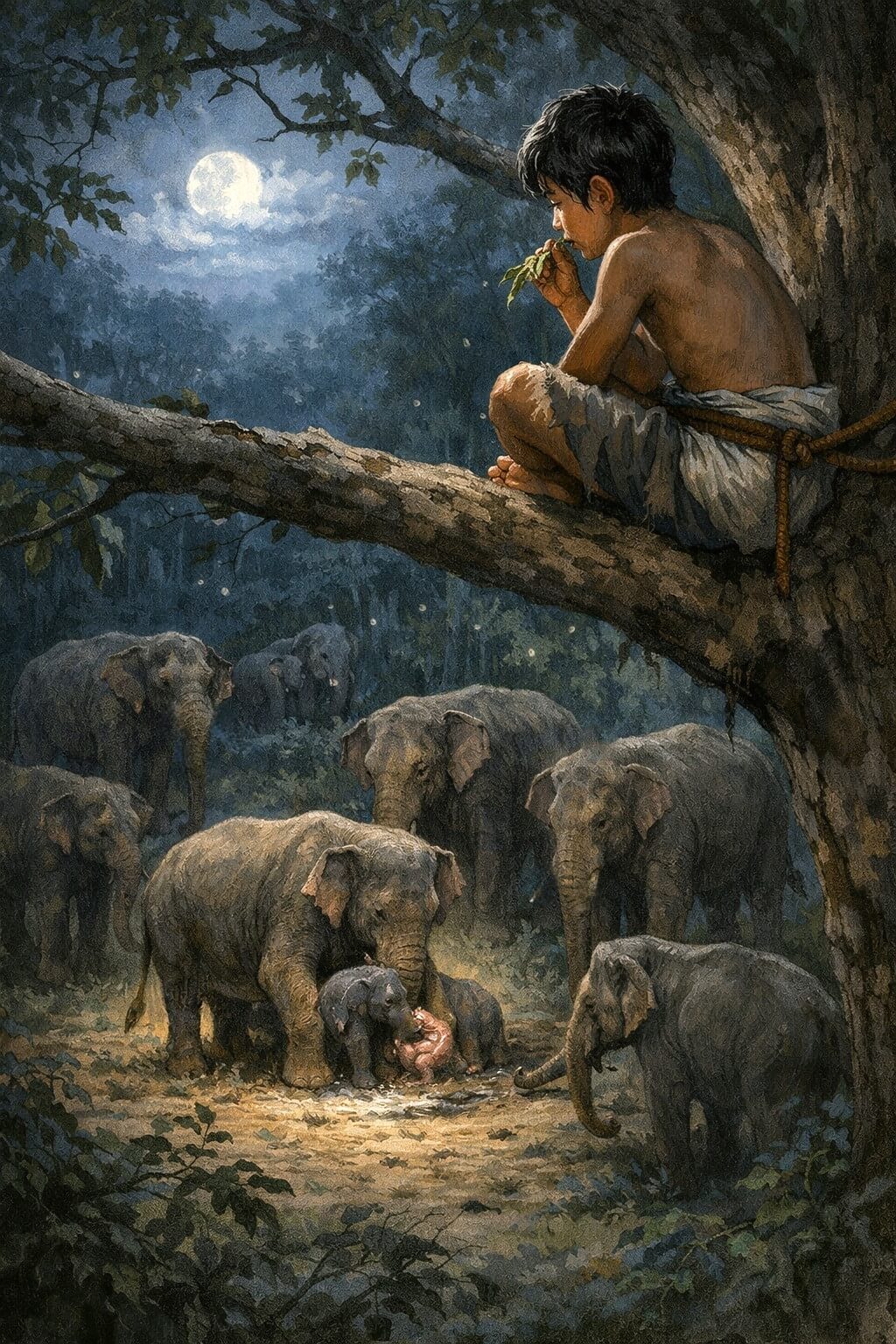
Back in the village, I had seen cows and goats giving birth. At home, my mother and grandmother would become busy and anxious whenever a cow or a goat was about to calve. They extend caring hands to them. Before the baby elephant was born, the other elephants surrounding the expectant mother were doing exactly the same things.
It was as though I could understand their conversations and share in their joy.
At that time, hours seemed like.......
I have seen, within a short time, that little elephant calf had learned to stand and walk, and to suckle repeatedly from its mother. Next few days I passed seeing the little one’s naughty activities and playing with the seniors, all females, just around and how the seniors controlling the naughty baby! As if that was my routine job then. It is difficult to say how many days I’ve passed in this manner….
Undoubtedly, I suffered greatly from hunger and thirst. Chewing the leaves of that tree, I somehow managed to survive for those days, though I have no idea exactly how many days they were—perhaps nine, may be ten.
The largest tusker was in control of the herd—there must have been about fifty elephants in all. Everyone obeyed him. From the tree I could see elephants spread out in all directions. Except for that tusker, no other male elephants came beneath my tree to the females. The tuskar also came less often, maybe to asses the situation from one elderly female attending the mother and baby. A little farther away there was a group of young and middle-aged elephants surrounded the area, while the adolescents had been scattered little further, all around centreing my tree.
I also saw the tusker responding to their different calls and signals. That is when I first realized that they have a language of their own for communicating with one another; otherwise, why would they answer each other's calls?
I saw many other things whose meaning I did not understand then but came to understand later.
One morning, a few days later, I watched the little one and the other large female elephants, left the place together in single file keeping the little one in the middle, attending call of the Dantal. All others around also assembled there. They all gathered close to the tusker and, placing the newborn calf and its mother in the middle, disappeared into the forest in a line. ….. I felt as though a chapter of my own life had come to an end there. I untied myself from the tree and climbed down, then started back toward my village.
I could barely walk. Some villagers found me and brought me home. I remained ill and bedridden for many days afterward.
After I returned home, my mother and grandmother would say, I was out for ‘two weeks!' I myself no longer had any clear sense of the passing of day and night. But I had witnessed all kinds of activities among the elephants.
For a long time, I used to dream about those days spent with the elephant herd. Even today, those memories fill my heart with a strange and beautiful feeling. I became deeply attached to elephants.
I listened to Bhim in complete fascination, almost spellbound! Then, after a few tidbits, I asked him about the reward he had received for his work in driving away elephants.
He said:
I have had to drive elephants away in many places—across Purba Medinipur, Paschim Medinipur, and different parts of Bankura, Purulia and Dalma, from wherever the authority call us. It takes time to turn an elephant around and make it retreat. The elephant is extremely active and is aware of everything happening around it. Its tail, however, is comparatively weak. Why did I say this? There is a reason.
Beside our Hulaparty members, many villagers from different places, have often chased elephants away. But they do not understand an elephant’s behaviour; they act according to their own impulses. Some throw stones at the elephants. Such actions create great difficulties for our work and make the elephants highly agitated.
I once witnessed a tusker seize a man with its trunk and fling him aside. After doing so, it was preparing to charge and trample him. I ran at full speed, grabbed the elephant's tail, and pulled it with all my strength. Naturally, feeling pain and irritation, the elephant released the man and turned towards me to attack. By then the man had scrambled away and escaped with his life, I also dispersed a little further. As for me, I knew that if the tusker could strike that man once again, it would almost certainly kill him. Therefore, keeping myself little apart, I moved in front of the elephant, trying to draw its attention away from the man. And, he was saved!
When I returned, all the details had already been reported to a senior officer of the Forest Department by other forest officials, may be. Hence, this incident came to the notice of him, and he arranged an award in recognition of my courage. He also arranged all expenses for my to and fro journey. I’m deeply indebted to him.
Unfortunately, my association with that extraordinary elephant expert and friend, Bhim Mahato, did not last very long. In 2001, while trying to drive away a herd of elephants in West Medinipur, he went with his team and was killed. The news read:
“Bhim Mahato, a legendary hula member from Purulia, was gored to death by an elephant when he lost his guard.”
The word “guard” has been used here in its truest sense. The tragedy occurred precisely because he had let down his concentration for a moment.
This raises a question in my mind: why are there so many deaths now? Earlier, such incidents were not so common. Why has it become almost routine for elephants and humans to come into conflict and cause casualties?
Let us briefly examine the reasons for this phenomenon, particularly in the context of our state, West Bengal.
First of all, it should be noted that India has had legislation for elephant conservation since 1879, namely the Elephant Preservation Act, 1879, which still remains in force. Later, the Wildlife (Protection) Act, 1972 was enacted, under whose Schedule I, Section 1(a), the elephant was included, thereby granting it the highest level of legal protection. Consequently, killing, injuring, or capturing wild elephants was prohibited.
Subsequently, in 1992, another initiative known as Project Elephant was launched under the Elephant Protection Act, 1992, which became widely known as “Project Elephant–1992.”
The objectives were to protect wild elephants, conserve their habitats, and reduce conflict between elephants and humans (Human-Elephant Conflict). These remain the fundamental principles of elephant conservation in our country, and by 2025 several supplementary laws and regulations have also been enacted. However, rather than delving into legal technicalities, let us examine the root causes of this conflict in our own state.
Over the past 77/78 years, India's population has increased by nearly one billion. At present, having surpassed China, India is the world's most populous country, with approximately 1.42 billion people. Naturally, this is a complex issue that has had profound effects on the nation's economy, society, and environment. In this regard, among all the states and Union Territories of the country, West Bengal is one of the most severely affected.
Within this state, the distribution of elephants is concentrated mainly in North Bengal and South Bengal. From ecological and environmental perspectives, these two regions differ greatly. The forests of the Terai and Dooars regions of North Bengal are the principal elephant habitats. Until not very long ago, tea gardens and comparatively sparsely populated forest-fringe lands acted as buffer zones, separating dense forests from human settlements and agricultural areas. In other words, these buffer zones played a crucial role. Consequently, there was neither a need nor much opportunity for the wild animals of the dense forests to come close to human habitation.
However, from the latter half of the twentieth century onward, a large influx of migrants (please understand the context) began establishing settlements across vast areas of the Terai and Dooars. Population growth inevitably led to greater food production requirements, which in turn meant increased land use, scientific efforts to enhance land productivity, and the conversion of land from single to multicrop production.
The natural consequence of these developments(?) was the gradual use of the buffer-zone lands for cultivation. Subsequently, cultivation spread even further into forested areas, and in many places the buffer zones themselves disappeared. As a result, agricultural lands and dense forests came into direct contact with one another.
In reality, wherever large herbivorous wild animals have unrestricted movement and foraging grounds, there is inevitably the possibility of human encroachment—whether for collecting firewood and other forest resources, or for allowing domestic livestock to graze and obtain fodder. Such conflicts are therefore unavoidable.
At the same time, an undeniable consequence of the strict enforcement of various forest laws by the State Forest Department has been that dense forests have become increasingly suitable habitats for wildlife compared with earlier times. As a result, the populations of wild animals in the forests of North Bengal have increased.
Alongside the growth of the human population, agricultural land has expanded, roads and transportation networks have developed, and the constant movement of vehicles and people has brought human activity ever closer to wildlife habitats. Consequently, while intelligent animals such as elephants are becoming less fearful of humans, they are also becoming increasingly attracted to new crops and their diverse tastes.
Another noteworthy aspect of the tea-growing regions of North Bengal is the production and sale of country liquor, which has emerged as an alternative rural industry. The strong smell of fermenting liquor is also highly attractive to elephants.
Now let us turn our attention to South Bengal. Here, the elephant distribution area comprises the districts of Paschim Medinipur, Jhargram, Bankura, and Purulia, together with the adjoining Dalma Wildlife Sanctuary, which was established in 1975 as an elephant habitat covering approximately 195 square kilometres. The nearest city is Jamshedpur.
A distinctive feature of these four districts of South Bengal is the presence of relatively small and scattered forest patches separated by extensive agricultural lands and human settlements. Earlier, during the monsoon months of July and August, herds of elephants would descend from Dalma into the forested areas of Purulia, move through the smaller forest patches, and reach the Ranibandh region of Bankura. They would then return to Dalma during December and January.
According to data from 2024, the elephant population in Dalma now stands at about fifty, which is higher than before.
During these seasonal movements, elephant herds generally use specific routes known as Elephant Corridors. In other words, an elephant corridor is a path or area that elephants naturally use for their movement, especially when travelling from one habitat to another.
These corridors are vital for the elephants' way of life, including obtaining food, breeding, and seeking shelter. A report by the Ministry of Environment, Forest and Climate Change, Government of India, has identified 150 such elephant corridors across the country. Compared with many other states, West Bengal has a relatively small elephant population, yet it possesses 26 elephant corridors, accounting for nearly 17 percent of all the elephant corridors in the country.
One of the principal reasons for the increase in the number of corridors in South Bengal is that elephants, in search of food, are increasingly splitting into smaller groups and moving through different routes or corridors in order to travel from one forest patch to another.
In recent years, the corridor used most frequently by the elephants of Dalma has been the route that begins in July–August from Dalma, crosses the hills, enters the forests of Medinipur (mainly Paschim Medinipur), passes along the banks of the Kangsabati River, and moves through the forests of Lalgarh, Bishnupur's Joypur forest, and Sonamukhi, before returning to the Dalma Sanctuary during December–January.
Naturally, this route passes through numerous villages and extensive cultivated lands. And, truly speaking, who would not like to change taste? Is it really the elephants' fault? So, by their very nature, they raid crop fields and sometimes even enter villages. Consequently, human-elephant conflict is increasing.
People often try to drive elephant herds back towards the forests by beating drums, making loud noises, and blasting fire crackers. Forest authorities call for Hula Parties. Villagers also join in these efforts. Yet, as experienced elephant lover Bhim Mahato used to say, "This often causes more harm than good."
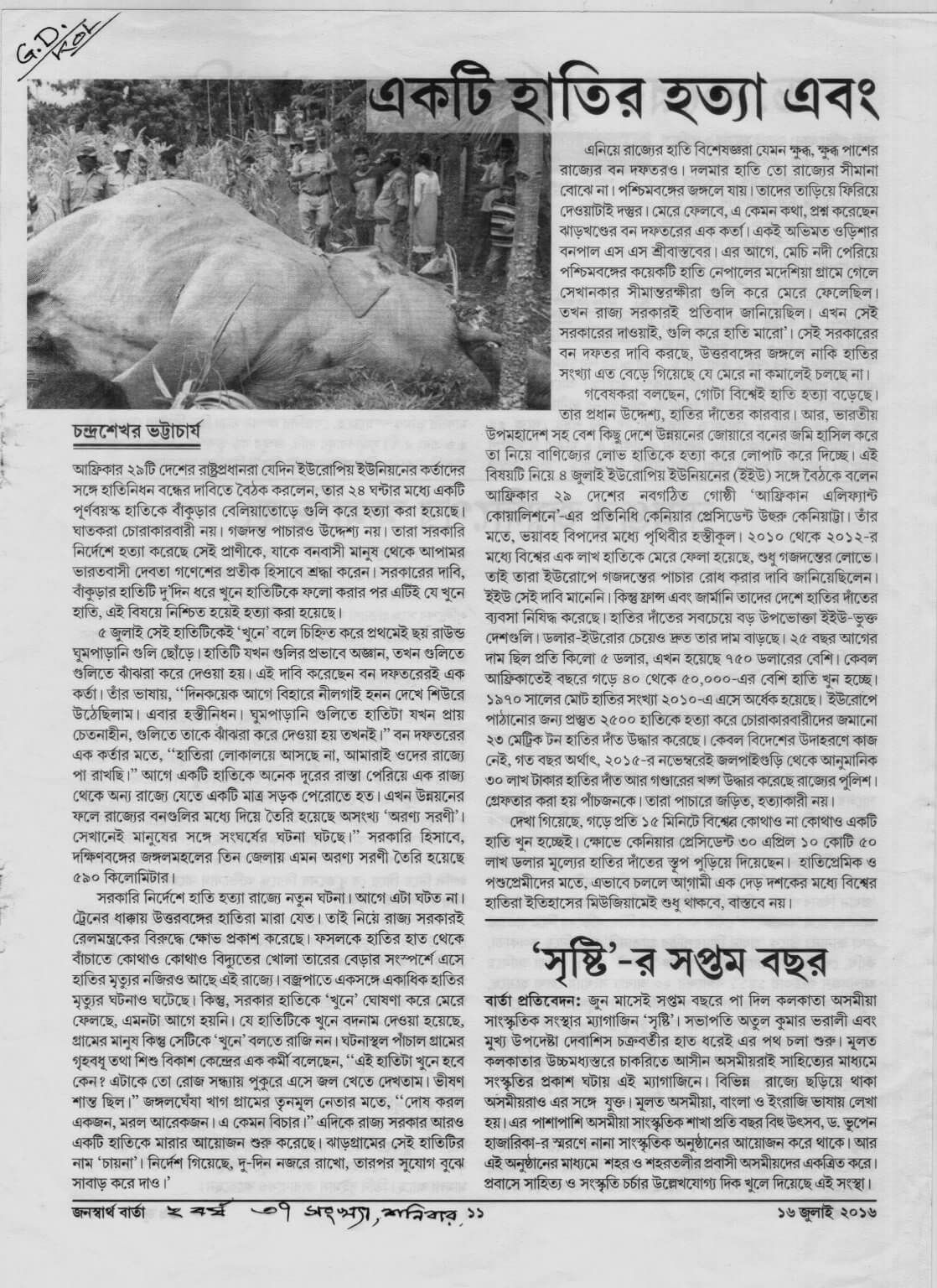
In most cases, villagers are frightened of elephants and, because they know little about elephant behaviour, tend to adopt an aggressive attitude toward them. The elephants, in turn, respond aggressively. That is why so many deaths occur. Bhim himself eventually became a victim of such aggression toward elephants amid this chaotic situation. In this regard, many examples are there in Bengal, where innocent elephants have been killed by administration as they came out of forest and entered local villages/towns, just out of unknown fear and ignorance, in stead of guiding them back to forest. A news in Bengali vernacular dated 16.07.2016 on such a cool-headed murder held at Bankura is a clear testament to that; the same is pasted below:
In comparison, just think of what happened in China’s Yunnan Province, when in recent past, a herd of 15 Asian elephants came out of their natural habitat and wandered about 500 km north up to outskirts of Kunming! The Yunnan government deployed thousands of emergency personnel, tracked the herd continuously using a fleet of drones, strategically laid out tonnes of food to divert them away from highly populated urban centers like Kunming and its subarbs; temporarily evacuated about 1.50.000 residents from the path of the herd to prevent human-elephant conflict and finally successfully turned the herd around to their natural habitat safely with good health. The wandering Yunnan elephants were out of their natural habitat for approximately 17 months (around 500 to 530 days; March, 2020 to August,2021). While their overall migration route twisted and turned over a total distance of roughly 1,300 kilometers (800 miles), the initial northbound leg that made global headlines was a direct 500 kilometer stretch from their sanctuary to the outskirts of Kunming. Can we not think of to reach at least near to that level?
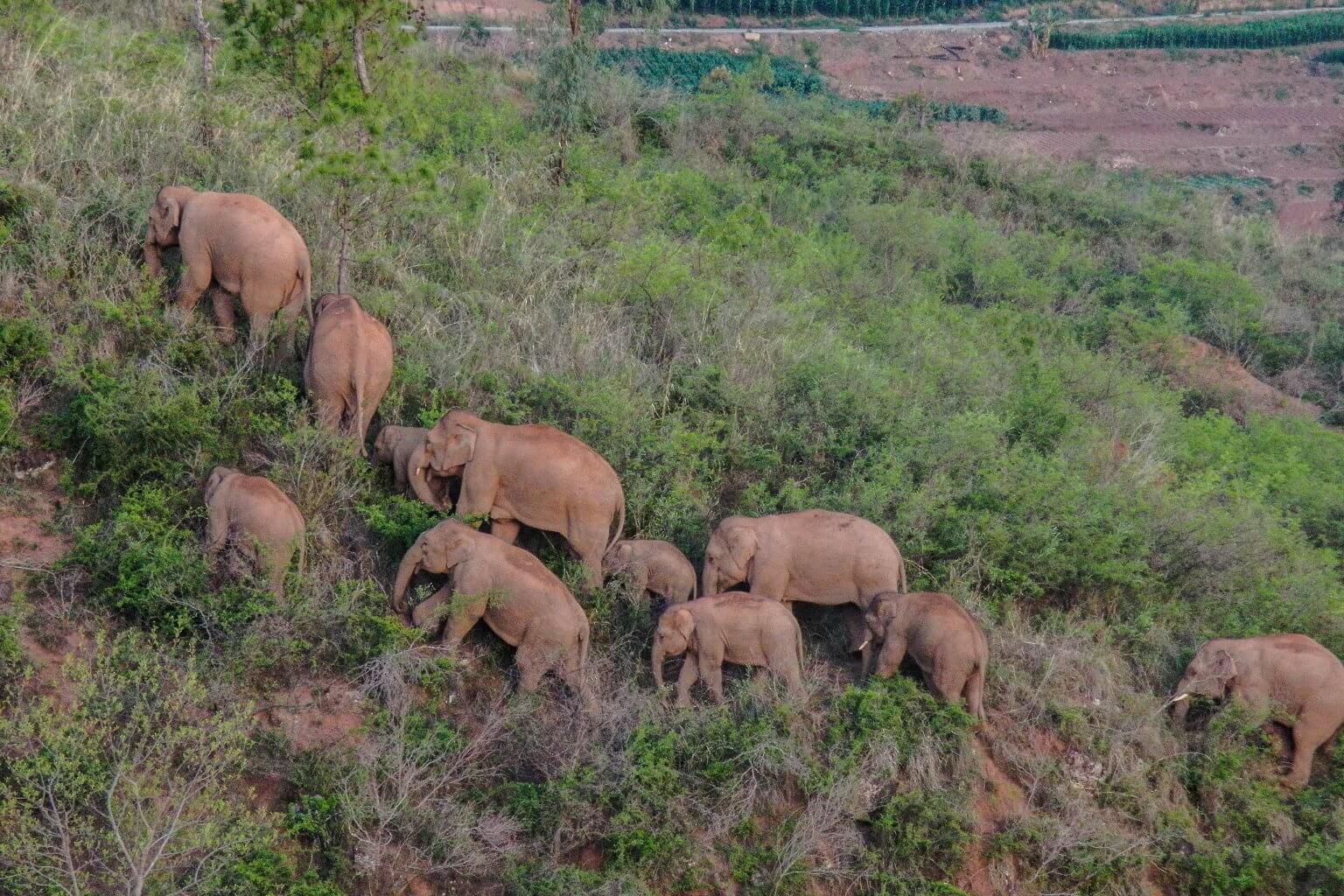
Wandering Yunnan elephants (Drone photo from net)
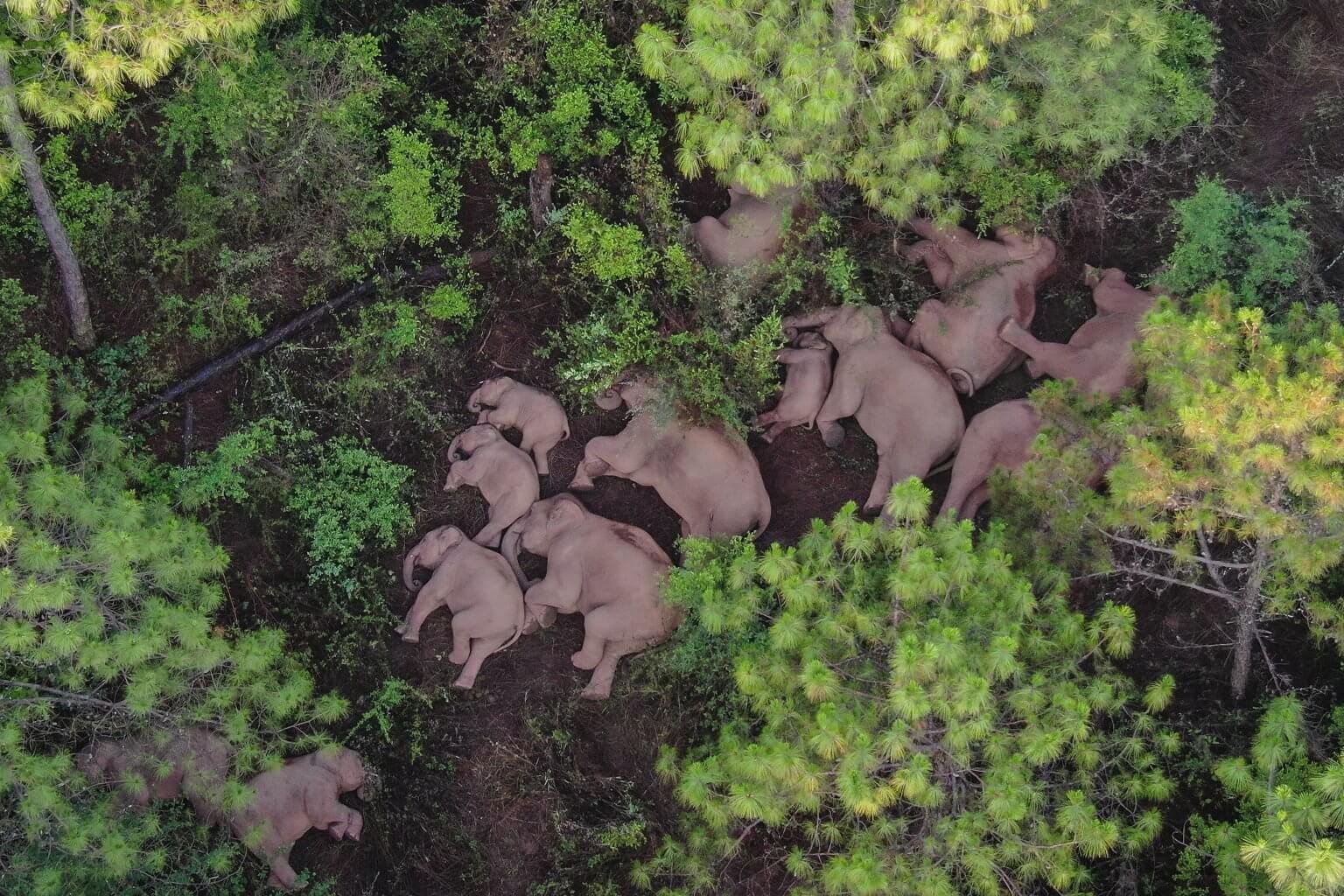
While the tired herd was taking rest (Drone photo from net)
Elephant censuses are conducted every five years. According to the 2017 census, using the "sighting based direct count" method, the elephant population in twenty-three Indian states was estimated at 27,312. In 2012, the estimated number was between 29,391 and 30,711.
It should also be mentioned here that, in comparison with the "sighting based direct count" method, the "indirect dung count" method is often considered to be more accurate.
However, a new and more confirming method SAIFE (the Synchronous All India Elephant Estimation 2021–25) has been used lately. SAIEE is India’s first DNA-based count of elephants conducted by the Wildlife Institute of India, under the aegis of Project Elephant Ministry of Environment, Forest and Climate Change. According to the All-India Synchronous Elephant Estimation-2025 report, India's wild elephant population is estimated at 22,446. This study is significant as it is the first to use DNA-based technology (a methodology similar to the tiger estimation framework), establishing a new, precise baseline for future conservation efforts.
As per report,
State-Wise Distribution
The elephant population is concentrated in Southern and Northeastern states. Major states include: Karnataka: 6,013, Assam: 4,159, Tamil Nadu: 3,136, Kerala: ~2,785, Uttarakhand: 1,792, Odisha: 912, Chhattisgarh: 451, Uttar Pradesh: 257, Jharkhand: 217, Andhra Pradesh: 120 (= 19842); balance in other states including West Bengal.
Regarding Regional Concentrations, the 2025 report highlights four primary landscapes: 1) Western Ghats: 11,934, 2) North Eastern Hills & Brahmaputra: 6,559, 3) Shivalik Hills & Gangetic Plains: 2,062, and 4)) Central India & Eastern Ghats: 1,891(Total=22446). Though, the estimated latest census is 22,446, which marks a decrease of 4,065 elephants or 17.81% from the 2017 estimate of 27,312, the report advises treating the current estimate as a new baseline due to methodological changes.
Methodology
The new estimation adopts a methodology similar to the tiger estimation framework:
- Forested habitats divided into small blocks or cells for data collection.
- Use of a genetic mark–recapture model by analyzing over 20,000 dung samples to identify 4,065 unique elephants.
- Combination of genetic data and ground surveys to derive population estimates.
Threats to Elephant Habitats
- Western Ghats: Land use changes, plantation expansions, and development projects.
- Northeast: Connectivity issues, requiring stronger law enforcement.
- Shivalik Hills and Brahmaputra plains: Habitat loss due to infrastructure development.
- Central India: Mining pressures.
Conservation Recommendations
The report calls for enhanced habitat connectivity and law enforcement, along with cooperative engagement to address human-elephant conflicts and habitat disruptions.
Key Findings of the report
- It estimates total Asian Elephant population at 22,446 and India harbours the largest wild population – approximately 60% of global total. Please note here that, if it is correct, the global total has drastically reduced to about 37500 from 48000 to 52000 as estimated earlier! Just think of, so disastrously sketched painful condition it is!
- Currently, wild elephants persist mainly in four forested hill regions— Himalayan foothills, Northeastern states, East-central India, and Western/Eastern Ghats—with a small feral population in Andaman Islands;
- Western Ghats hosts the largest population of wild elephants followed by North Eastern Hills and Brahmaputra Flood Plains.
- Among states, Karnataka supports highest population, followed by Assam, Tamil Nadu and Kerala.
- Threats:
- Habitat Shrinkage & Fragmentation: Once-contiguous elephant population in the Western Ghats is rapidly disconnecting due to changing land use, including expanding commercial plantations (coffee and tea), invasive plants, farmland fencing, human encroachment and mushrooming developmental projects.
- Human–Elephant Conflict (HEC): Rising sharply in Central India and Eastern Ghats.
- Linear Infrastructure: Roads, railways, and power lines disrupt corridors and cause fatalities via electrocution and collisions.
- Recommendations: Strengthening corridors and connectivity, restoration of habitat, improving protection strategies and mitigation of developmental projects.
However. It is true that the elephant population is steadily declining, which is a highly alarming signal from the perspective of maintaining ecological balance. According to statistics from the Ministry of Environment, Forest and Climate Change, the growing intensity of human-wildlife conflict has resulted in the deaths of 1,783 people and 341 elephants in the country over the last three years i.e., 2021-24. Elephant deaths numbered 87 in 2021–22, 133 in 2022–23, and 121 in 2023–24. One of the principal causes identified is electrocution, which accounts for more than 75 percent of elephant fatalities.
But, during 2024-25, India's human-elephant conflict remained a severe issue, resulting in approximately 500 human deaths. While national tallies for all elephant deaths are still collated by the Ministry of Environment, Forest and Climate Change, regional statistics highlight heavy casualties.
Key Statistics by Region
- Odisha: Recorded the highest number of human casualties in the country with 171 human deaths, alongside 106 elephant deaths in 2024–25.
- Kerala: Reported an average of 124 elephant deaths annually, with the state seeing 150 wild elephant deaths during 2024-25.
- National Context: Nearly 70% of all national conflicts and casualties occur in hotspots across Odisha, Jharkhand, West Bengal, and Assam.
Primary Causes of Casualties
- Human Deaths: Driven mostly by direct encounters, crop raiding, and accidental interactions as human development encroaches on traditional migratory corridors.
- Elephant Deaths: Driven primarily by anthropogenic factors such as accidental and deliberate electrocution, train collisions, poaching, and poisoning.
The report by the Odisha state government released on 11.10.2025, Saturday is particularly interesting to picturise the whole issue. It stated that as many as 106 elephants perished in the state in 2024-25, making it the highest casualty in a year in last one decade, since 2015-16. The deaths reported in 2024-25 is also 62 per cent more than the previous year when the number was 66.
- As per the report, 30 elephants were killed in deliberate electrocution while four died in retaliatory killing last year. The Forest Department has no clue about death of another 17 elephants during the period.
- In last one-decade between 2015-16 and 2024-25, 842 elephants died in the state which included 111 in deliberate electrocution, 44 in accidental electrocution, 231 in diseases and 29 each in train accidents and poaching. Only 87 have died naturally, while another 231 have been killed due to infighting, stampede, falling down from hill, lightning and stroke, etc.
- The report also presented a grim picture of human casualties and crop damage in the man-animal conflict. As many as 171 people were killed in wildlife attacks in 2024-25, which included 153 in elephant attack. Around 500 people also sustained injuries in wild animal attacks in the year. Similarly, 12,337 farmers sustained crop damage over a total area of over 2,905 acres, one of the highest in the last 10 years.
- The report indicated that on an average 74,350 people were affected in human-wildlife conflict in 2024-25 compared to 42,771 in 2015-16. The average of people getting impacted in man-animal conflict in the state in last 10 years also stands at a staggering 50,647.
Although this discussion began with an elaboration of a viral video clip as mentioned in the beginning, where we have seen that intelligent elephants are capable of crossing electrically charged fences, yet in reality they are being killed in large numbers. The question therefore remains: what alternatives do we have to prevent elephant incursions into human settlements and croplands?
Scientists have been searching for solutions and, in recent years, have turned their attention to bees. Because an elephant's trunk is extremely sensitive, the simultaneous attack of a swarm of bees often compels elephants to adopt the strategy of "run away and survive." Wild elephants naturally fear bees. Traditional methods such as the use of torches (mashal), shouting, and firecrackers have become familiar to elephants and no longer frighten them effectively. Therefore, creating barriers with beehives or using the buzzing sound of bees may help prevent elephants from entering human settlements.
Experimental studies in India have shown that this method can be highly effective in keeping elephants away from populated areas. Kenya has achieved considerable success through this approach. In India too, attempts are being made to implement the method through the RE-HAB (Reducing Elephant-Human Attacks using Bees) project. The initiative has already been introduced in Kerala.
This approach is natural and environmentally friendly. It is harmless to elephants, comparatively safe and beneficial for humans, and inexpensive. Consequently, it can play an effective role in reducing human-elephant conflict and ensuring peaceful coexistence between the two.
One may hope that, in the future, many more environmentally friendly methods will be developed and adopted to conserve elephants, protect croplands, prevent elephants from straying into human habitations, and reduce human-elephant conflict. Scientists are also considering crops that elephants dislike but which are useful to humans and economically profitable. Such ideas may well prove effective.
Above all, however, what is most needed is greater awareness among people living in forested regions regarding elephants, their behaviour, and the measures necessary for their own safety.
Efforts of this kind, at the governmental level, have in fact been continuing since the 1980s. In India, the World Bank has assisted various projects related to elephant and wildlife conservation. During the 1980s and 1990s, two programmes—"Afforestation on Cultivable Wastelands" and "Forest Regeneration"—also brought about some developmental work in our state.
The formation of Forest Protection Committees involving people from forest villages, along with initiatives for joint forest management and rural development, certainly yielded some benefits. However, the results were not entirely satisfactory. Otherwise, the poaching of elephants for ivory would undoubtedly have ceased, but it did not.
Nevertheless, times have changed and people's attitudes are gradually evolving. The country's Ministry of Environment, Forest and Climate Change has undertaken several new initiatives regarding elephant conservation and issued guidelines on 25 July 2024. Financial allocations in various sectors have also increased. New methods of education and awareness-building among forest-dwelling communities have been introduced, and various aspects of wildlife management have been expanded.
The management of elephant habitats and wildlife habitats in general is primarily the responsibility of state governments or the administrations of Union Territories. An important component related to elephant conservation overlaps with broader forest conservation activities. Under Project Tiger and Elephant, state governments and Union Territory administrations have been directed to provide financial and technical assistance for elephant protection, the conservation of their habitats and corridors, the mitigation of human-elephant conflict, and even the welfare of captive elephants. What is required now is the proper implementation of these measures. In the case of our state, I believe that the sincere initiatives of the government, together with the active participation of forest-dwelling communities, will lead to successful implementation.
There is one matter on which we can all agree: apart from human-elephant conflict, dangerous electric fencing, railway lines passing through elephant corridors in the forests of North Bengal, and various natural or human-made disasters, the real cause of elephant deaths lies hidden within the elephant's tusks.
Ivory, and certain other body parts of elephants continue to attract the attention of unscrupulous traders—most often backed by influential political interests—and through the hands of the poachers they employ, thousands upon thousands of innocent elephants have been slaughtered (indeed, the figure is in lakhs).
Today, elephants are included in the IUCN Red List as a species that is "Endangered and rapidly declining..." category. In many elephant-range countries, elephants are legally protected under the Convention on International Trade in Endangered Species of Wild Fauna and Flora (CITES), of which India is also a signatory. The ivory trade has been strictly prohibited under this convention. But has it solved the problem? Reports say, "No."
Elephant numbers continue to decline across the world, and our country is no exception. From the forests of Jharkhand, Bihar to Karnataka, elephants are being killed. Karnataka was far ahead since the time of raffish notorious Birappan. Tamil Nadu, Kerala, Assam, Odisha, and even our own West Bengal have not been spared. Various countries are taking extraordinary measures to send a strong message to the black-market networks associated with poaching.
According to news reports on first May 2016, "105 tonnes of elephant ivory and one tonne of rhinoceros horn were burned." The incident took place in Kenya's Nairobi National Park, where a demand was raised for a complete ban on the ivory trade. Then Kenyan President Utthuru Kenyatta lit the ceremonial fire on Saturday, 30 April 2016, marking the beginning of this historic event. Nearly seven thousand elephants had been killed to obtain this quantity of ivory. The estimated value of the destroyed ivory was US $ 68 million.
India has also moved in this direction. To address the decline in elephant populations, curb illegal hunting, and stop the illicit trade in ivory, India began destroying confiscated ivory stocks in 1989. That tradition continues even today.
According to an Anandabazar Online report dated 19 December 2023, "The Bankura Forest Department destroyed 57 elephant tusks that had been preserved for ten years through a special process." The special process was nothing more than incinerating them in the furnace of an industrial plant in Barjora at a temperature of 1,000 degrees Celsius.
The state's Chief Conservator of Forests (Central Circle), S. Kulandaivel, stated:
"In the past, the forest department in North Bengal destroyed several elephant tusks in this manner. Plans have now been made to carry out this process regularly in South Bengal as well."
According to one report, the present estimated market value of these 57 tusks is around ₹300 crore (three billion Indian rupees). It has also been said that, because of the ban on trade, the price of ivory in the international black market has reportedly risen to more than ₹1.50 crore per kilogram.
There is considerable debate among experts as to whether India should follow this model of destroying confiscated ivory, rhinoceroses’ horns, and similar wildlife products. Asian elephant expert and scholar Prof. R. Sukumar believes that India possesses nearly 30 tonnes of elephant ivory, and that this stockpile increases every year. In his opinion:
"A portion of this stock should be used for scientific research and for building institutional DNA databases."
He further stated:
"Even sniffer dogs should be trained to identify elephant ivory, which would help in tracking down poachers."
According to Shekhar Kumar Niraj, head of the wildlife trade monitoring network TRAFFIC, India requires samples of elephant ivory for the training of law-enforcement agencies.
"Instead of destroying it, we should catalogue and store it securely and distribute samples for training purposes."
As strange as it may sound, it is true that over the last few decades, an increasing number of tuskless elephants have been born in Africa, particularly in Mozambique. This phenomenon is believed to be primarily the result of genetic changes. Scientists observing this trend have concluded:
"The sharp increase in elephant deaths for tusks at the hands of poachers is the principal cause."
According to wildlife conservationists, 30,000 African elephants are killed every year by poachers solely for their ivory.
The country of Mozambique endured prolonged instability, first during the war of independence from 1961 to 1974, and later during the civil war from 1977 to 1992. Poachers took advantage of this persistent instability and slaughtered elephants indiscriminately for their ivory. During the civil war, money earned from smuggling ivory abroad was even used to purchase weapons. Rebel groups regularly consumed elephant meat. Thus, because elephants with tusks became the primary targets of poachers, the species began to exhibit certain genetic changes.
Consequently, Mozambique's famous and oldest elephant habitat, the Gorongosa National Park, is now nearly devoid of tusked elephants. Herds of tuskless elephants can now be seen there. According to statistics, the proportion of tuskless female elephants has increased from 19 percent to 51 percent.
At least those female elephants without tusks are surviving and continuing the elephant lineage. It is almost as if ‘Nature Mother’ itself has devised a way to ensure their survival and perpetuate the species. And, be aware that, the conservation of elephants cannot be separated from the conservation of forests themselves.
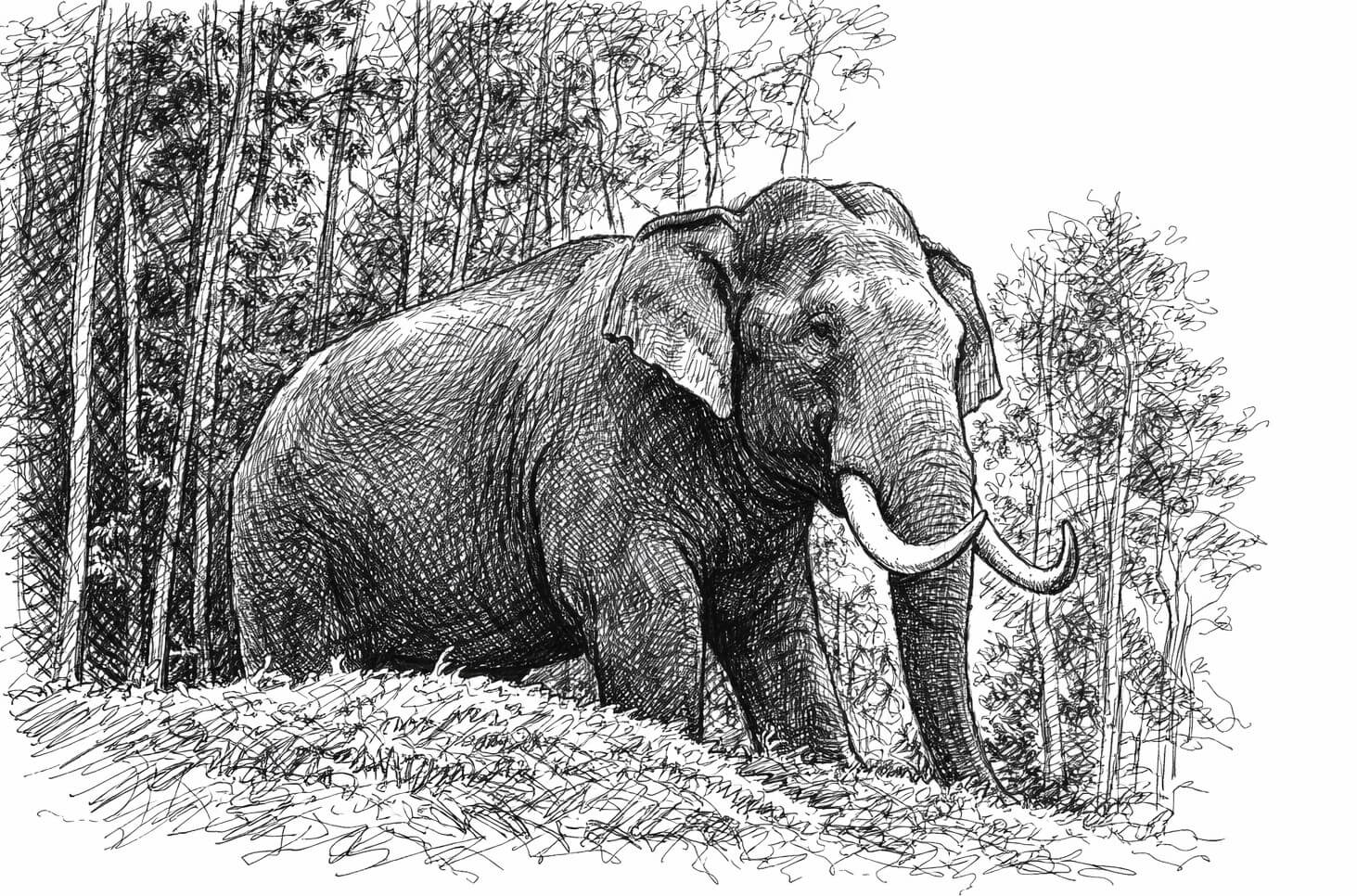
“If we fail to protect the elephant today, the generations to come may encounter this majestic being only in fading pages and wistful memories — a legend of what once walked the earth.”

Related Articles


Place your ad here. Call +919163231788 or Contact Us


