Society and Rock Climbing
Gautam DuttaCategory: Article
Date of Publication: Mar 4 , 2026
It is better to admit that the English term rock climbing is still more widely used than the Bengali word shailarohan. Back in the 1970s, when I had just stepped out of school and entered university, I had no idea about this subject. Other than seeing pictures of mountains in geography books and calendars, I had never seen a real mountain.
Down the memory of first Rock Climbing
At Jadavpur University, surrounded by free-spirited minds, beside my core subject of studies I became interested in photography and mountaineering despite my financial struggles. I knew both hobbies were expensive and not really meant for me, but youthful dreams have no limits. I still remember how, with great difficulty, I managed to collect the subsidized course fee of just 45 rupees in December and joined the “Jadavpur University Mountaineering and Hiking Club” (JUMHC) for their basic rock climbing training camp to be held at Susunia Hill located in Bankura District in West Bengal. The camp ran from December 23 to 26, 1978 and we all boarded in train on 22nd night. Arriving at Chhatna station before dawn, we walked nearly ten kilometers with our loads on our backs. As the morning light broke, the sight of Susunia Hill—shaped like an elephant’s back—filled me with wonder and excitement.
The camp was organized by JUMHC with support of the Himalayan Association, known as the “mother organization” of mountaineering in West Bengal. Senior Sherpa instructors from the Himalayan Mountaineering Institute (HMI) also joined as experts and advisors. I remember our camp commandant was the respected Shri Manik Banerjee, and the expert observer was the respected Shri Phu Dorjee of HMI, famous for the Nanda Devi East expedition (Shri Dorjee tragically died in 1981 along with Premjit Lal, while descending from summit during that climb).
I was assigned to Rope No. 1. Our rope instructor was a small but tough man, Shri Bidyut Sarkar, affectionately addressed “Chhorda” by everybody. On the very first day he imposed punishment on me—one hundred push-ups publicly, right after lunch (many had not even finished eating). My offence? I had slipped away to climb a gully (named Angkami Gully – a twopitch climb) on the right side of the Angkami Straight Face to get a better view from above— unbeknownst to most but not unnoticed by Chhorda. Until that moment I had believed, as most schoolchildren do, that teachers always praise you when you perform well. To my surprise this world followed a different logic altogether! My immature sensibility felt deeply humiliated; everyone seemed to be suppressing a smile. Enough to make anyone shrivel.
The next morning, at the rock site, we were taught roped-up climbing. A team of expert instructors prepared to demonstrate a three-member roped-up ascent on the Angkami Straight Face. Someone teasingly asked me, “Well, can you do it?” My immediate “Yes” amused them enough that—with, I believe, Phu Dorjee’s approval—they strapped the lead climber’s harness onto me and fully rigged me for a real lead attempt. Using the exposed root of a sideways-growing tree as an anchor, and clipping it with a sling-carabiner set, I made the first runner on. I was then told to carry another pair around my neck to place a second runner above. At the time I had no proper climbing shoes—only a pair of old Hunter boots, borrowed from a senior of my hostel. I had no idea how significant an achievement climbing the Angkami Straight Face was considered then. Yet I completed the climb comfortably and felt immense joy. Later, I was astonished to see a laminated photograph of that very climb hanging on the wall of the JUMHC room.
Just a month later, in January, I completed the advanced rock-climbing course organized by the Himalayan Association, thanks to encouragement from Manikda and JUMHC’s secretary Shri Anup Banik Chowdhury. I wasn’t charged any fee—perhaps Anupda arranged it from the club’s funds.
Although these may seem like purely personal anecdotes, I narrate them because I, too, am a product of post-Independence, post-industrial Indian society. After receiving structured training in rock climbing, I began to notice in myself certain transformations—changes that enriched and eased my everyday existence. The bookish youth I had been suddenly discovered that he was courageous, and in many ways, more capable than he had ever realised. I understood that theoretical knowledge must be tested against real life. Rationality is essential; superstition is not. One must think not only of oneself but of the collective. Group cohesion and mutual cooperation are fundamental. Successfully climbing a rock face is, in essence, a metaphor for sharpening oneself on the touchstone of adversity, to serve society better. The call to protect the environment is hollow unless one actively becomes a protector. I may not have imagined becoming a mountaineer then, but I did understand this much: if just a few days of rock-climbing training could transform me so profoundly, what could happen if every adolescent and young adult underwent such an awakening in our society!
From then on, I became deeply curious about climbing. Weekends from November to March were spent at Susunia, Joychandi, or Mathaburu hills. My regular companions included Amit (now Ex-Wing Commander Amit Chowdhury, General Secretary of UIAA) and Amitava Dutta. Later, Rao (Krishna Tarakeshwar Rao of the Kanchenjunga Foundation, sadly deceased in an accident) became my constant partner. I climbed in places like Panchalingeshwar and Bangriposi in Odisha, Maharajpur in Bihar and explored the rock-walls present there extensively.
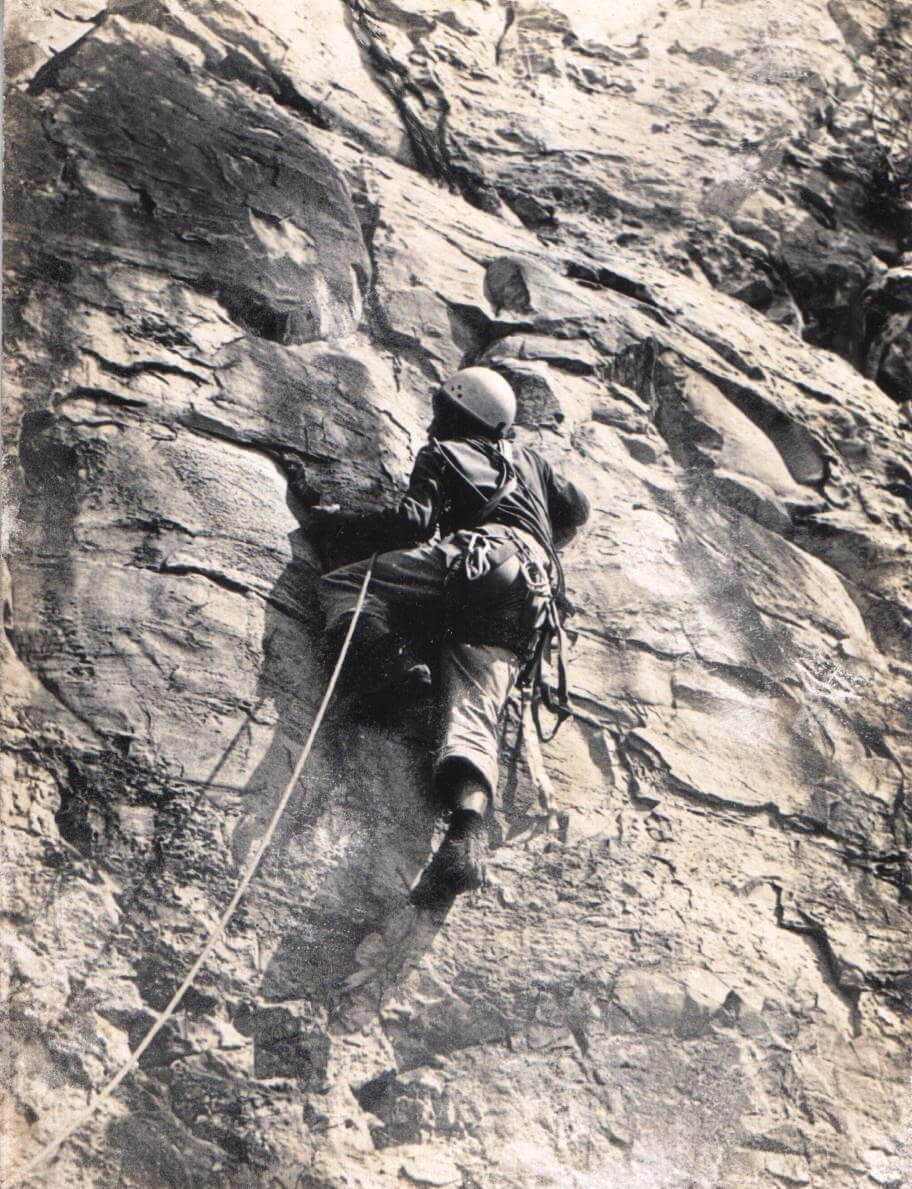
Leading AngKami Straight face at Susunia - 1978
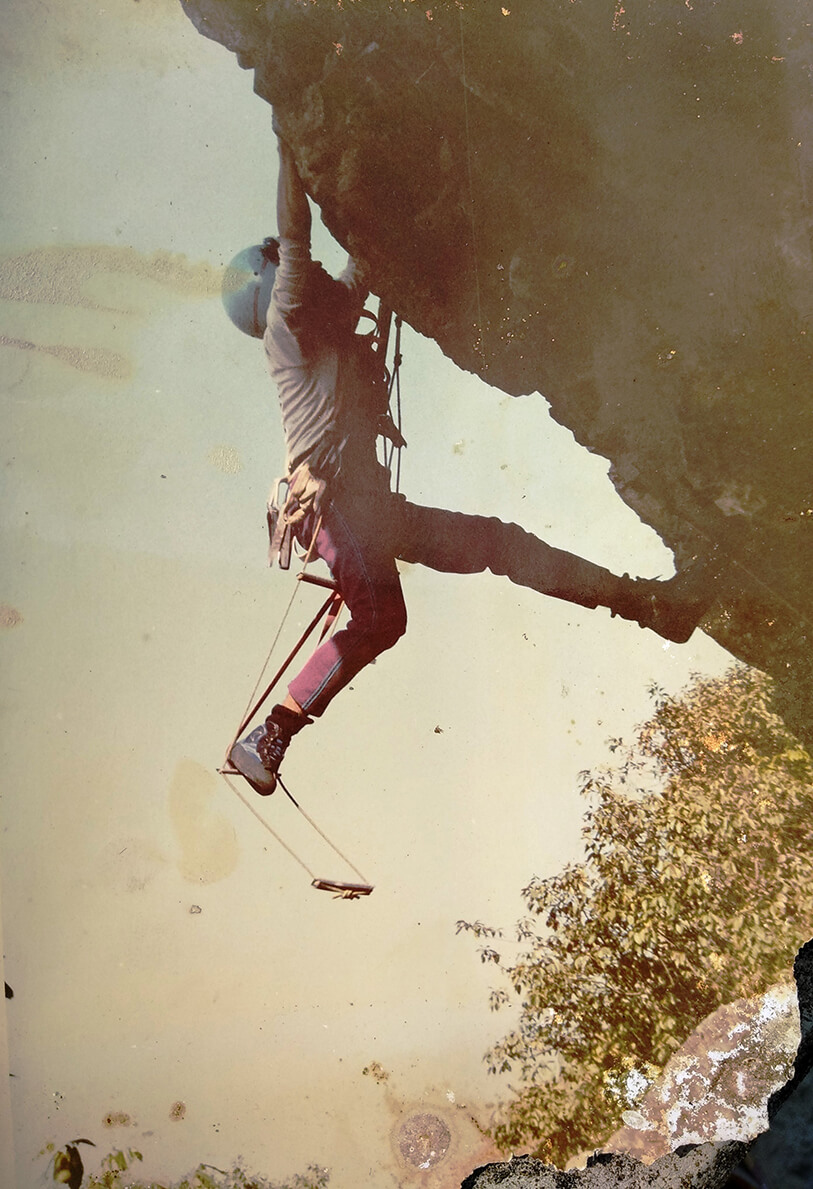
Leading Polomolo in 1989
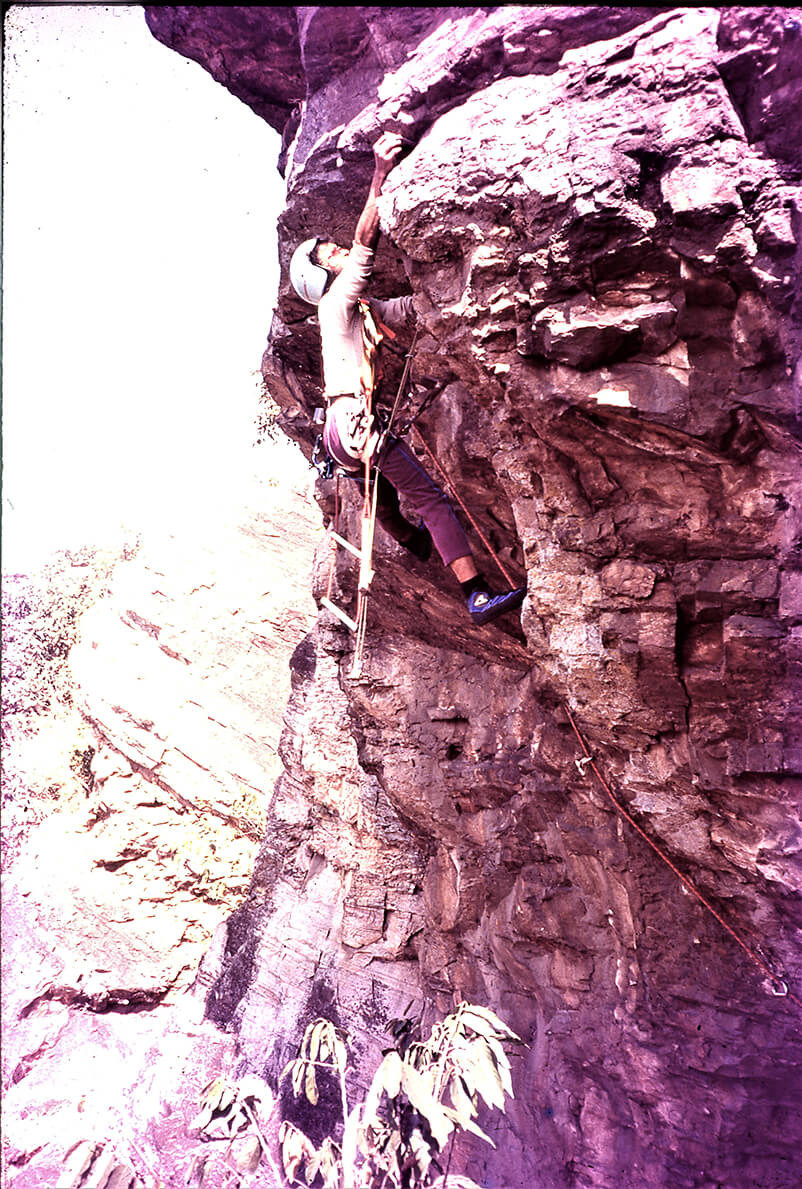
Leading Polomolo in 1989
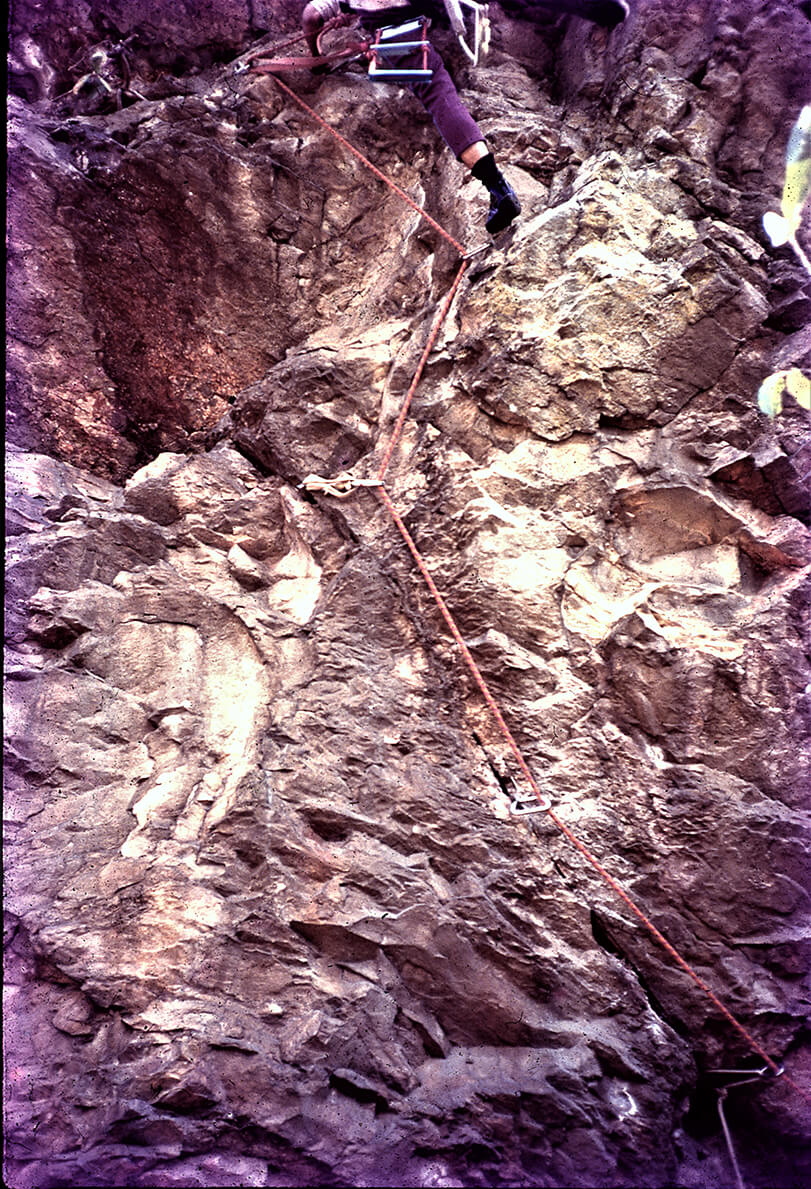
Leading Polomolo in 1989
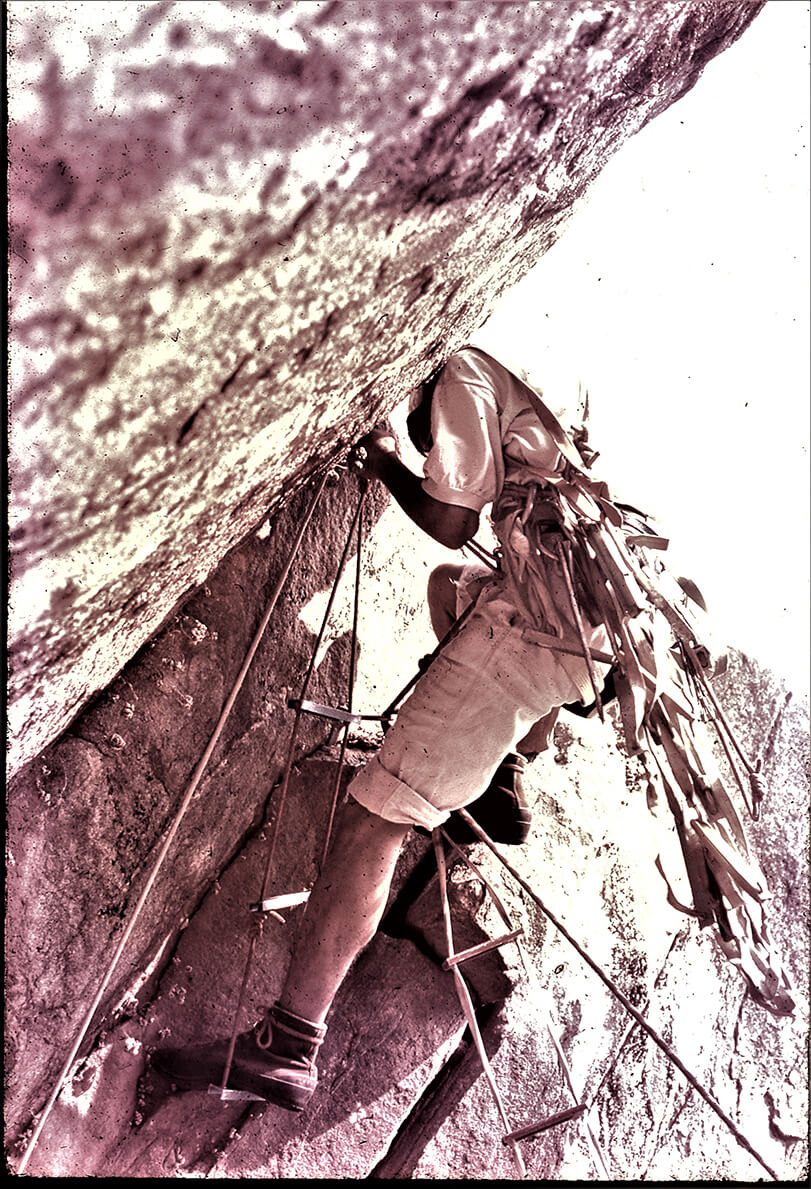
Leading an ovehanging wall at Matha 1990
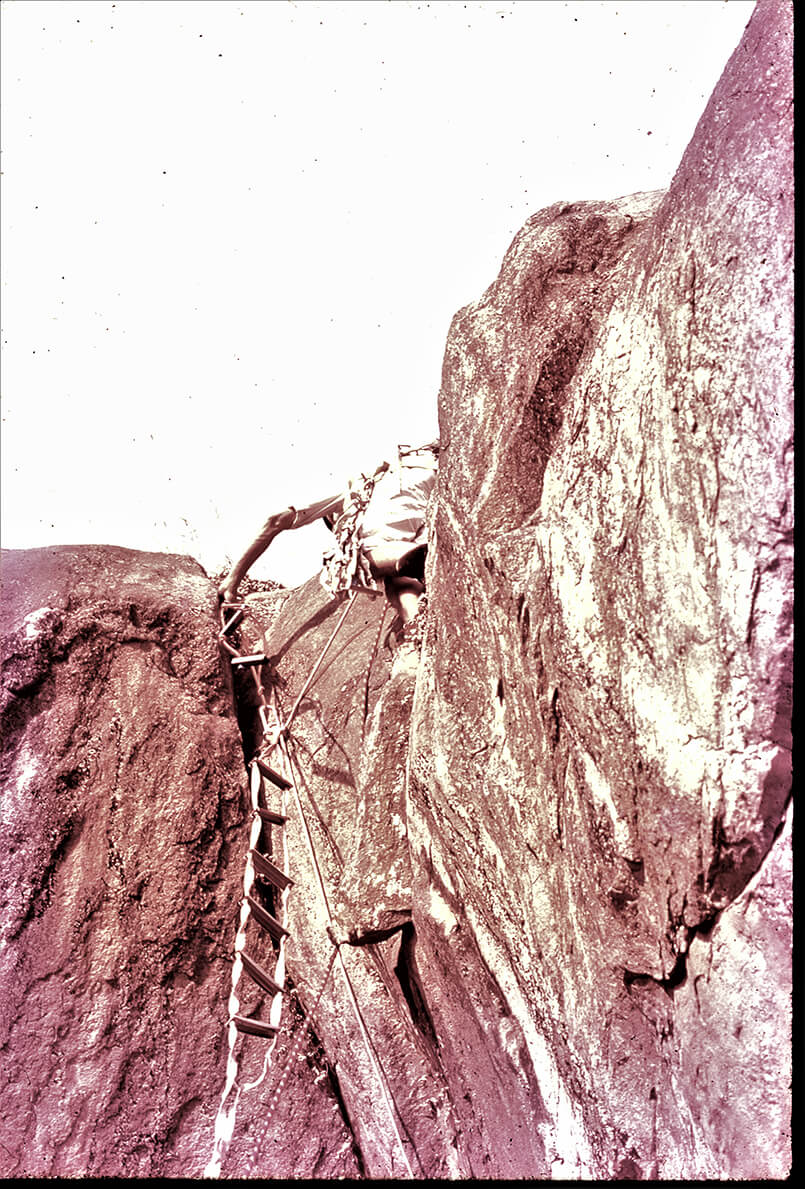
Leading an ovehanging wall at Matha 1990
Historical Context of Rock Climbing
Looking at the history of rock climbing, one finds many opinions. It is said that in the late 18th century, climbing began in parts of China and Europe mainly to reach mountain summits, generally out of some necessities. Progress was limited by hemp ropes and wooden pegs.
In the next centuries, nylon ropes, carabiners, metal pitons, harnesses, and later devices like “friends” transformed the activity in to sport. Along with evolving climbing styles, rock climbing became an independent adventure discipline. Today it has many forms—bouldering, single-pitch climbing, multi-pitch, or big wall climbing. Increasingly today, people identify themselves not as mountaineers but as pure rock climbers.
Social Reflections
In social context, the importance of rock climbing education must be considered from different angles. For children, any new learning is exciting. In fact, life itself is full of adventure, wonder, joy, and uncertainty. But one cannot always wait for life to bring excitement; sometimes we must seek it ourselves.
Late adolescence (16–18 years) is the right time to discover oneself. If someone wishes to break free from routine, I would say: step outside your familiar circle and try something new— trekking, climbing, or any adventure. These experiences spark curiosity, build confidence, and teach responsibility, cooperation, and adaptability.
College years (18–23 years of age) bring deeper experiences, opportunities to prove oneself, and sometimes dreams of changing the world. But compassion for others is equally important which also comes from rock climbing. True adulthood requires knowledge, training, and participation in challenging adventures.
Global Developments in the 1960s; Indian Scenerio
In the 1960s, as mountaineering advanced worldwide, rock climbing also began to spread. Climbers like Chris Bonington and his companions, and later Reinhold Messner, were making record-breaking ascents in the Himalayas and the Alps. To be a good mountaineer, rock climbing skill became indispensable. This period is often called the Golden Age of Himalayan Climbing, and it played a major role in the global expansion of rock climbing.
India was no exception. In fact, youth communities in West Bengal and Maharashtra were already engaged in adventure activities, and rock climbing began in these states around the early 1960s. The first organized rockclimbing training camp in West Bengal was held in January 1965 at Susunia in Bankura district, conducted by the Himalayan Association. In Novenber, 2025, its 60th anniversary has been celebrated in a grand way at Susunia, Bankura. But even before 1960, a small group of Bengali climbers had already practiced rock climbing, I believe. Because, a team from West Bengal went to the Kalindi Pass in 1959, and also expeditions to Nandaghunti (1960) and Nilgiri (1962) were launched. The expeditors must have practiced rock climbing to tune them up for Himalayan climbing. It may be mentioned here that, since 1955, the Himalayan Mountaineering Institute (HMI) in Darjeeling had included rock climbing in its syllabus, and provided training to the students on its rock sites. The concerned climbers were trained from HMI only. As such, the founding of the Himalayan Mountaineering Institute (at Darjeeling) on 4th November in 1954; and the creation of the Indian Mountaineering Foundation (as the sponsoring committee in 1957 for the ChoOyo Expedition; then as a national body established on 15th January, 1961 and then formally registered as IMF on 3rd November in 1961) played a crucial role in the propagation of overall climbing in India.
Historical Roots in Europe
Tracing the origins of rock climbing is like searching for a needle in a haystack. But as a former British colony, India inherited much of its mountaineering culture from them. Rock climbing was an essential part of Victorian youth mountaineering in the Alps. In the late 19th century, young men in England, France, and Italy embraced climbing as a joyful expression of youthful energy. Over time, it evolved beyond its Alpine application into a distinct athletic sport.
Interestingly, “buildering” (urban climbing) was popular among university students in late Victorian England. At Cambridge and Oxford, climbing the buildings was a tradition dating back at least to the late 18th century, emerging from the developing sport of rock climbing. It grew out of the burgeoning interest in mountaineering and formal rock climbing that was developing in areas like the Lake District. Geoffrey Winthrop Young, a Cambridge student and noted mountaineer, published the first buildering guide in 1900: The Roof Climbers Guide to Trinity.
The founding of The International Climbing and Mountaineering Federation (UIAA – Union Internationale des Associations d’Alpinisme, it’s French name) in Chamonix, France on 27th August, 1932 by 20 national mountaineering Associations from 18 countries during the 3rd International Alpine Congress is another milestone in the progress of climbing worldwide. It is now the leading global network representing 100 member associations/federations of 78 countries having its office at Berne, Switzerland. The main purpose of this international body UIAA is to act as the global governing body for the sport, promoting and protecting mountaineering and climbing worldwide by advancing safe and ethical practices, and advocating for access to mountain environments.
Types of Climbing
Climbing can be divided into four categories
- Mountain climbing
- Ice wall climbing
- Rock climbing
- Bouldering (a form of rock climbing, but different in scale, method, and risk).
Though distinct, all of them share a common principle: maintaining balance and weight management. Success in rock climbing means reaching a chosen height—whether a mountain summit or a specific wall—without falling. In modern competitions, the focus is not on reaching the highest point but on how quickly and skillfully climbers progress through increasing difficulty.
Rock climbing is classified as an extreme sport because of its unique challenges, excitement, and the adrenaline rush it produces.
Evolution of Techniques and Equipment
Our predecessors foresaw these possibilities more than 160 years ago. The world’s first mountaineering club, the Alpine Club, was founded in 1857. Their ideals spread globally, leading to innovations in equipment and rope handling techniques. By 1910–11, German and Italian climbers had developed advanced rope handling techniques and new pitons and carabiners. After World War I, expeditions to high mountain ranges benefited from these innovations. Rock climbing also developed as a sport: in the 1940s, the Soviet Union held the world’s first climbing competition. In the 1950s, multi day ascents in the Alps showed climbing’s potential beyond recreation.
By 1976, regular competitions were held in the USSR. In 1985, Italian climber Andrea Melano and journalist Imanuel Casara organized Sportroccia, the first international climbing competition, in Bardonecchia and Arco in Italy. This event has marked the birth of modern sport climbing. In 1991, Frankfurt hosted the first climbing world championship. In 2011, the International Olympic Committee shortlisted sport climbing for the 2020 Olympic, which was debuted in Japan in three categories: speed, bouldering, and lead.
Today we have various kinds of high elasticity and abrasion resistant unicore water repellent ropes, different types of pitons, expansion bolts, carabiners, harnesses, friends, descenders, gri-gris, gears integrated with cams and quickdraws for rapid use, anchors and many more, enabling climbers to tackle increasingly difficult ascents. In this regard, UIAA Safety Commission is putting great effort in revolutionising the equipment required to form climbing’s backbone!
Artificial Walls and Sport Climbing in India
During Sportroccia, experts noticed that preparing natural rock walls for a climbing competition with numerous anchors damaged their integrity. This led to the idea of artificial climbing walls. In India, the influence of global sport climbing reached in the 1990s. Artificial walls began appearing in cities, and the Indian Mountaineering Foundation (IMF) played a key role in promoting this sport. Indoor climbing centers were established, starting with the Nehru Institute of Mountaineering (NIM), Uttarkashi.
Sport climbing is now recognized as a popular, safe, and health-enhancing activity. Just as neighborhood clubs once had gyms, they could now have artificial climbing walls. It is important to remember that sport climbing and Adventure/Traditional rock climbing differ fundamentally. Sport climbing is conducted in controlled and safe environments with pre-planted safe-guards while Adventure/Traditional rock climbing in nature involves risks in reality which a climber requires to take care while on the go in real time climbing.
Adventure, Society, and the Spirit of Mountaineering in Bengal
To understand the social mindset, we must recall the youth of undivided Bengal. From the early 20th century, educated Bengali youth played a crucial role in India’s independence movement. During the 1905 partition of Bengal and the Swadeshi movement, people resisted British rule and promoted indigenous industry. Revolutionary groups like Anushilan Samiti and Jugantar began armed activities.
In the 1920s came the Non-Cooperation Movement, and in the 1930s, MasterDa Surya Sen led the Chittagong Armoury Raid. Brave young men like Khudiram Bose, Kanailal Dutta, Binoy-Badal-Dinesh, Jatin Das, and women like Pritilata Waddedar, Kalpana Dutta, Bina Das, Leela Nag, Manorama Basu, and others—many just college students—took up arms against the British, often carrying cyanide capsules to avoid capture. Even older women like Matangini Hazra showed extraordinary courage.
These sacrifices, often forgotten, reveal how deeply adventurous and fearless Bengal’s youth were. Maharashtra’s youth also showed similar spirit in the freedom struggle.
We must not forget history. There was a time when the British Empire was so vast that the sun never set on it. The British were nourished by an adventurous spirit, which enabled them to build such a vast empire. Of course, their misrule, cunningness, exploitation, plunder, indiscriminate killings, and assaults are beyond the scope of this writing, so I will refrain from commenting on those.
Certain landmark expeditions inspired the world deeply. On May 29, 1953, Edmund Hillary and Tenzing Norgay, members of a British expedition, became the first to reach the summit of Mount Everest, filling people everywhere with excitement and awe. On July 20, 1969, when Americans first set foot on the moon, the world was equally thrilled. Though different in nature, that too was a scientific adventure by NASA—“One Giant Leap for Mankind”. Such events created in people the belief that even the seemingly impossible could be achieved. This belief itself is the true social contribution of adventure, and in that sense every adventurer effectively creates an impact on the society and hence, a social worker.
On May 23, 1984, Ms. Bachendri Pal became the first Indian woman to climb mount Everest. This event stirred millions of Indians, especially the womenfolk, with a new wave of hope and determination: “We too can achieve the impossible”. Their minds swayed with new aspirations and confidence. And, who does not know that moving forward in new ways marks the progress of civilization?
Practical knowledge of mountaineering, rational and scientific analysis of situations, and an inquisitive mind together shape a climber. A true mountaineer is one who is mentally prepared to face all kinds of dangers. This mindset enabled the climbers from Bengal in the 1991 Indian Everest Expedition via Tibet (China) to attempt the challenging Great Couloir route along it’s north face. They proved that even such a difficult path could be climbed. Unfortunately, fierce western storms and continuous blizzards forced them to spend three days in a snow cave to achieve 7,800 meters before retreating.
There is no doubt that adventure plays a vital role in advancing society. Wise people believe that adventure helps build the backbone of a nation. That is why Pandit Jawaharlal Nehru and Dr. Bidhan Chandra Roy took special care to establish the Himalayan Mountaineering Institute in Darjeeling on November 4, 1954, opening new horizons of adventure for Indian youth.
Also, everyone knows how perilous the mountains can be! In their vastness, humans seem small and insignificant. Mountaineering is thrilling but dangerous. Those who love nature or are drawn by its mysteries often risk their lives, balancing on the fine thread between survival and death. As long as mountains exist, people will continue to be drawn to them—whether for beauty, silence, self-testing, or some unknown inner reason. It is an endless quest: to discover oneself, to understand oneself, perhaps to improve oneself.
After the Everest success in 1953, Edmund Hillary said: “We conquer not the mountain, but ourselves”. Few have understood the importance of self-conquest as he did. Strangely, the very dangers of mountains seem to attract people irresistibly, and those who return from the brink of death learn to live more vibrantly. Perhaps it is because of these risks that mountaineering is so enchanting. Also, mountains never completely disappoint their climbers. Each expedition brings something—thrill, problem-solving exercises, companionship, empathy, self-belief, and joy. Yet it must be said: mountains are harsh places. If dangers are not respected, not only will the joy of climbing be lost, but lives may be lost too. To keep risks at bay, one must understand them clearly.
Milestones in Indian Adventure vs. Bengal's Reaction
Few events like, the 1950 Annapurna ascent led by Maurice Herzog and the team’s frostbitten retreat; the 1953 Everest climb by Hillary and Norgay; the founding of the Himalayan Mountaineering Institute in 1954; and the creation of the Indian Mountaineering Foundation in 1957 (formally registered in 1961)—all these stirred the adventurous spirit of Bengalis. At that time, apart from a few Doon School expeditions, most Himalayan expeditions were conducted under the supervision of the Indian Army. Even so, some enthusiastic Bengali youth organized treks and expeditions in the Himalayas purely through their own efforts. Slowly, since 1960, through the promotion of mountaineering in the general mass via Nandaghunti Expedition, Bengal has observed unperecedented growth both in mountaineering and rock climbing. Formation of various mountaineering associations/clubs in various parts of the state were instrumental in that growth. For instance, the number of mountaineering associations/clubs leaped from a single one (i.e., Himalayan Associatiuon) in 1960 to 76 in 1979; to 230 in 1990.
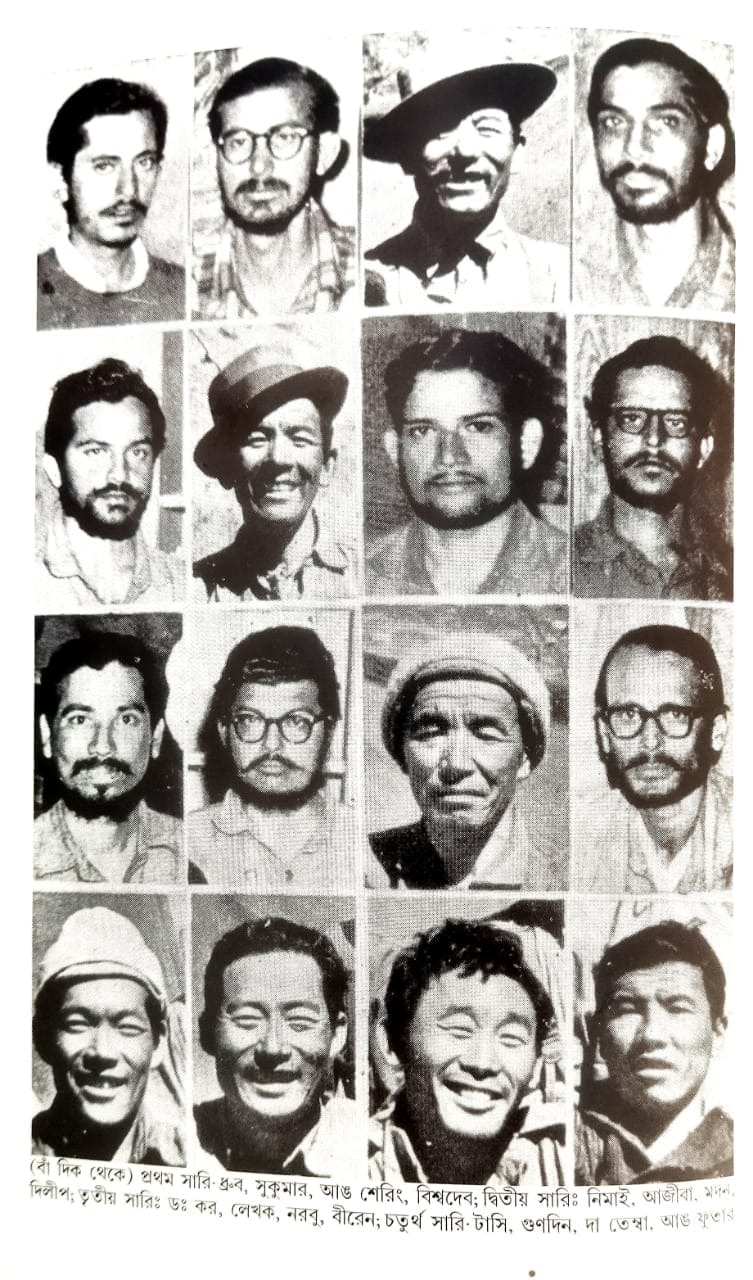
Members of Bengal's Nandaghunti Expedition 1960
In terms of number of mountaineering expeditions in the Himalayas, beside many repeatitions, 13 new summits were attempted/scaled during 1960-69 including one by women climbers; 25 new summits were attempted/scaled during 1970-79. Total number of expeditions during 1959-79 were 122, with 6 accidents, and 9 deaths. There was a big surge during 1980-89, 48 new summits were attempted/scaled which included Alpine style expeditions, expeditions following ‘Face route’, solo expedition etc. Total number of expeditions during 1980-89 were about 250, with 14 accidents, and 28 deaths. Lots of repeat expeditions to some summits are also remarkable to note in these phases. For example, more than 25 expeditions were launched to Mount Kamet (25,447 ft) only from Bengal! Side by side, the number of casualties increases because of various types of accidents held in the expeditions and innumerable trekking programs arranged from Bengal in these phases. But then, it couldn’t diminish the undaunted spirit of Bengal climbers. The curve however started drooping down since the 1990s. The number of mountaineering expeditions in the Himalayas, beside many repeatitions as usual, to new summits attempted/scaled were 22 during 1990-99, which included two expeditions to Mount Everest, one of them being the famous 1991 Everest Expedition via it’s dreaded Great Couloir route along North face which retreated from 7800m and the other held in 1993 along North Col-NE Ridge route retreated from 8200m; and 18 new summits were attempted/scaled during 2000-2009. The lean phase observed since 1990s has obviously caused a drastic effect on the number of active mountaineering associations/clubs in Bengal which reduced to about 60 by 2010. One may consider this phenomenon in other way round also, as if, the youth of Bengal has lost interest in mountaineering activities for reasons yet unknown and to be researched.
Since 2010, a somewhat new tendency could be observed in the aspiring climbers in Bengal, who have/had fallen prey to syndicate climbing (as it is now happening in Nepal since mid 1990s) to few of the 8000ers including mount Everest to earn easy fame! The WB Government, interestingly, through it’s Youth Services Department started giving some incentives to the aspirers in the form of allocation of hepty money, which certainly goes against ethics and philoshopy of mountaineering and adventure on the whole! We found group activities in mountaineering is diminished further, individual fame seeking effort flourished completely under the domain of syndicate governed high altitude tourism, causing a real irepairable blow on the growth of mountaineering/Adventure in the state. This phenomenon, in fact, does not conform the legacy of Bengal mountaineering, and we are optimistic that this ebb will go away soon and usher a new horizon to uplift adventure again as it held in Bengal in the past, especially in 1980s.
The Value of Rock Climbing
At the heart of all adventure pursuits lies rock climbing—a discipline that has never been merely a physical exercise, a risky sport, or a recreational hobby. True rock climbing represents a profound engagement between human capability and the natural world, guided by a strong philosophical and ethical framework. It nurtures both physical well-being and mental equilibrium, while offering a meaningful way to immerse oneself in nature.
Climbers approach rock faces not with the intent to conquer or dominate them, but to test personal limits while remaining deeply respectful of the environment that sustains them. This interaction fosters confidence, perseverance, sound judgment, and the ability to take calculated risks. The foundational principles of adventure, self-reliance, teamwork, and environmental stewardship define the true spirit of rock climbing. Exposure to diverse landscapes and cultures broadens the mind, while the inherently team-oriented nature of climbing develops cooperation, communication, solidarity, and leadership. Over time, climbers develop a deep respect for nature, often becoming committed guardians of the environment rather than mere consumers of it.
Against this backdrop, the challenges faced by today’s youth appear particularly acute. Young people are growing up amid intense academic competition, uncertain employment prospects, and relentless comparison driven by social media. Excessive digital exposure has contributed significantly to anxiety, depression, frustration, and emotional instability. These internal pressures frequently manifest as impatience, impulsiveness, rough behavior, and, at times, a disregard for elders and their accumulated wisdom. In such a climate, the ethical values embedded in rock climbing can serve as a powerful and constructive remedy.
As a disciplined mode of engaging with nature, oneself, and others, rock climbing naturally cultivates patience, humility, responsibility, and respect—qualities increasingly eroded in fast- paced, screen-dominated lives. On a rock face, there is little room for haste, ego, or aggression. Every movement demands calmness, concentration, and thoughtful decision-making. This process trains the mind to regulate fear, manage anxiety, and replace impulsive reactions with composure and clarity—abilities that extend well beyond climbing and into academic, professional, and personal life.
Equally significant is the culture of mentorship inherent in climbing. Experience is valued not as authority, but as wisdom earned through practice and judgment. Young climbers learn safety, technique, and decision-making through attentive listening and careful observation, fostering humility and genuine respect for seniors. This stands in sharp contrast to the dismissive and often confrontational attitudes encouraged by contemporary digital culture.
Rock climbing also instills a strong sense of ethical responsibility. A climber is accountable not only for personal safety but also for the well-being of partners. Trust, clear communication, and mutual care are indispensable. This shared responsibility nurtures empathy, reliability, and moral awareness, countering the tendencies toward self-centeredness and social indifference.
Furthermore, climbing reconnects young people with the natural world, offering a vital respite from constant digital stimulation. Natural rock environments encourage silence, reflection, and presence in the moment. Such experiences can be deeply therapeutic, easing mental fatigue, emotional overload, and feelings of alienation.
The philosophy of climbing emphasizes inner growth rather than superficial success. Progress is measured through perseverance, skill development, and self-mastery—not through instant recognition or external validation. Failure is accepted as an essential teacher rather than a source of humiliation, helping young people build resilience, self-respect, and a balanced sense of identity.
In conclusion, the ethics and values of rock climbing—discipline, humility, responsibility, respect, resilience, and environmental consciousness—offer far more than physical fitness or adventure. They provide a comprehensive framework for character formation, emotional healing, and social maturity. When practiced in its true spirit, rock climbing can guide today’s youth away from anxiety, arrogance, and alienation, towards balance, ethical awareness, and meaningful human relationships. In essence, it strengthens social bonds and nurtures individuals into responsible, compassionate, and constructive citizens—the very foundation of a healthy and dynamic society.
Philosophical Reflections
Even the Bhagavad Gita speaks to this spirit. Sri Aurobindo acknowledged its greatness, saying that the Gita presents the supreme and profound knowledge in brief, and that its path of action is the eternal way of progress—not renunciation, but active work.
Several verses are especially relevant to social welfare:
- “Karmanyevadhikaraste ma phaleshu kadachana” (Chapter 2, Verse 47): Encourages selfless action without attachment to results.
- “Saktah karmanyavidvamsa yatha kurvanti bharata, kuruyad vidvans tathasaktas cikirsur lokasangraham” (Chapter 3, Verse 25): Inspires the wise to act responsibly for the welfare of society.
- “Vidya-vinaya-sampanne brahmane gavi hastini, shuni chaiva shvapake cha panditah sama-darshinah” (Chapter 5, Verse 18): Teaches equal respect for all beings, promoting harmony and friendship.
These verses inspire individuals to increase self-awareness, act selflessly, and treat all with equality—thus building a healthy and benevolent society.
Having been involved in mountaineering for nearly forty-eight years, I have seen that the mindset of climbers often reflects the same social welfare spirit expressed in the Gita. Exceptions exist, of course, as they do in all fields, but exceptions do not define the rule.
Therefore, our youth—particularly adolescents—must be introduced to adventure at the earliest possible stage. For children up to age 14, Nature Study Camps or Adventure Training Camps lay the foundation. For older youth, Rock-Climbing Camps cultivate discipline, teamwork, confidence, and inner strength, and certainly usher an enlightened path to them for real adventurism. A nation that nurtures such youth builds not only strong bodies but also character— capable of confronting adversity, serving society, and living with integrity.
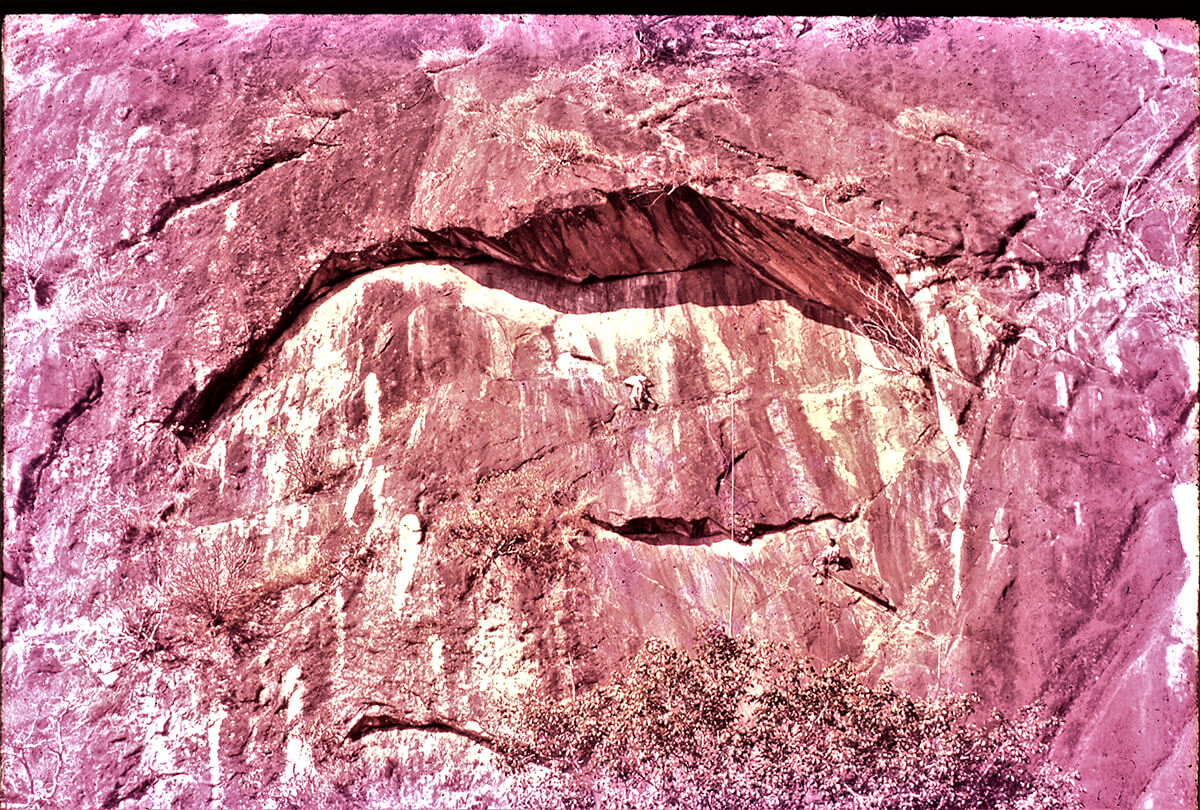
Leading a long wall at Matha 1990
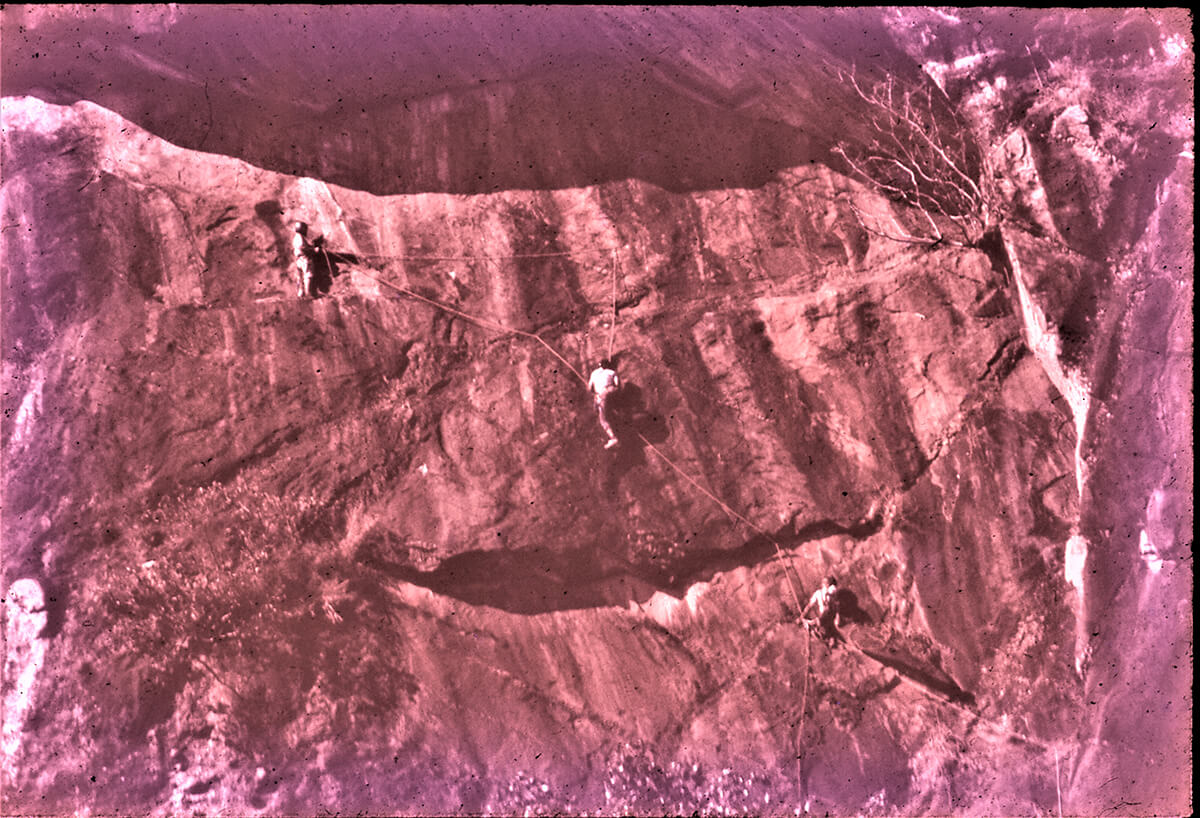
Leading a long wall at Matha 1990
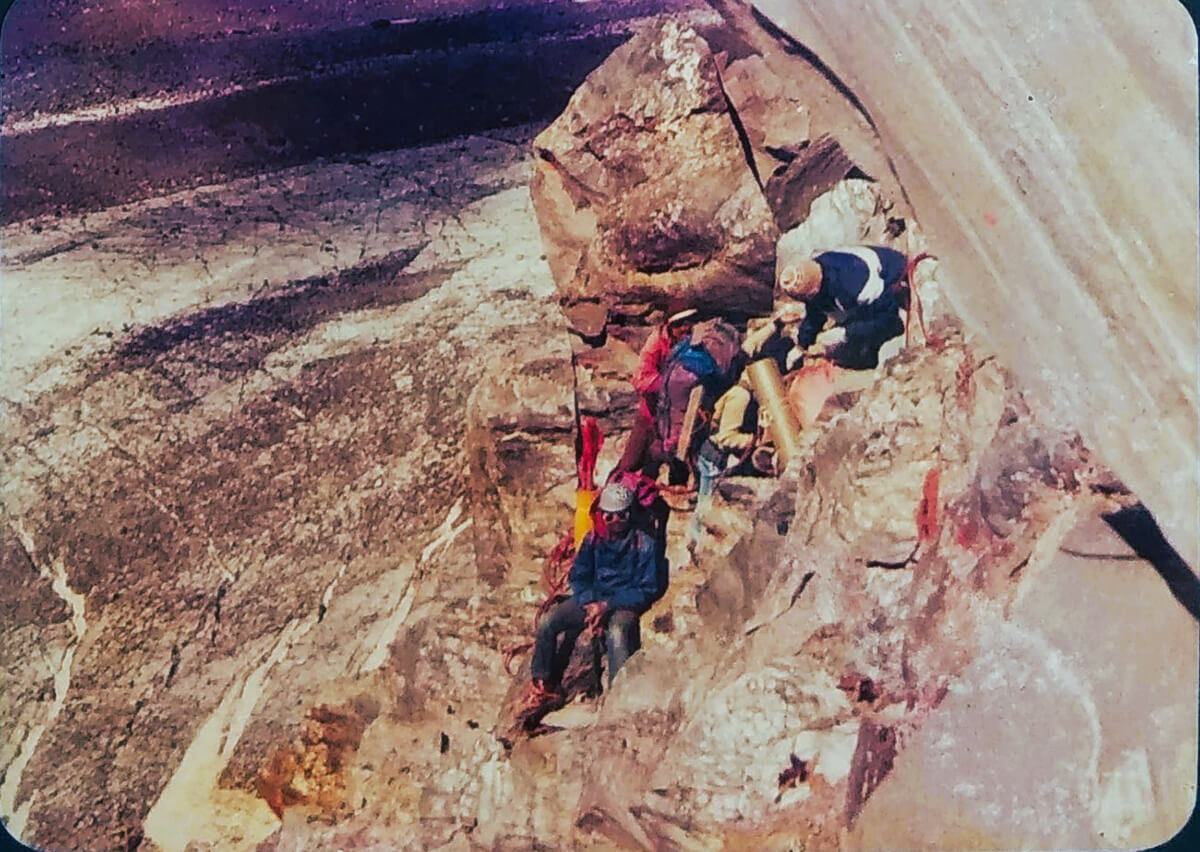
A resting spot while climbin on SW face of HT on 22.09.87
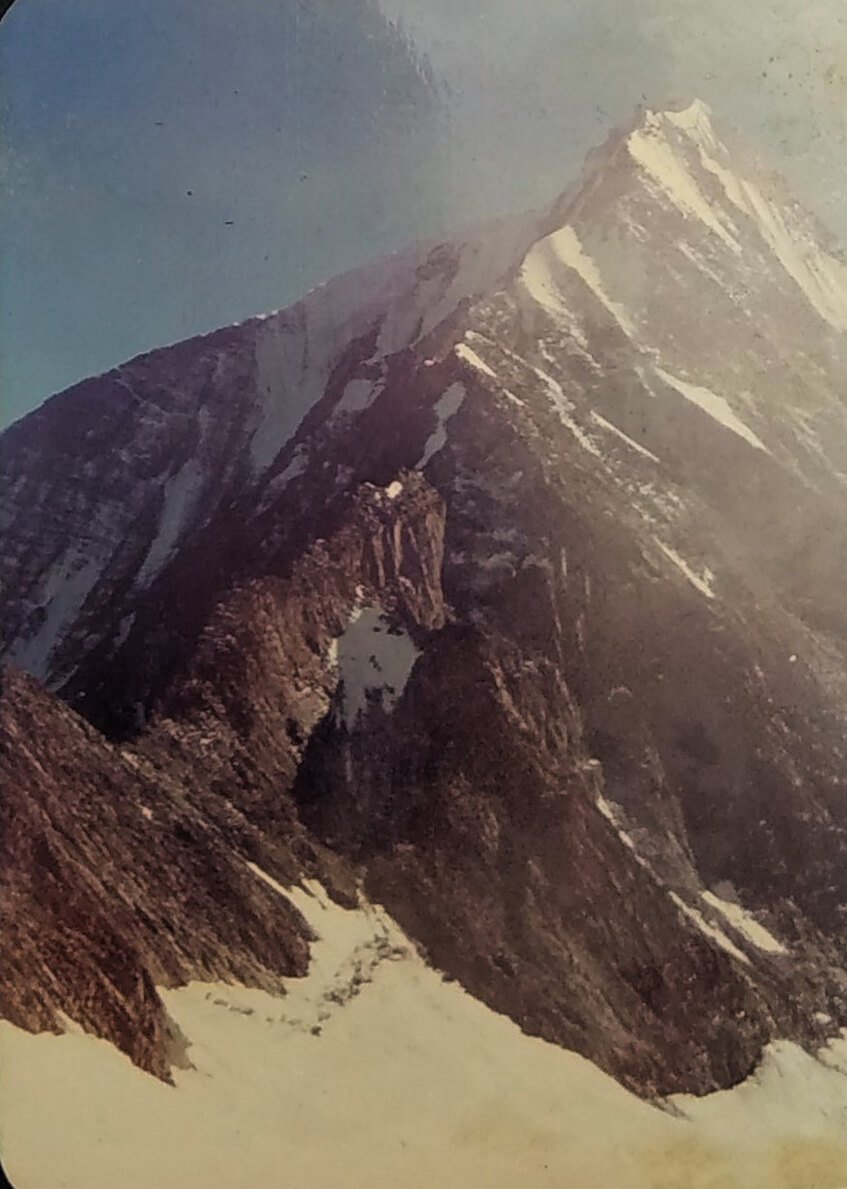
Hanuman Tibba(19500ft) from Tentu(Solang) pass
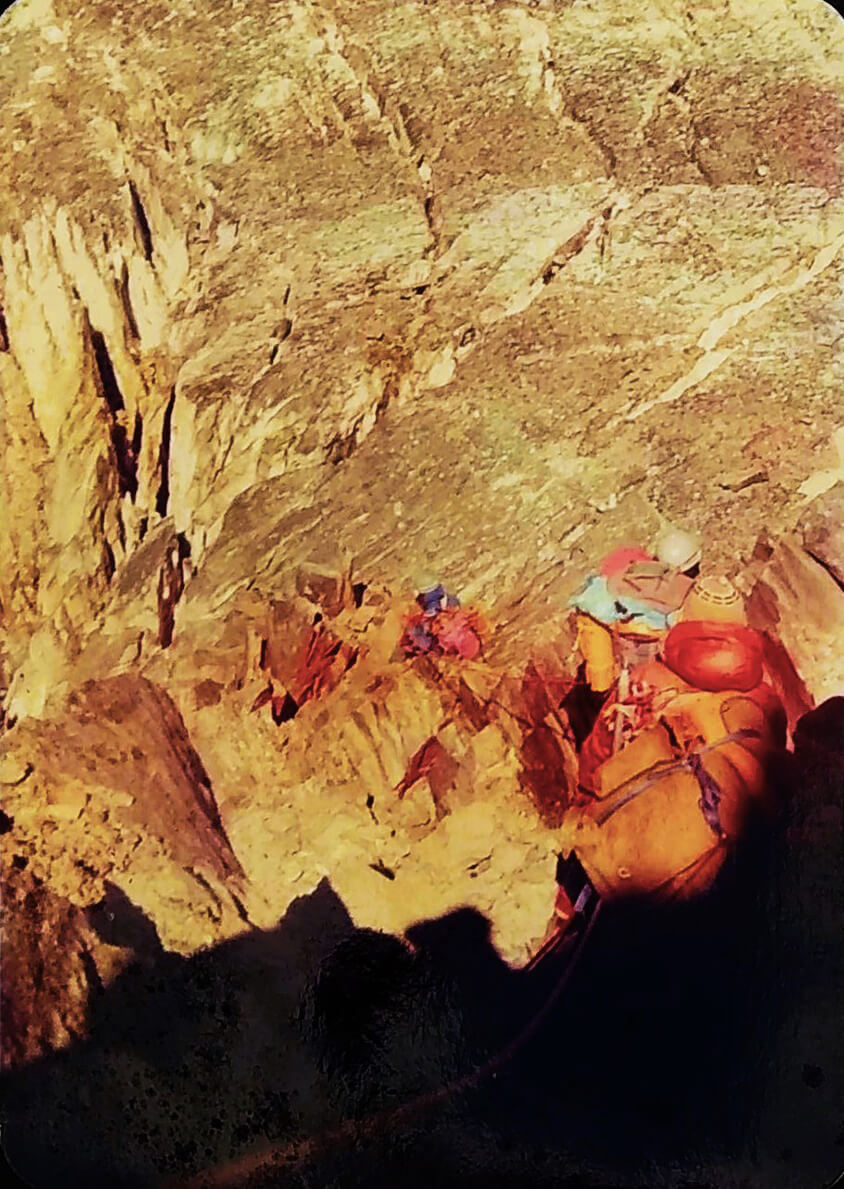
Climbing on SW face of HT on 22nd Sep 1987
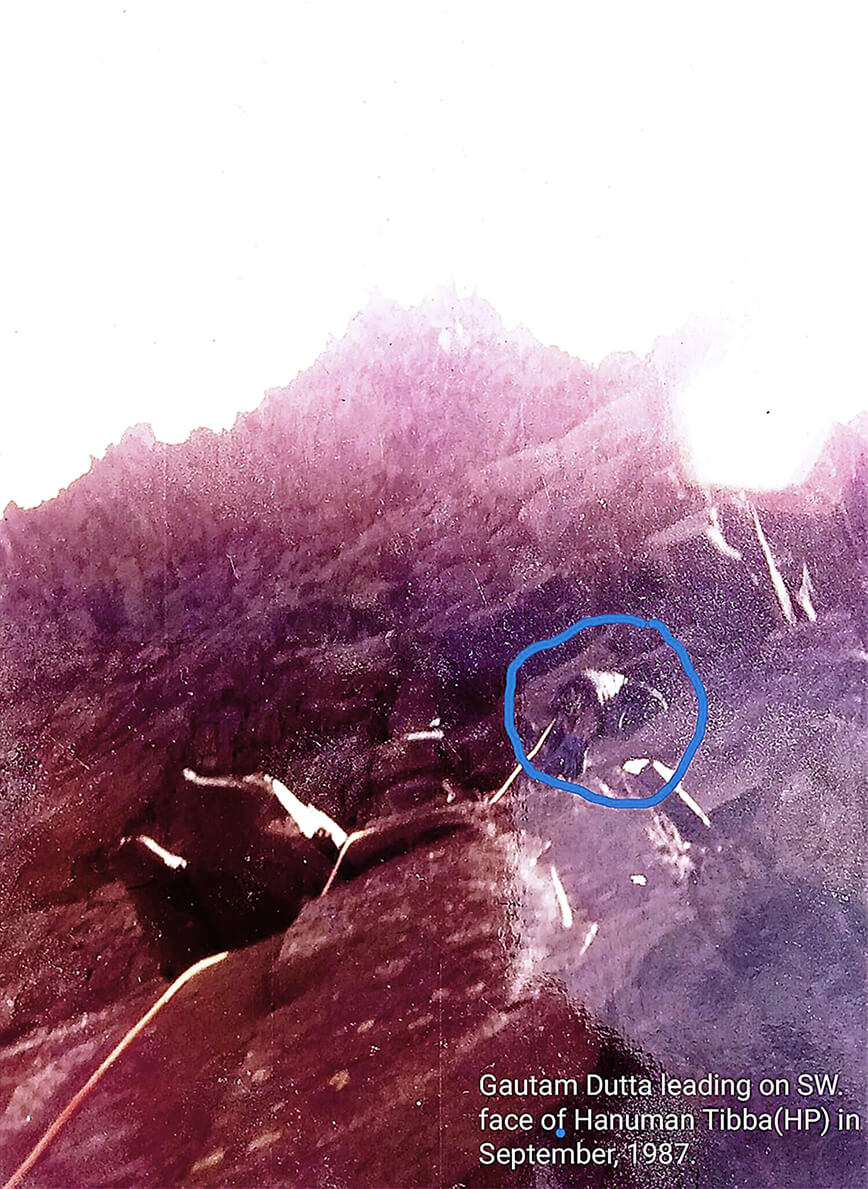
It was 3-00pm and weather was fine till then on 22.09.87
Related Articles


Place your ad here. Call +919163231788 or Contact Us


