Rock-Climbing Heritage in the Bansa Hills Area: Principles and Practice of Training Site Development
Gautam DuttaCategory: Article
Date of Publication: May 25 , 2026
Introduction
Rock climbing in Bengal has always been more than a sport. It is a discipline, a philosophy, and a community endeavour that binds generations together. Founded in February 1966, the Jadavpur University Mountaineering and Hiking Club (JUMHC) has stood at the forefront of Bengal’s climbing tradition. For six decades, JUMHC has nurtured climbers, built training sites, and mentored organizations across the state. Each new site is not merely a physical space carved into rugged terrain; it is a living testament to discipline, imagination, and collective spirit.
When we speak of JUMHC, the legacy of such an organization within a distinguished university cannot be weighed merely in the tally of summits conquered. Its true worth resides in the spirit it has nurtured—where trainees have imbibed discipline, adventurers have discovered the light of imagination, climbers have forged resilience, and all have been embraced by sincere fellowship. This fellowship, this guidance, did not remain confined within the walls of the university club. It reached outward, illuminating the path for other organizations—especially in the creation of training grounds and the stewardship of camps. In this way, JUMHC’s heritage has become not just a record of ascents, but a beacon of community, discipline, and shared endeavour.
So far, our members were instrumental in developing Rock-climbing sites at various places, namely at:
1. Mathaburu(Purulia): since 1978-79 with members of Himalayan Association, and also with Kanchenjungha Foundation(KF) since the beginning of eighties[the first course held there in 1980 under the joint organisation of KF, Chandannagar Mountaineering Association(CMA) and Bharat Scouts with the Training leadership of JUMHC],
2. Panchalingeshwar(Odisha): with KF in eighties and later with Arete Mountaineering Foundation in nineties,
3. Bangriposhi(Odisha): with KF again in eighties. Besides, development of sites at
4. Maharajpur(Bihar), and Jayanti-Buxaduar(North Bengal): were also undertaken in the eighties with KF and a couple of Training courses were organized, though these were found to be more suitable for Adventure Training programmes than exclusive Rock-climbing courses.
Each site developed under its guidance becomes a beacon of heritage, reminding climbers that they are part of a lineage that values not only daring ascents but also the wisdom of safe practice.
JUMHC's pioneering initiative of its own
In December 1966, JUMHC organized its very first rock-climbing course at Susunia Hill in Bankura district. In this regard, it was the second organization in Bengal to do so, following the Himalayan Association. Yes, assistance was taken from both HA and HMI, Darjeeling. From then until 1980, annual training continued to be held at Susunia. From the very beginning, Joychandi Hill(s) was included by JUMHC as part of its training program, primarily for advanced students. For them, it became customary that the final day of the course would always be conducted at Joychandi Hill.
From 1981 onwards, the training site was shifted to Mathaburu, and annual training continued there right up to 2025. For various reasons—chiefly the excessive financial burden imposed by the West Bengal Forest Department since December 2019 and its markedly uncooperative attitude—we were compelled to consider abandoning Mathaburu as our regular training ground. Consequently, from around 2022, we began searching for a suitable rock-climbing site within forested terrain, one that possessed proper infrastructure (visible physical conditions such as roads and communication facilities) as well as social infrastructure (acceptance among local residents).
Recent Initiatives
Recently, JUMHC has undertaken two projects in the Bansa Hill area, located in the western part of Purulia district. Bansa is a picturesque hilly site near Kalidah Tulin, beside the Ranchi–Purulia Road. The nearest railway stations are Tulin or Muri Junction (Jharkhand). The region is quite extensive, enriched with scattered hills bearing different names. Among them, the tallest granite dome-shaped hill is Bansa Hill itself (Height: 280 meters/918 feet above ground level; 539.30 meters/1769.44 feet above sea level; Coordinates: 23°22'00.69" N / 85°55'35.34" E). There is a temple of Devi Bansa at its foothill just adjacent to Ranchi–Purulia Road opposite ‘Bansa More’, the entry point to Bansa village.
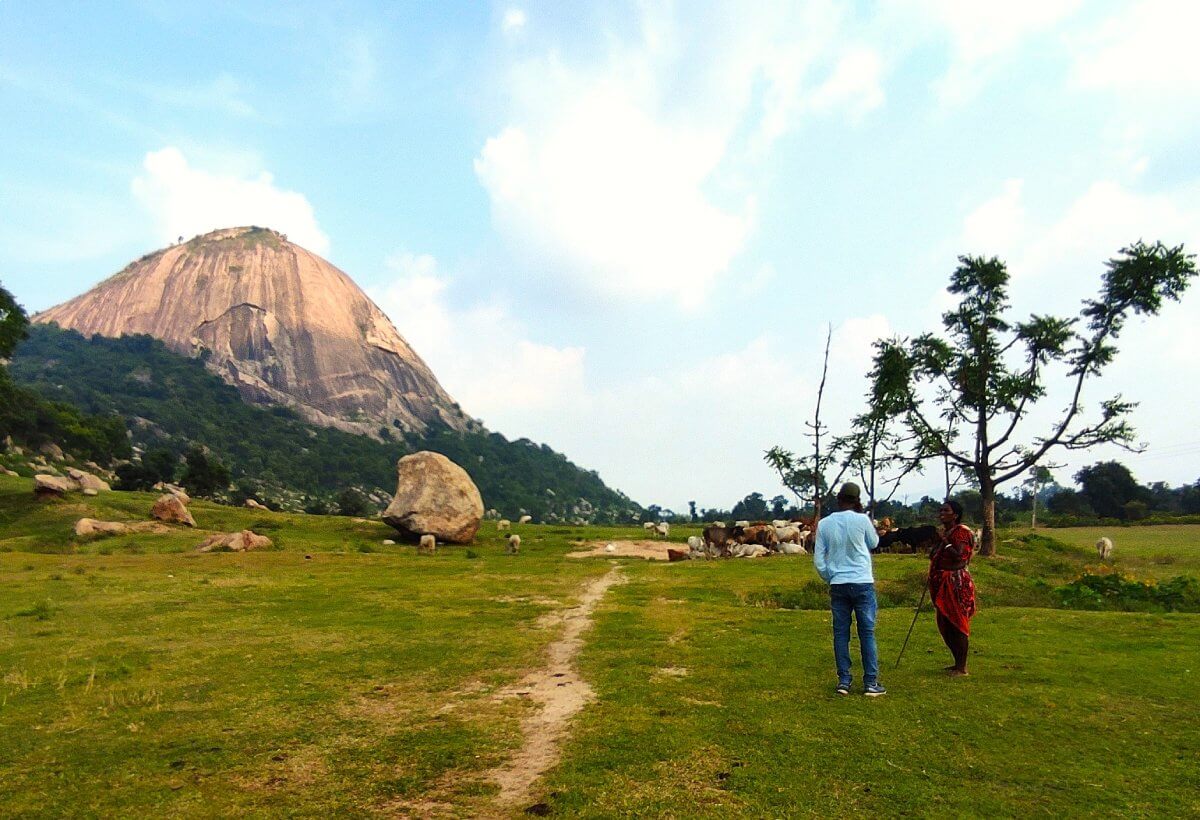
Bansa Hill (Height: 539.30 meters/1769.44 feet above sea level; Coordinates: 23°22'00.69" N / 85°55'35.34" E).
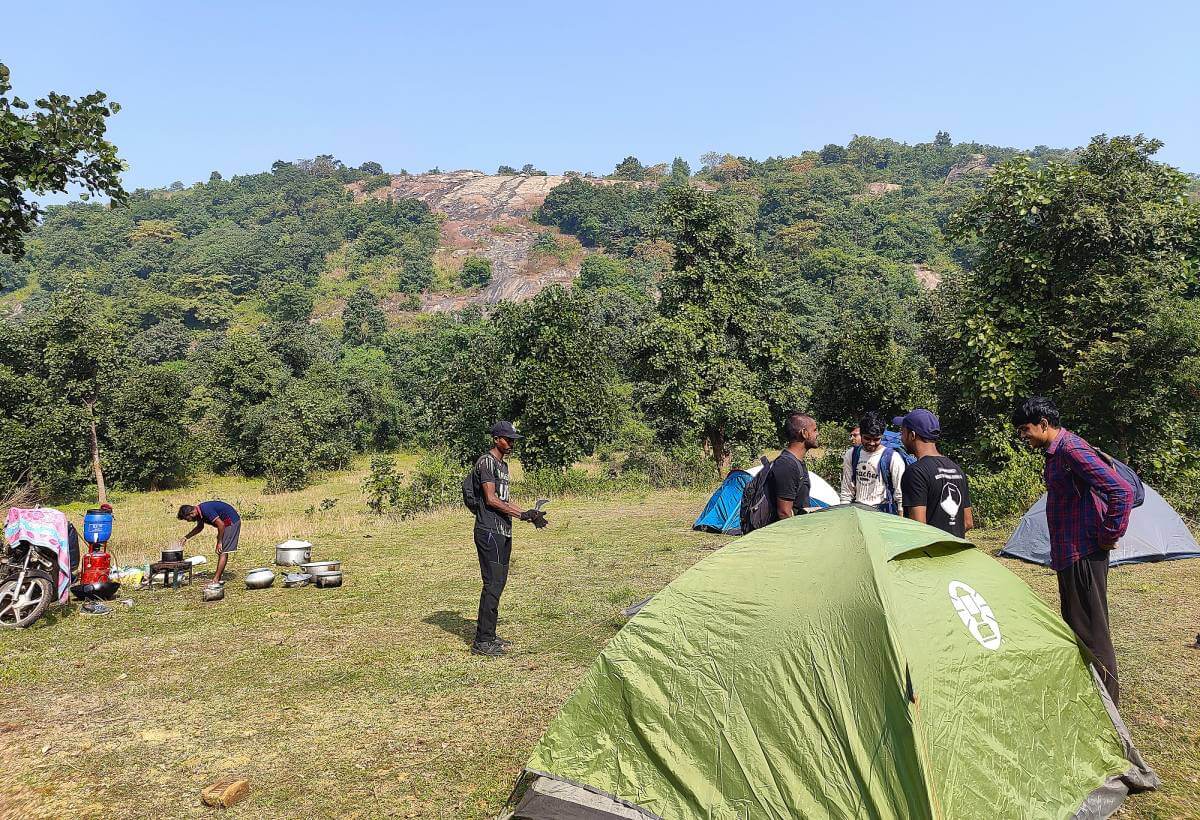
Majherpahar, right beside the Karilata Campsite.
Our first project was on Majherpahar, right beside the Karilata Campsite — which had been developed in 2024 for the Kolkata Prakriti Paribrajak Samiti (KPPS). In December, under the leadership of JUMHC, a full-fledged rock-climbing training camp was held there. The camp was highly successful, because it not only taught climbing techniques, but also instilled discipline, safety, and the spirit of teamwork.
The second project was at the newly developed cluster site of Dhelburu–Rani Tungri–Majher Tungri–Chandni Hills, where JUMHC organized a training camp in February 2026. This project was larger and more demanding. Here, training was not limited to rock climbing only— an environment was created where trainees learned self-reliance, endurance, safety, and how to move forward in life by valuing teamwork and cooperation.
Both of these projects were the practical application of JUMHC’s guiding principles — discipline, imagination, survey, improvisation, mentorship, dedicated labour, and social consciousness. These values, inherited from our predecessors, continue to guide every step of our site development today.
Principles of Developing a Rock-Climbing Training Site
The development of a training site is a multi-layered process. It begins with imagination and ends with execution, but in between lies a journey of surveying, planning, rock-site building, and mentoring, which we started since September, 2024. The principles we followed at Majherpahar-Karilata and Dhelburu to Chandni Pahar area can serve as a blueprint for future generations.
1. Vision and Imagination
Every site begins as a dream. The rugged but green landscapes of Bansa Hills area — with their cliffs, boulders, and ridges — hold immense potential, but it takes imagination to see a training ground where others see only wilderness. Apart from Majherpahar-Karilata site, identifying Dhelburu, Rani Tungri, Majher Tungri, and Chandni Pahar cluster as suitable terrain was the first visionary step. We envisioned routes that could challenge beginners and advanced climbers alike, and spaces where camps could be sustained for weeks.
2. Survey and Feasibility
Imagination must be tempered with practicality. A thorough survey of the terrain is essential. We examined:
- Rock quality: Stability, fracture lines, and suitability for anchors.
- Accessibility: Paths for trainees, instructors, and supply chains.
- Safety hazards: Loose rocks, wildlife, weather exposure.
- Environmental impact: Ensuring minimal disruption to local ecology.
This feasibility study ensures that the site is not only inspiring but also sustainable.
3. Community Involvement
No training site can be built in isolation. The strength of JUMHC lies in its community endeavour — students, instructors, alumni, and support staff especially selected from the local community at Bansa area. After the completion of site-building endeavour at Majherpahar beside Karilata campsite, a Rock-climbing course was organised for KPPS in December, 2024 under JUMHC’s guidance, where we had 35 trainees, 13 instructors and a number of observers, in all about 65 personnels. By February,2026, at Dhelburu-Chandni pahar area, this time camp organised by JUMHC, the scale had grown to 68 trainees and nearly 105 personnels in all including instructors, other officials. kitchen staffs, and logistics teams, all played vital roles. Their collective effort transformed raw terrain into a functioning training ground.
4. Infrastructure Development
A training site is more than rock faces. Discipline, imagination, and mentorship are not abstract ideals; they are principles that shape every decision, from the placement of a piton to the organization of a meal. It must cater to climbers of varying skill levels, offering routes that build confidence, challenge technique, and inspire aspiration. The diversity of terrain in the Bansa hills region makes this possible. It requires:
- Beginner-Friendly Routes: Gentle slabs and short climbs with ample protection are prioritized for novices. These routes instil confidence and teach fundamental techniques such as foot placement, balance, and rope handling.
- Intermediate Challenges: Vertical faces of moderate difficulty allow climbers to refine advanced footwork, handholds, and rope management. These routes bridge the gap between basic competence and technical mastery.
- Advanced Test pieces: Overhangs and technical wall/ridges provide the necessary challenge for experienced climbers. They serve as aspirational goals, motivating trainees to progress steadily.
- Grading System: It is for determining the difficulty of routes according to international standards. This ensures consistency and allows climbers to track progress and compare achievements across sites.
The execution was not glamorous. It involved sweat, toil, and countless small decisions. But each decision was guided by principles: safety, sustainability, and community.
5. Safety and Discipline
Climbing is inherently risky, but risk can be managed through discipline. Hence, as mentioned earlier, adequate care must be given so that every trainee learns:
- Proper use of equipment.
- Rope management and knot techniques.
- Rescue drills and first aid.
- Respect for rules, hierarchy and nature.
Discipline is not a restriction; it is the foundation of freedom in climbing. Without it, imagination collapses into chaos.
6. Mentorship and Collaboration
JUMHC has always believed in mentoring its students as well as other organizations. At different places, we guided other organisations in site development and training. This mentorship spreads the ethos of principled mountaineering beyond our own club. Collaboration ensures that the heritage grows, connecting communities across Bengal.
The Spirit Behind the Principles
What makes these principles powerful is not just their technical soundness, but the spirit behind them. Each principle is infused with values: imagination with creativity, survey with responsibility, community with solidarity, infrastructure with foresight, safety with discipline, and mentorship with generosity. Together, they form a philosophy of mountaineering that is uniquely Bengali — rooted in heritage, yet open to innovation.
Case Study-1: Majherpahar-Karilata Training Site (2024)
The Majherpahar project at Karilata campsite was a beginning for JUMHC in the Bansa Hills area. It was not the first site we had developed, but it carried a special significance: as it was when our mentorship ethos extended beyond our own club to guide others, in this case KPPS, fully by JUMHC collective.
The Terrain and Its Promise
At first sight, Majherpahar appeared to be an unpromising tract of land—covered in dense forest and thorny thickets, with a few scattered rocks peeping through. Hidden behind the thorny undergrowth lay boulders of varying sizes and sheer walls, almost invisible then and still largely so today. Beside the hill stretched a large natural waterbody, which to the untrained eye made the terrain seem even more forbidding. Between this waterbody and Majherpahar lay a region rich with palash trees, known as Karilata.
Yet to the eye of an experienced climber, this very wilderness became a canvas upon which new visions of training could be drawn. That imaginative step was crucial—we identified possible climbing routes, marked out bouldering zones, and conceived of a campsite capable of accommodating trainees for several weeks.
Here I must especially recall Shri Parthasarathi Dutta of The Adventure Quest. Well-versed in the nooks and corners of the Bansa region and held in high regard by the local villagers, he was the first to explain me the beauty and potential of Karilata as a site for setting up camp—provided a training ground could be developed nearby. It was his two students, Deepak Mahato and Tarun Mahato of Bansa village, who first introduced us to the place.
The Team
Vigorous effort by JUMHC collective made it suitable for organising a full-fledged Rock-climbing training ground by the end of December, 2024. The December 2024 camp brought together 35 trainees and a total of about 65 personnel, including instructors, observers, and support staff. This was not a small gathering; it was a miniature society built on discipline and cooperation. Each person had a role — from instructors guiding rope work to kitchen staff ensuring nourishment. Observers added another dimension, watching and learning from the process, ensuring that the lessons of Karilata would ripple outward. In this regard, I must congratulate Shri H.P.Chattokhandi and his team of KPPS for their kind acceptance of JUMHC as mentor in organising their 9th Rock Climbing Course(RCC) over there. But the tremendous effort put by the JUMHC members to make it a success worth naming. They are, Rohan Biswas, Aman Mahato, Sk. Mainul Alam, Shewar Naser, Abhay Ranjan Bara, Sudip Sharma, Sudhanshu Prasad who were involved since the onset of the project and later acted as instructors as well in the final camp along with Gunendra Singh, Abhijeet Nona, Pradhumna Roy, Shubham Roy and Smt Sankari De, a regular associate with JUMHC’s training programmes. Their heartfelt effort in developing the site as a Rock-climbing training spot certainly deserve high praise.
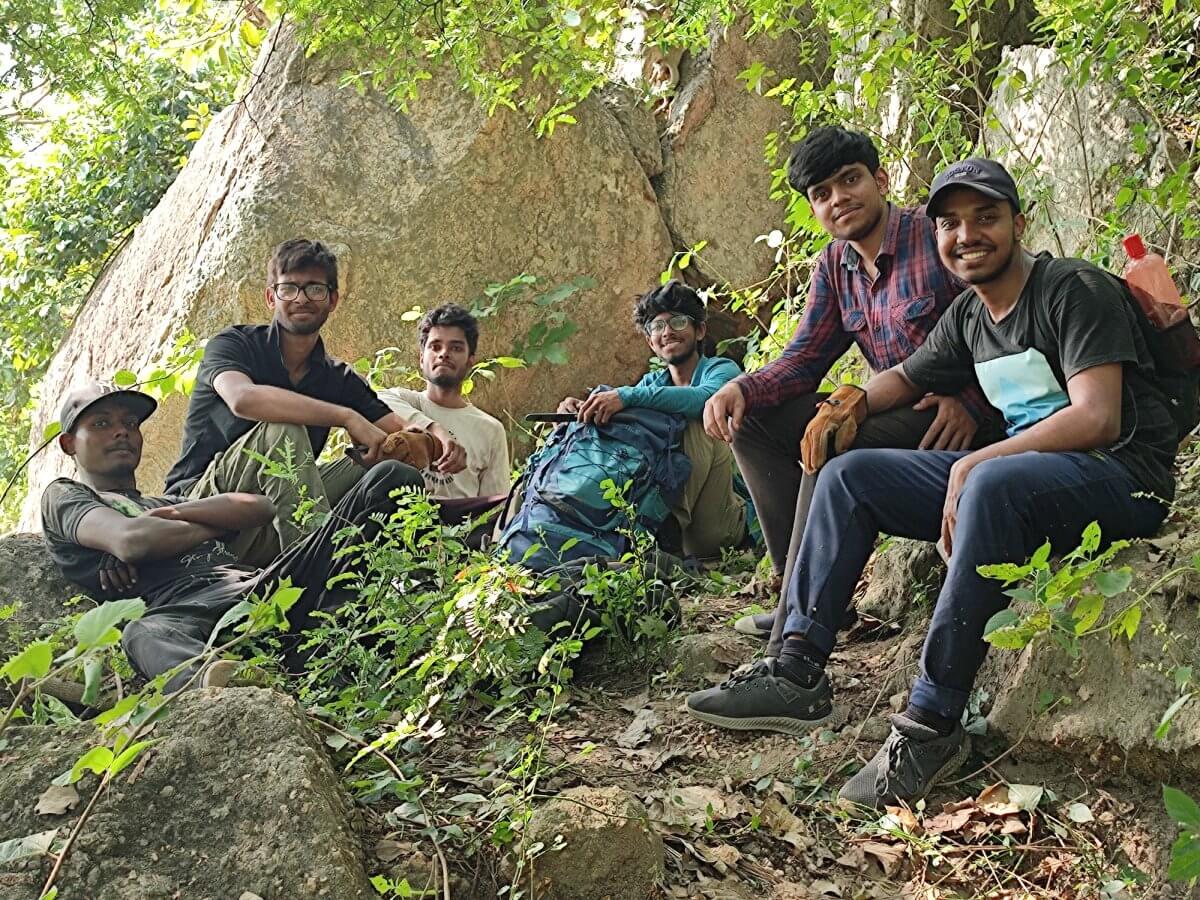
Our specialized Rock-climbers toiled hard while developing the site for Rock-climbing training at Majherpahar.
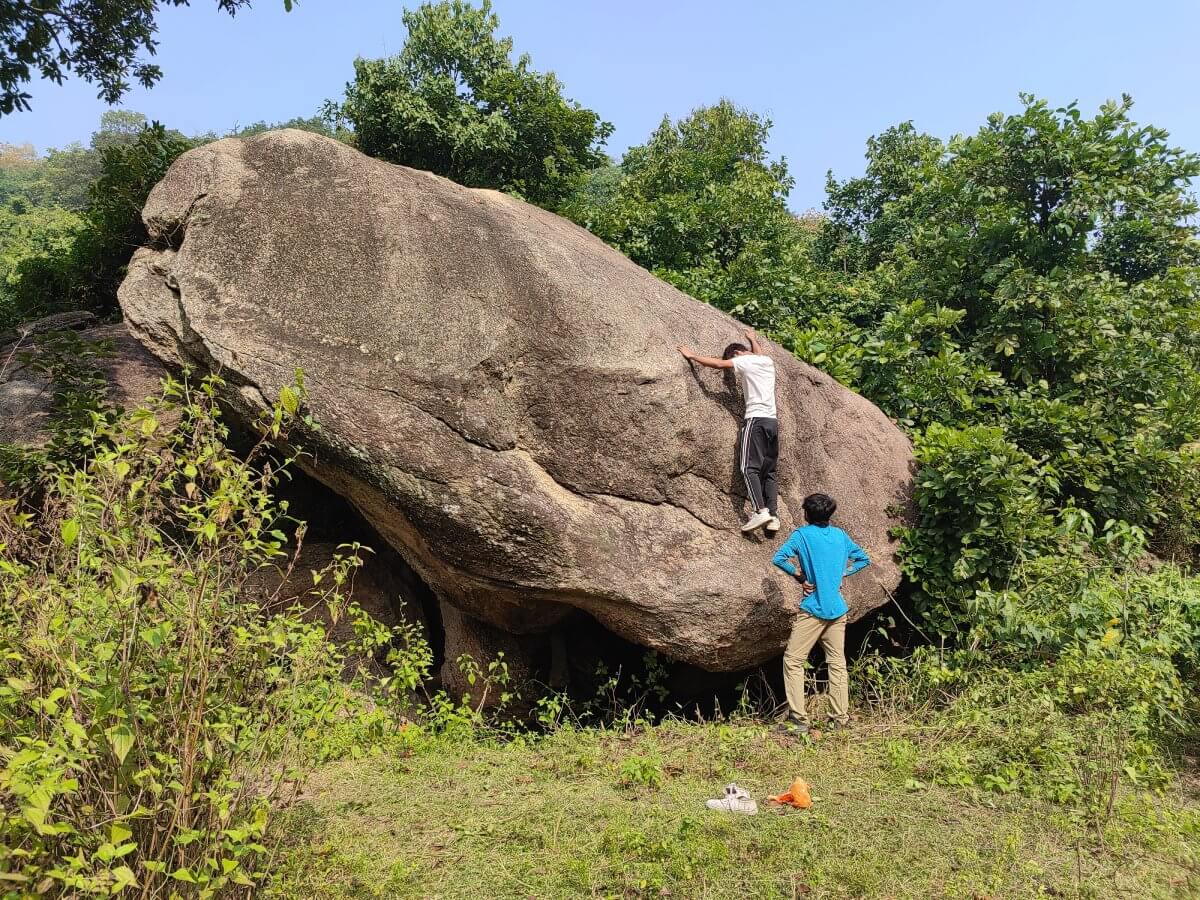
Exploring a boulder for scheduled climbing.
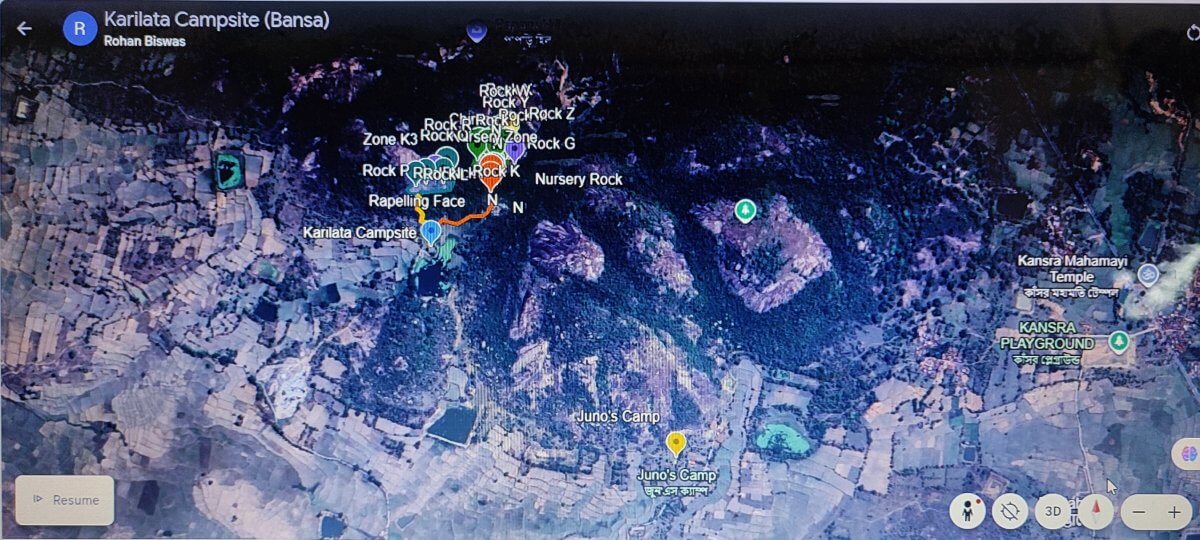
The Karilata Camp, training-site, and routes prepared shown in a map.
Infrastructure and Execution
By offering routes across the spectrum, the site becomes inclusive for nurturing trainees at every stage of their journey. Hence, building the campsite required meticulous effort:
- Anchors and ropes were placed with precision, ensuring safety and reliability.
- Training zones were demarcated for different skill levels — beginners practiced knots and belays, while advanced climbers tackled steep ascents.
- Campsite facilities were established, balancing comfort with ruggedness. Cooking areas, sanitation, and sleeping arrangements in tents were organized with discipline, all through makeshift arrangements. It may be mentioned here that Karilata site does not have any road connectivity except foot trail and also lacks drinking water facility. It naturally necessitated more hardship and effective financial burden.
Perhaps the most defining aspect of Karilata was cooperation. JUMHC did not work alone; we guided KPPS through the process. This was more than technical instruction — it was about instilling values. We taught not just how to run different training programmes, but why regulation matters. We showed not just how to organize a camp, but why community spirit sustains it. Mentorship is about planting seeds. At Karilata, those seeds were sown in the minds of KPPS members and trainees, who carried forward the ethos of principled mountaineering.
Discipline and Training
The camp itself was a rigorous exercise in discipline. Beside climbing on rocks, all that could be provided in a training camp were put in force and the trainees learned:
- Rope management and knot techniques.
- Climbing, belaying and rappelling techniques.
- Rescue drills and first aid.
- The importance of hierarchy, respect for rules and of course for nature.
Discipline was not enforced harshly; it was embraced willingly. The trainees understood that in climbing, freedom comes only through proper regimen.
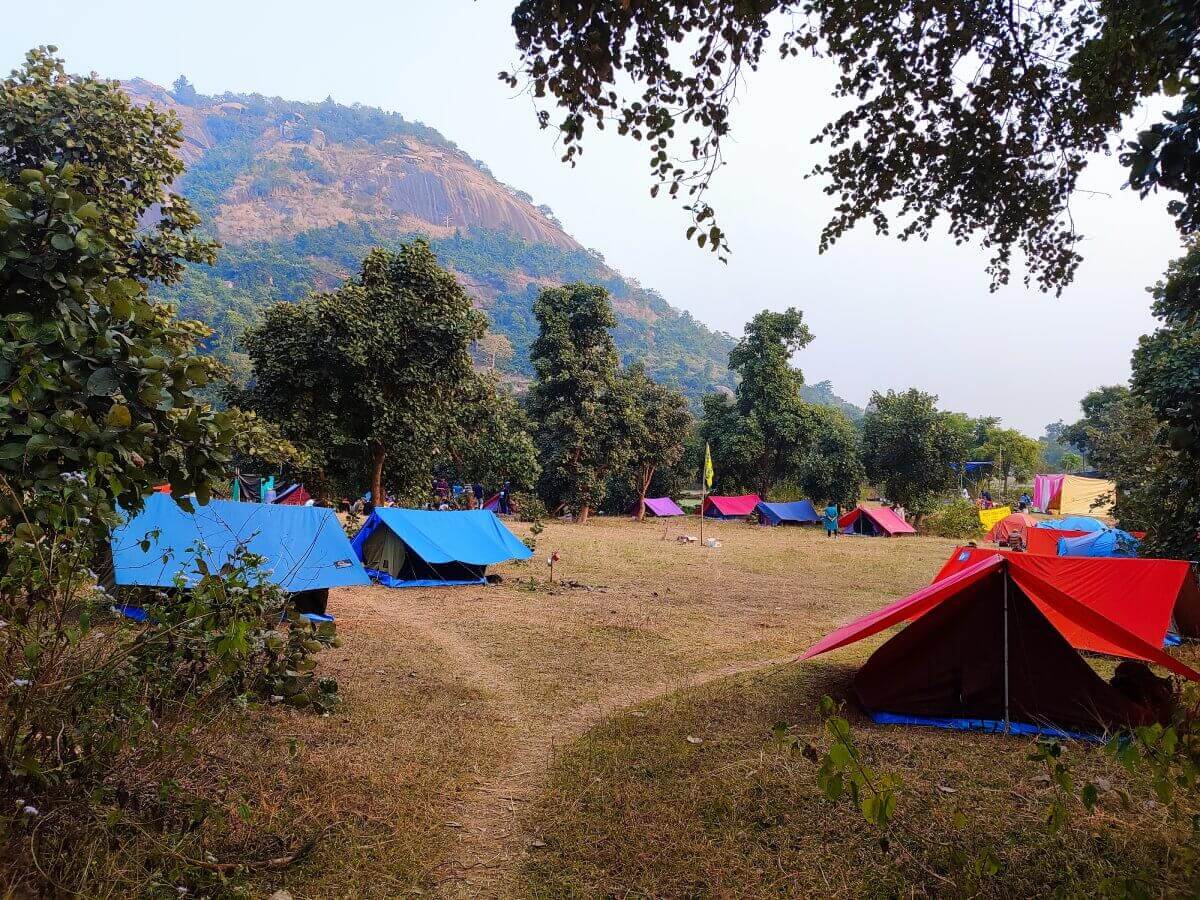
The Rock-climbing camp of KPPS at Karilata held in Dec,2024.
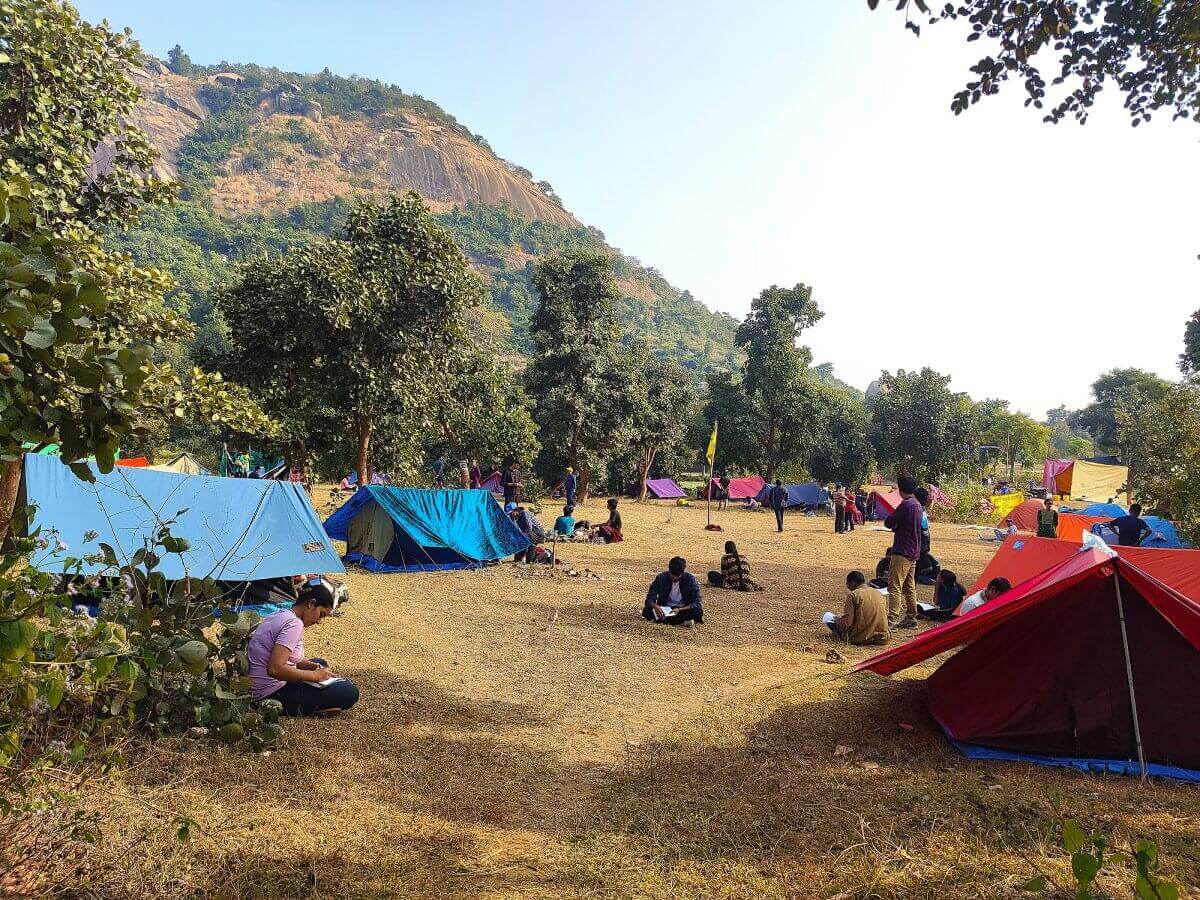
The students, busy in answering an examination on the last day of the course.
The Outcome
By the end of the camp, Majherpahar was no longer just a rugged terrain covered under thick bush & shrubs, it was a living training site, infused with spirit and purpose at a beautiful campsite just aside i.e., Karilata. The trainees left with skills, the instructors with pride, and the observers with inspiration. KPPS must have carried forward the lessons, ensuring that the impact extended beyond JUMHC.
Majherpahar vis-à-vis Karilata project was a success, because it was principled. It demonstrated that imagination, discipline, and mentorship could transform wilderness into heritage.
Case Study-2: Dhelburu - RaniTungri - MajherTungri - ChandniPahar (Feb 2026) cluster
If Majherpahar-Karilata project was the proving ground, then the Dhelburu–RaniTungri–MajherTungri–ChandniPahar project was the culmination of JUMHC’s vision and discipline again. This site, finally developed in early 2026, represented not only a larger scale but also a deeper maturity in our approach to training site development. It was the fruit of years of mentorship, imagination, and principled execution.
The Terrain and Its Challenge
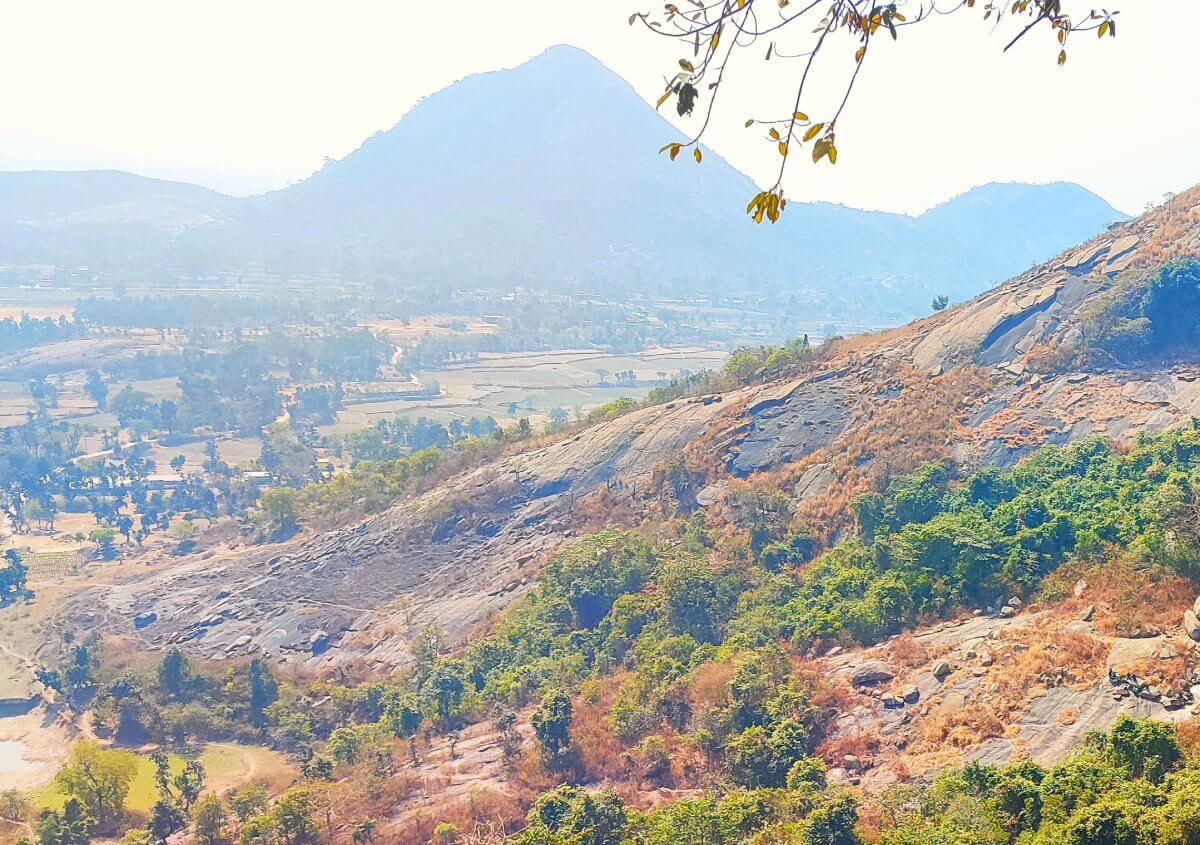
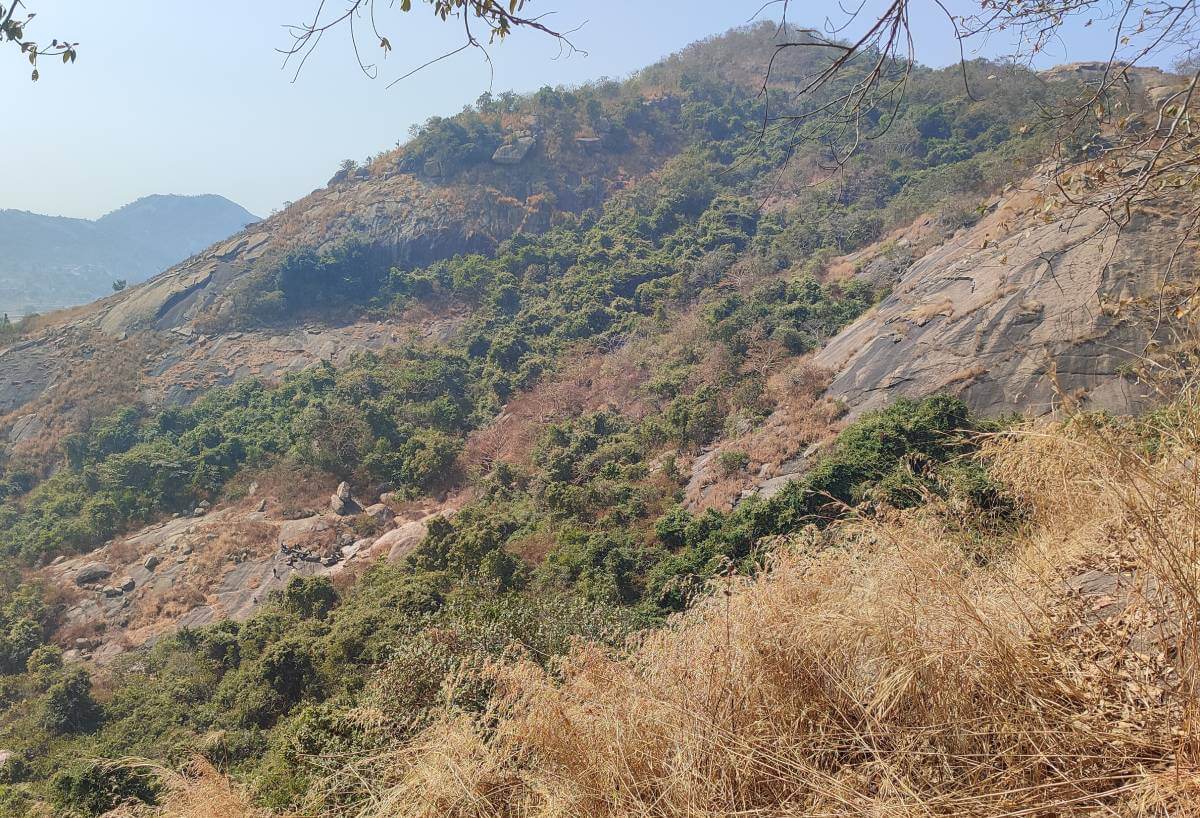
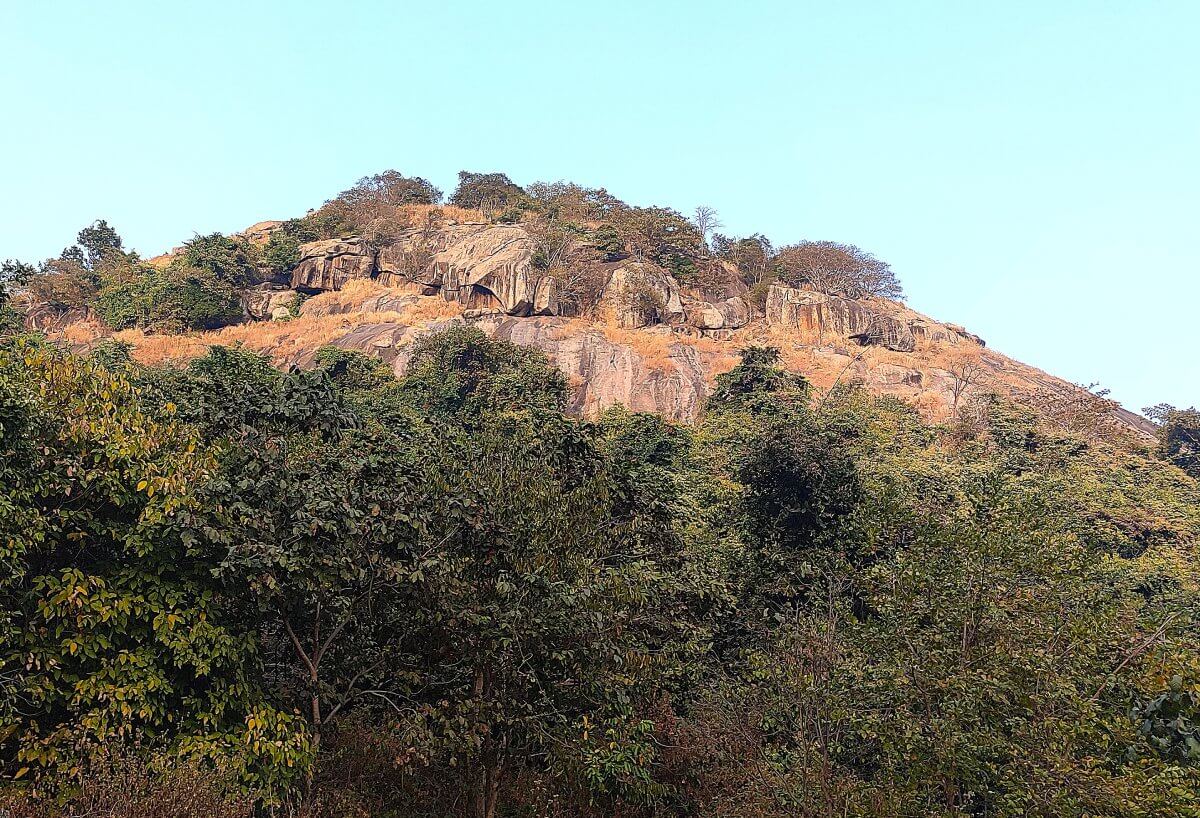
The Bansa Hills region is vast, and the cluster of Dhelburu, Rani Tungri, Majher Tungri, and Chandni Pahar offered a diverse set of rock faces and ridges. Unlike Majherpahar at Karilata, which was compact and almost self-contained, this site demanded coordination across multiple zones. Each hill had its own character:
- Dhelburu: Steep ascents, ideal for advanced rope work.
- Rani Tungri: Broad faces, perfect for group training and demonstrations.
- Majher Tungri: Technical ridges, testing precision and balance.
- Chandni Pahar: Scenic yet demanding, combining beauty with challenge.
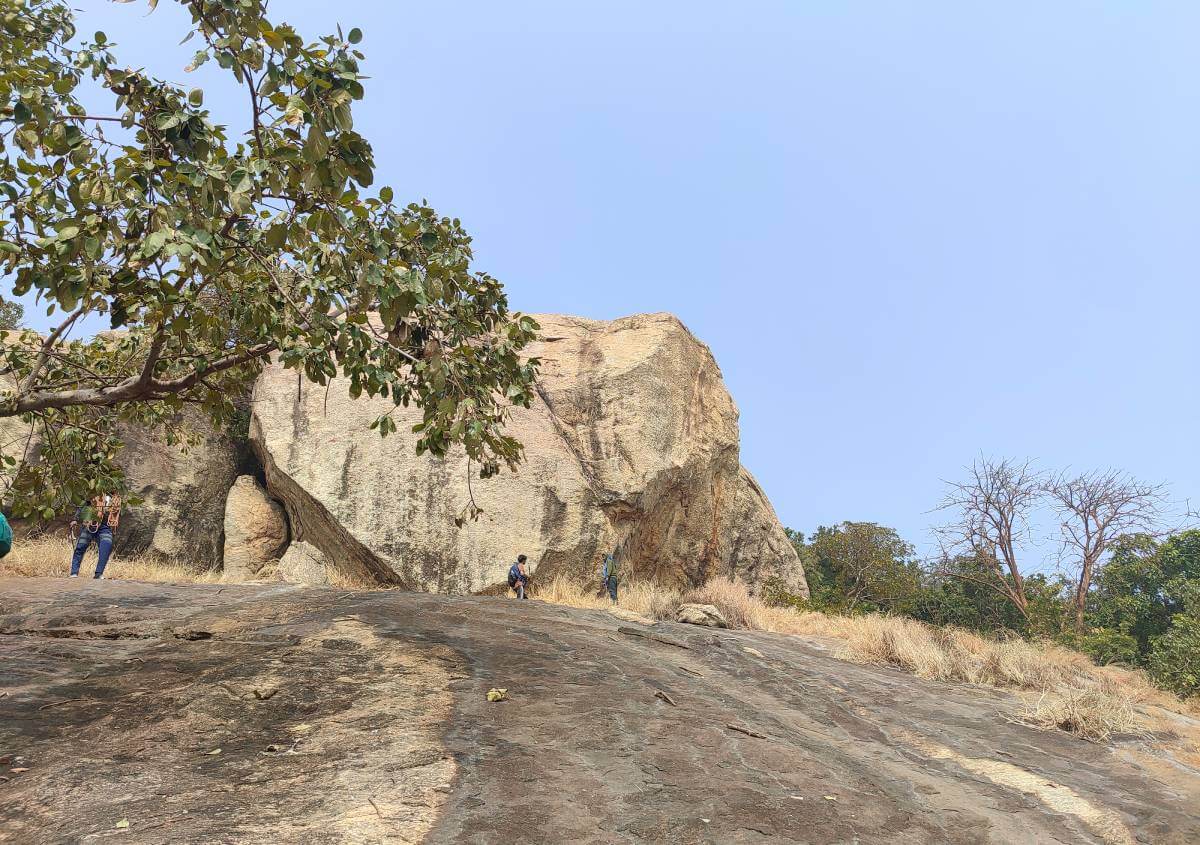
Dhelburu.
Ranitungri.
Majhertungri.
Chandnipahar.
The diversity of terrain made this site a comprehensive training ground, capable of nurturing climbers at every level.
The Scale of the Camp
The February 2026 Rock Climbing Camp was organized entirely by JUMHC. It brought together 68 trainees and a total of about 105 personnel — instructors, officials, kitchen staff, and support teams. This was nearly double the scale of Karilata, reflecting both the growth of our vision and the trust placed in JUMHC’s leadership.
Managing such a large group required strict regimen and foresight. Every individual had a role, and the success of the camp depended on seamless coordination. From kitchen staff preparing meals to instructors guiding rope drills, each contribution was vital.
Infrastructure and Execution
The development of the site followed the principles we had honed at Karilata, but on a larger scale:
- Anchors and routes were established across multiple hills, ensuring variety and safety.
- Training zones were carefully mapped: beginners practiced on Rani & Majher Tungri’s broad faces, while advanced climbers tackled Dhelburu & Chandni’s steep ascents.
- Campsite facilities were expanded to accommodate 100 or more personnel, with organized cooking areas, sanitation, and sleeping arrangements.
- Rescue readiness was emphasized, with drills conducted regularly to prepare for emergencies.
The campsite facilities were organized in a meticulous way. It was in our mind that no training ground can flourish without a reliable base camp. In this regard a campsite, developed by our Shri Kingshuk Chatterjee, an ex-student of Jadavpur University and a veteran of JUMHC, offered a fortuitous solution. Located near Bansa village at the closest vicinity of Dhelburu-Chandni pahar cluster, just about 9.40 kilometres from Muri Railway Junction (Jharkhand) yet within the district of Purulia, West Bengal, and 7.20 kilometres from Jhalda Railway station, the campsite provides both accessibility and proximity to the climbing sites at Dhelburu, Rani Tungri, Majher Tungri and Chandni Pahar. Karilata campsite, basing which we have developed a Rock-climbing Training site at the adjacent hill locally known as MajherPahar to the west of Rishi Tungri and successfully conducted Rock climbing course for KPPS in December,2024, is hardly 15 minutes’ walk from the campsite. It is made with different essential aspects required for an ideal campsite including enough drinking water facility, under Shri Chatterjee’s leadership since last two years or so, namely:
- Accessibility: The closeness to a railway junction ensures that trainees from Kolkata, Ranchi, or other parts of India can reach the site with relative ease. This reduces logistical hurdles and makes the training program more inclusive.
- Affordability: With reasonable expenses envisioned for lodging, the campsite democratizes access to climbing training. Students and enthusiasts from diverse backgrounds can participate without financial strain.
- Safety Integration: The campsite is not merely a place to sleep; it must be designed as a safety hub. First-aid facilities, communication equipment, and emergency transport arrangements should be centralized here.
- Community Spirit: Being developed by a veteran JUMHC student, the campsite embodies the ethos of community-driven development. It fosters a sense of belonging and responsibility among trainees, who see themselves as stakeholders in the project.
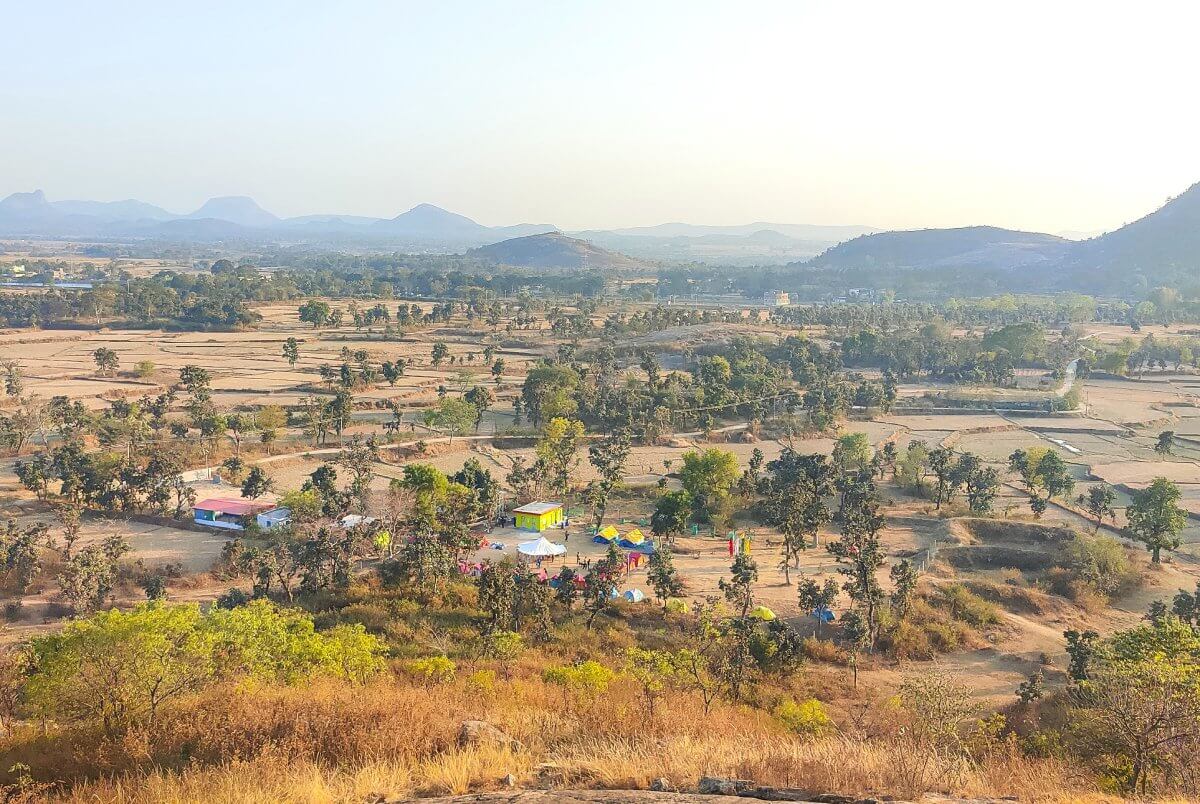
Juno's camp, as visible from Dhelburu slope.
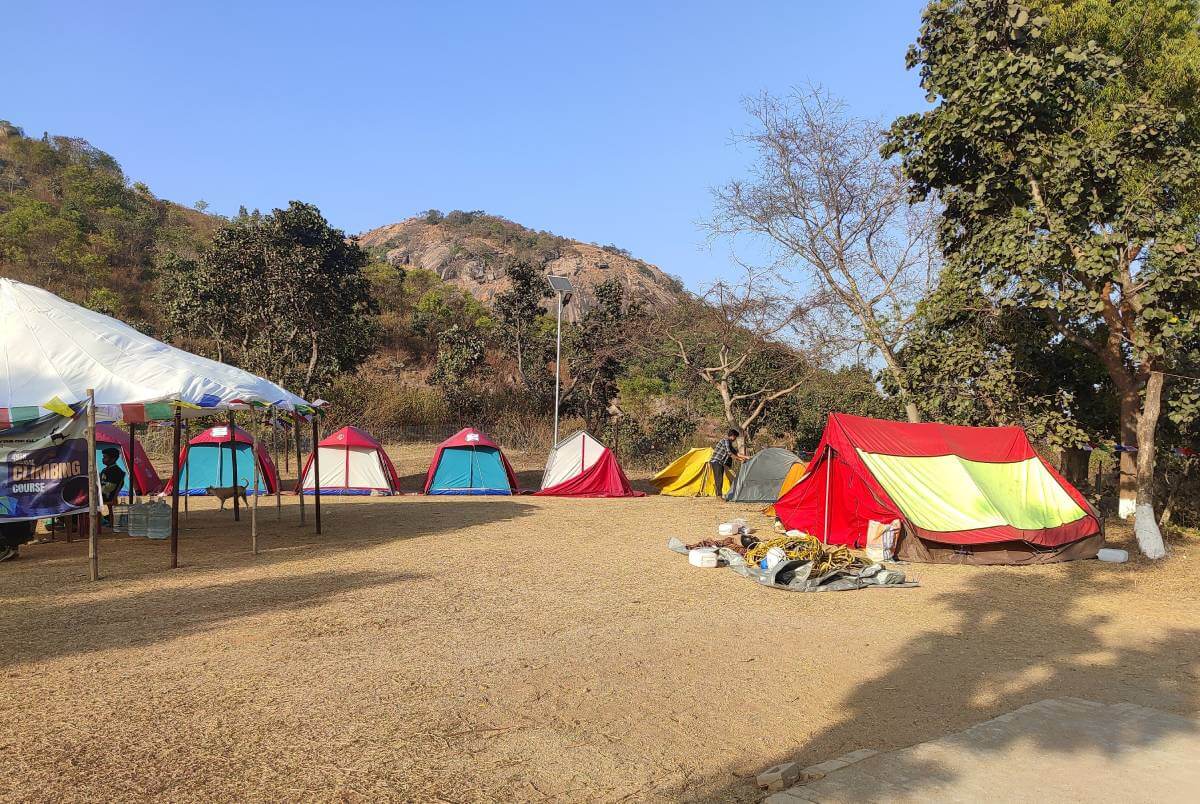
Juno's camp, location-wise easily accessible from Jhalda, Tulin or Muri junction.
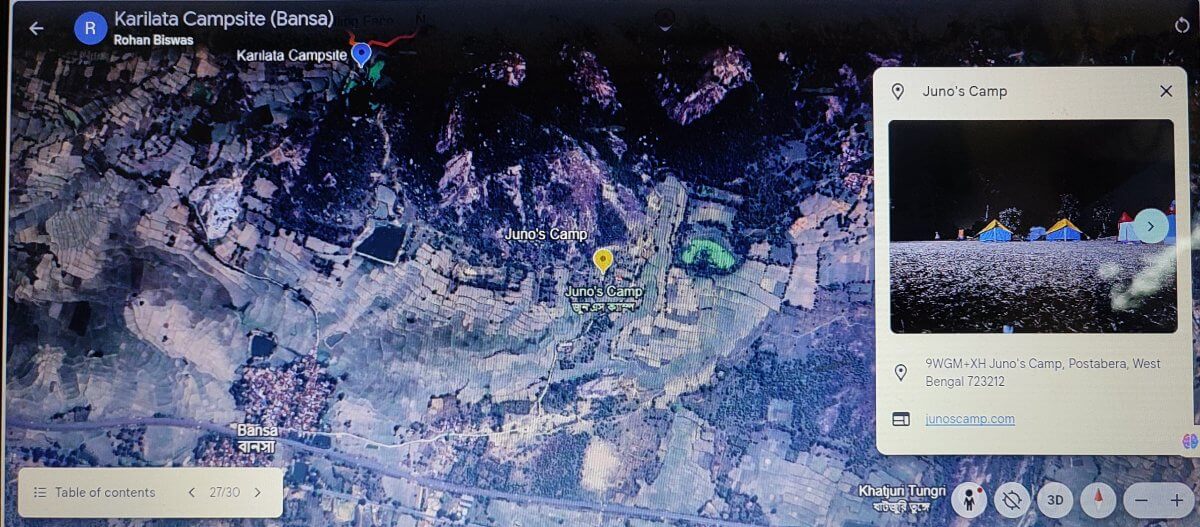
Location of Juno's camp with respect to Karilata camp, shown in a map.
All these executions demanded not only physical effort but also mental resilience. The terrain tested our imagination; the infrastructure and logistics tested our regimen. Yet, guided by principles, the team transformed the wilderness into a full-functioning training site.
The Spirit of Discipline
Discipline was the heartbeat of the camp again. With 68 trainees, chaos was a constant threat. But discipline turned potential disorder into harmony.
- Trainees followed schedules with precision.
- Equipment was handled with care and respect.
- Rescue drills were conducted with seriousness.
- Meals and rest were organized to sustain energy.
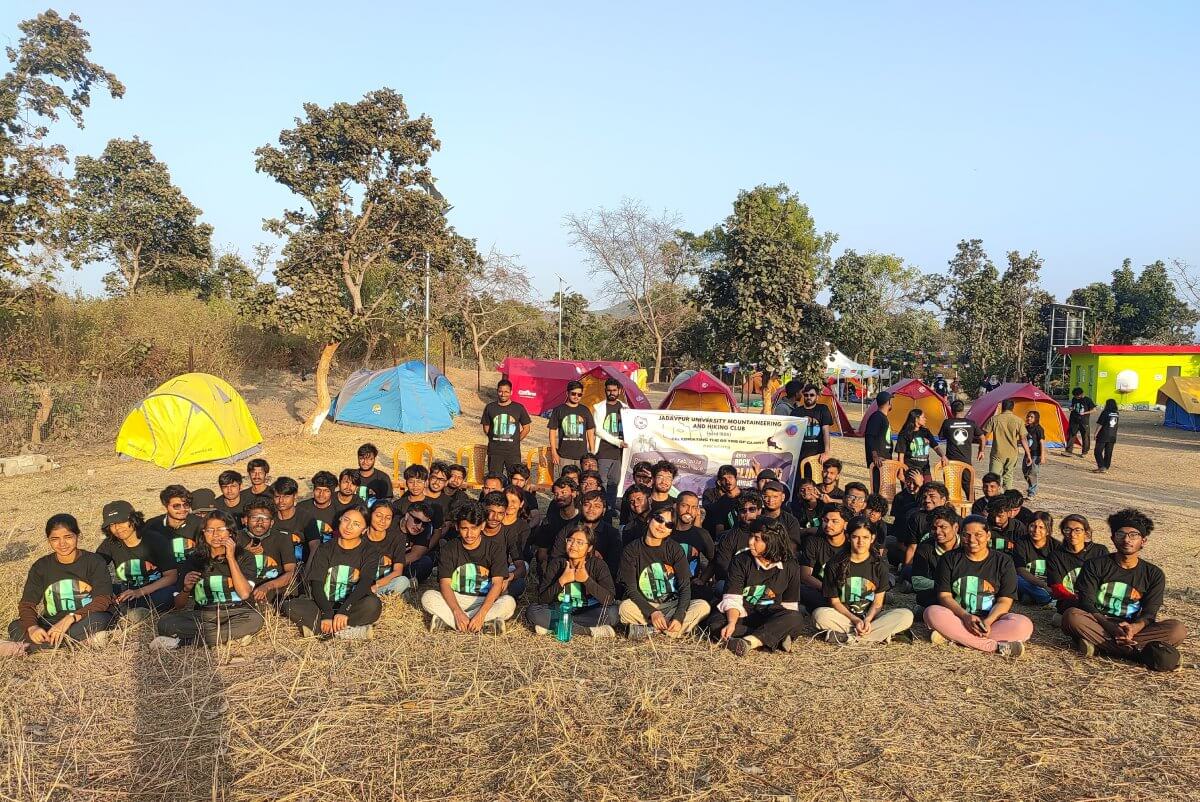
The trainees of JUMHC's RCC (Feb, 2026).
Here also, discipline was not imposed; it was embraced as usual. The trainees understood that it was the path to freedom — the freedom to climb safely, to explore boldly, and to trust one another.
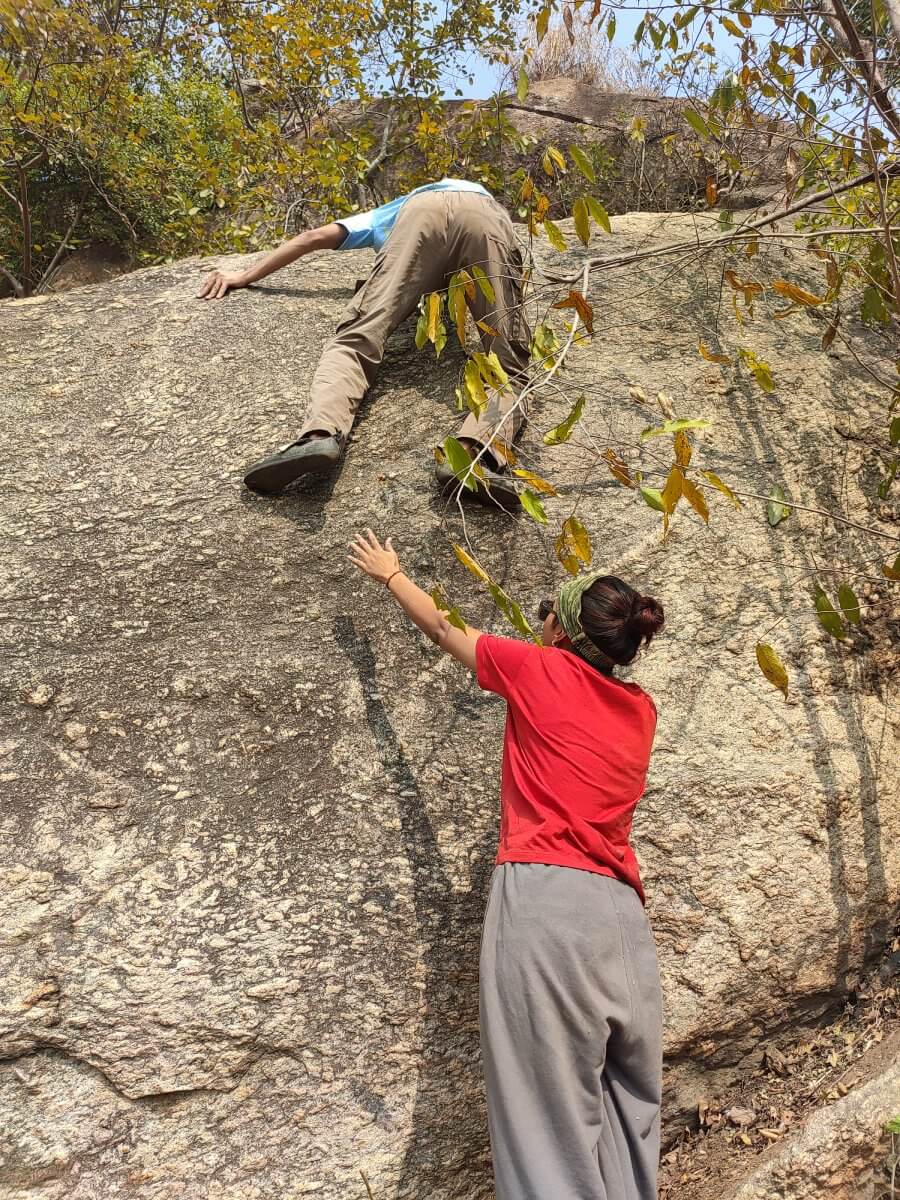
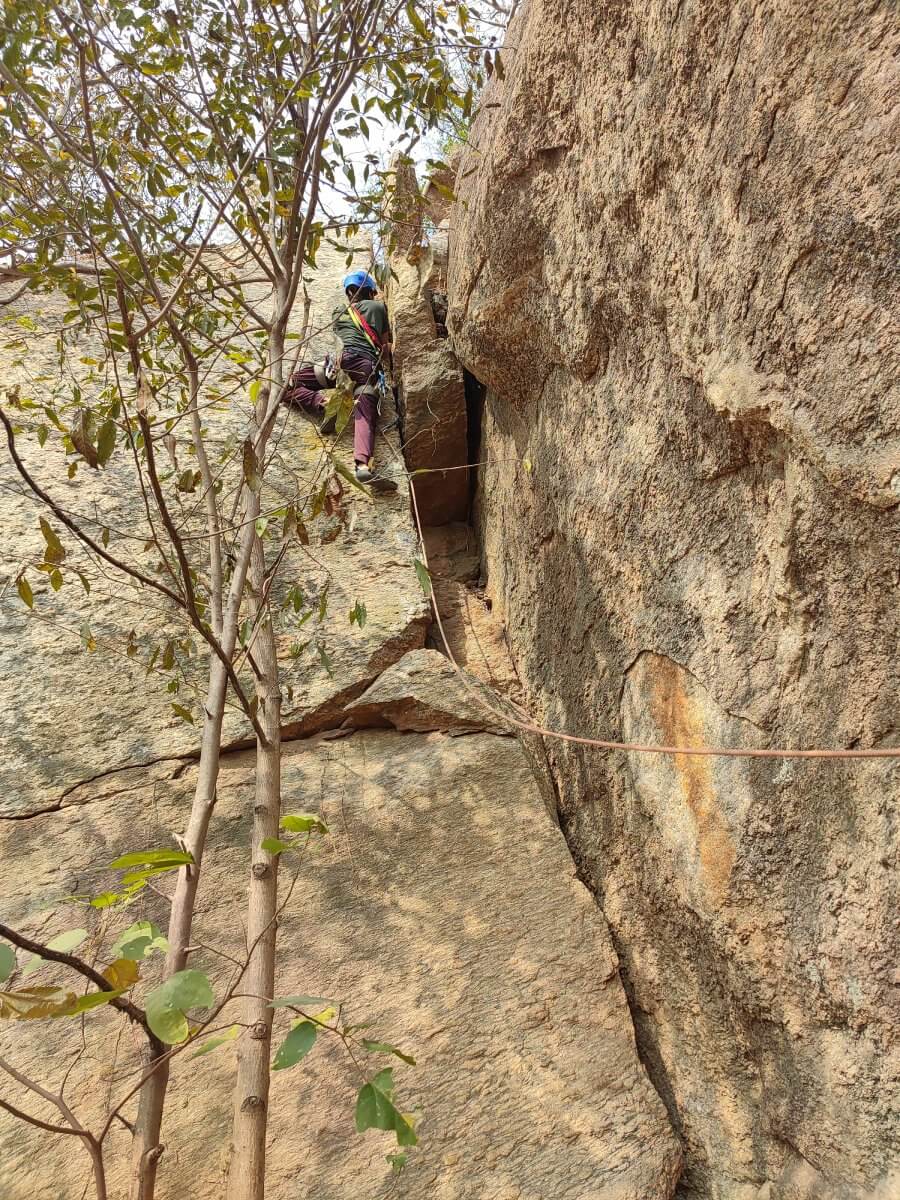
Few sample climbs as performed by our students. A UIAA-IV climb.
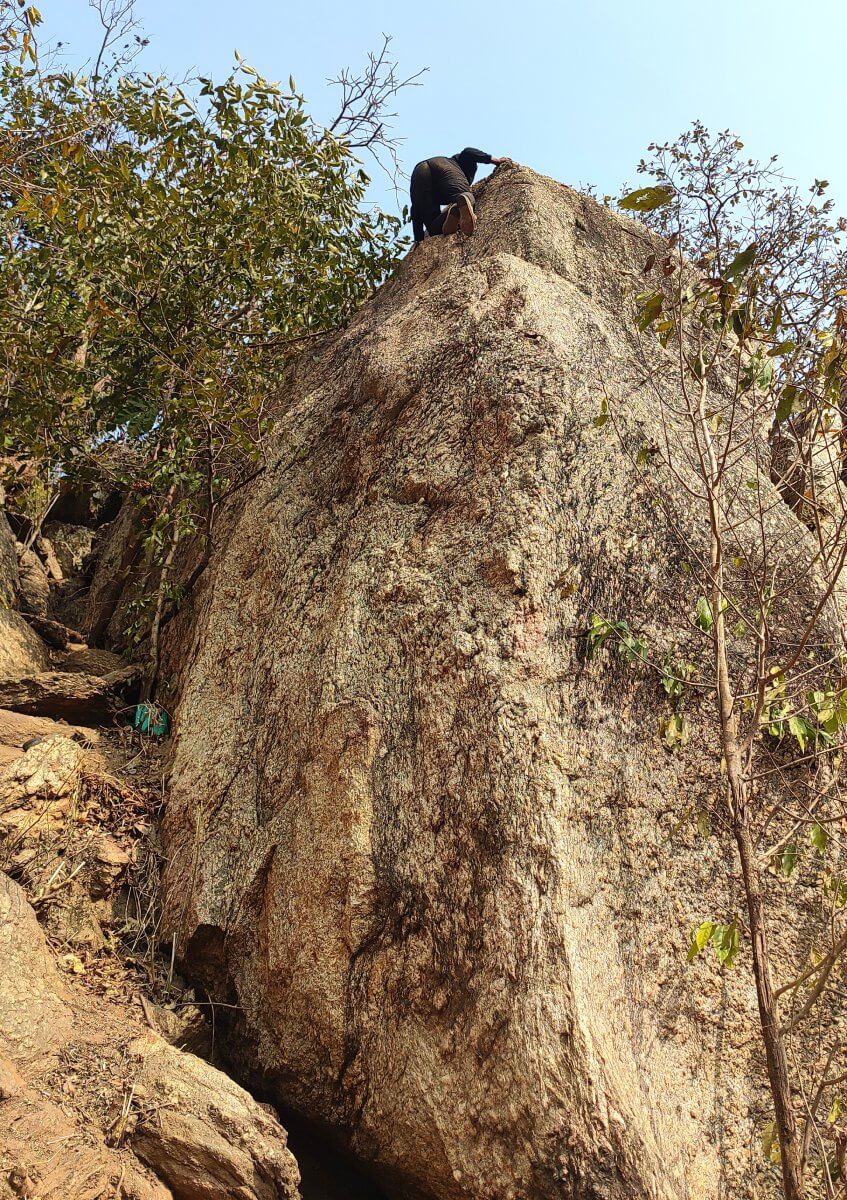
A UIAA-V climb at Chandnipahar.
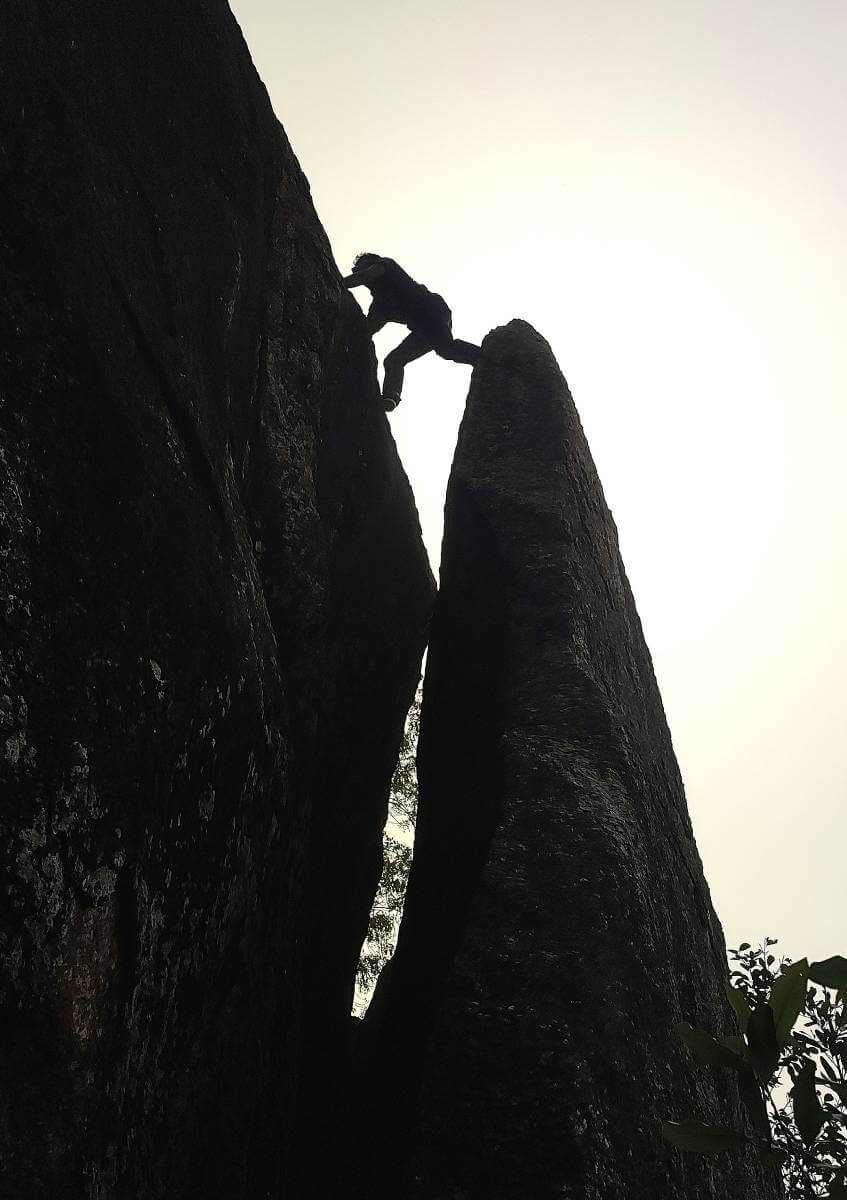
A UIAA-VI climb at Chandnipahar.
A UIAA-VI climb at Dhelburu.
The Return to Kolkata
When the camp concluded, the team returned to Kolkata with a sense of triumph. The satisfaction was not just in the climbs achieved, but in the spirit sustained. The trainees carried home skills and memories; the instructors carried pride; the support staff carried the joy of contribution.
The return was not an end, but a continuation. The site remained, ready to train future generations. The spirit remained, ready to inspire new organizations. The heritage remained, strengthened by principled toil and orderliness.
The Outcome
The Dhelburu–RaniTungri–MajherTungri–ChandniPahar cluster site stands today as a testament to JUMHC’s ethos. It is more than a training ground; it is a symbol of imagination, discipline, and community. It shows that with vision and principled execution; wilderness can be transformed into heritage.
The camp of February 2026 was not just successful; it was transformative. It demonstrated that JUMHC could lead large-scale projects, mentor communities, and sustain the spirit of mountaineering in Bengal.
Leadership Philosophy and Cultural Impact
In our training camps, leadership was never about issuing commands — it was about offering guidance balancing authority with empathy, discipline with encouragement. Its true purpose was to transform imagination into reality. From vision to execution, every step demanded creativity and responsibility. Whether on Majherpahar at Karilata or within the rugged cluster of Dhelburu–Chandni basing Juno’s camp, each project began with foresight — the ability to see promise in forest-clad, austere hills. Yet foresight alone was not enough. Realization required careful planning, regimented execution, and the endurance to see it through.
The duty of leadership was to unite two worlds — the dream of imagination and the rigor of reality. It meant awakening vision in the minds of trainees, then guiding them properly so that they felt inspired to learn diverse climbing and descending techniques from their instructors with eagerness and trust. The instructors, in turn, relied on the leadership to maintain order and direction. It was a chain of trust, built on discipline and shared purpose.
In both of our camps, trainees honoured the schedule with precision. They handled equipment with care. They treated rescue drills with seriousness. Meals and rest were taken in time, in harmony. This was a chain of trust — where discipline transformed chaos into unity, and unity became the heartbeat of our collective spirit.
Building Resilience and Teamwork
Climbing teaches resilience. Every ascent is a test of strength, patience, and courage. But resilience is not only individual; it is collective. At Karilata camp, 35 trainees and nearly 65 personnel learned to trust one another. At Juno’s camp, 68 trainees and nearly 105 personnel formed a miniature society built on cooperation.
Leadership meant fostering this resilience, ensuring that each individual contributed to the collective mission. Teamwork was not optional; it was essential. Kitchen staff, instructors, and trainees all played roles that sustained the camp. The success of the sites was the success of the involved teams.
Discipline as a Cultural Value
Discipline is often misunderstood as restriction. In mountaineering, it is liberation. It allows climbers to trust ropes, anchors, and one another. It transforms chaos into harmony.
At both camps, discipline was the heartbeat. Schedules were followed, equipment respected, rescue drills conducted with seriousness. Repeating again that this discipline was not imposed; it was embraced. It became a cultural value, shaping the identity of JUMHC and its trainees.
Discipline in climbing mirrors discipline in life. It teaches respect, responsibility, and resilience — values that extend beyond the rock face into everyday existence.
Mentorship and the Spirit of Community
JUMHC’s ethos has always been mentorship. At Karilata, guiding KPPS was a demonstration of the same. At Dhelburu-Chandni cluster, mentoring trainees was a continuation of this spirit. Mentorship spreads values, ensuring that the heritage of principled mountaineering reaches beyond one organization.
Community is the foundation of this heritage. Climbing is not solitary; it is community based always. Camps are sustained by collective effort, and heritage is preserved by shared spirit. JUMHC’s projects embody this community ethos, connecting generations and organizations through mountaineering. At this stage, I must name a few whose selfless effort made the cluster ready for accepting the challenges of organising a full-fledged Rock-climbing course at its lap which, some time back, was nothing but a rugged hilly landscape with greeneries around. They are: Shewar Naser, Sudip Sharma, Ms. Pragya Roy, Binit Oraon, Md. Imtesal, Abhijeet Nona, Sk. Mainul Alam, Pradhumna Roy, Shubham Roy, Shivam Jastoria, Sayan Mondal, and of course Kingshuk Chatterjee, all JUMHC cadres, most of whom were instructors as well beside many others who acted as dedicated instructors at the final camp held during 5th-8th February,’26. They are: Rohan Biswas, Sk. Sartaj Alam, Aman Mahato, Santosh Kumar Roy, Sajib Chandra Kha, Pratish Kumar, Ashish Kumar Mondal, Sourav Kumar, Waseem Ahmed Wani, Aditya Raj, Hemant Kumar Madhukar, Ms. Disha Ghosh, Samarendu Biswas, Binay Das, Ms. Urwah Md. Jawaid and Ms. Shankari De. The thankless job of Quarter (Kitchen) was very successfully conducted by Ms. Manisha Saha along with Sahid Majid Das with five assistants under them. The logistical support was given by Parambrata Halder and Harsil Sharma. And, needless to mention that each and every task at the camp was performed flawlessly under the guidance and leadership of the University appointed Camp-Commandant Shri Gautam Dutta, that’s me.
Cultural Heritage of Bengali Mountaineering
Mountaineering in Bengal is not only about peaks and ridges; it is about culture. It is about the joy of shared effort, the pride of disciplined achievement, and the spirit of community.
The development of training sites at Majherpahar basing Karilata as campsite and that of Dhelburu-Chandni cluster site at Juno’s camp strengthens this heritage. They are not just physical spaces; they are cultural landmarks. They embody values that define Bengali mountaineering: imagination, discipline, mentorship, and community.
By leading these projects, you have contributed to this heritage, ensuring that future generations inherit not only sites but also spirit.
Vision for the Future
The journey does not end with Dhelburu-Chandni cluster. The heritage must continue to grow. Future sites will demand new imagination, new discipline, and new leadership. The principles remain the same, but the challenges will evolve.
The vision is clear: to broaden recognition of Bengali mountaineering culture, to connect communities, and to mentor future generations. Each new site will be a step in this journey, each camp a chapter in this heritage.
Conclusion
The development of Majherpahar-Karilata and Dhelburu-Chandni cluster sites were not just about climbing; it was about leadership, discipline, and heritage. It showed that imagination can become reality, that discipline can sustain freedom, and that community can preserve culture.
The camps were successful not only because of climbs achieved, but because of spirit sustained. They were triumphs of principle, testaments to heritage, and beacons for the future.
In the end, the wilderness was transformed — not only into training sites, but into living heritage. And that heritage, nurtured by JUMHC, will continue to inspire generations of climbers in Bengal and beyond.
Related Articles


Place your ad here. Call +919163231788 or Contact Us


